

THE ULTIMATE GUIDE TO FALLS PREVENTION FOR SENIORS - PART 2
When we understand the factors that increase the risk of falling, we can eliminate or minimise them as much as possible, thus decreasing our risk of falling.
This is what we will be doing in this section, Part 2. Taking the appropriate steps to prevent falls.
10 STEPS TO PREVENT FALLS FOR GOOD
In Part 1 of this Falls Prevention Guide we covered that falls are not just a normal part of ageing. We looked at how a falls cycle can develop and the risk factors associated with falling.
When we understand the factors that increase the risk of falling, we can eliminate or minimise them as much as possible, thus preventing falls.
This is what we will be doing in this section, Part 2. Taking the appropriate steps to prevent falls.
What we will be covering in Part 2:
STEP 1: Stop What’s Putting You At Risk - Take Care and Ask For Help
STEP 2: How To Exercise To Prevent Falls - The Best Exercise For Falls Prevention
STEP 4: The Best Shoes to Prevent Falls and How To Take Care Of Your Feet
STEP 5: Simple Changes To Make In And Around Your Home To Prevent Falls
STEP 6: Be Aware of Health Conditions and Medications Putting You At Risk of Falling
STEP 10: Walking Aids & Assistive Devices - How They Can Help and How They May Put Your at Risk Of Falling
Before we start, if you feel you’re at risk of falling, maybe you’ve even had some near misses or have fallen. Do not keep this to yourself! Let your doctor know so you can determine why this is happening and can undertake what’s required to prevent further issues.
Furthermore, although I outline these 10 steps to decrease falls that you can follow, you should not and do not have to go it alone. Many services are available to help, which can be organised through your doctor.
STEP 1:STOP WHAT'S PUTTING YOU AT RISK - Take Care and Ask For help!
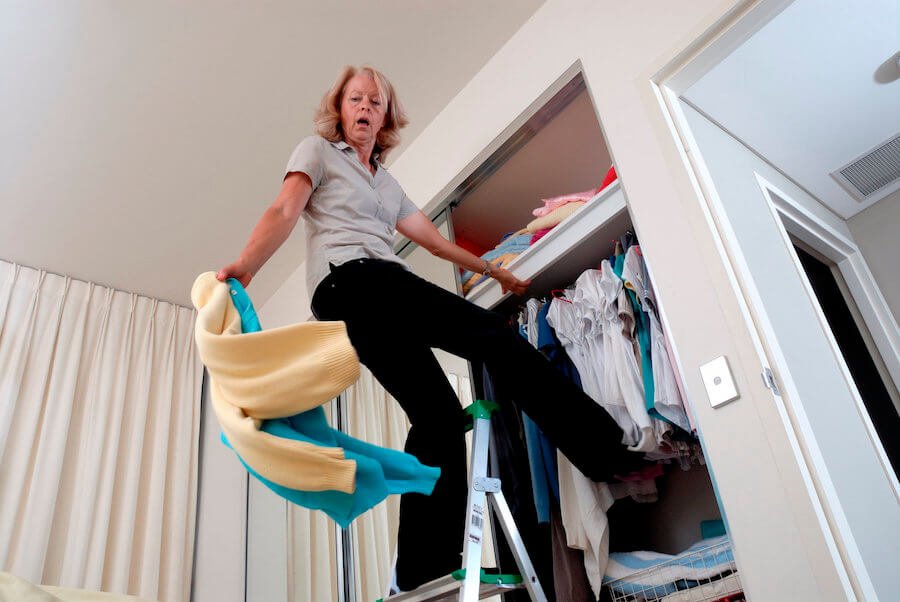
The first step in preventing falls is re-thinking how you do those tasks or habits that could put you at risk.
All of us are guilty of doing things we shouldn't.
Earlier in life, certain tasks you do, which could have little risk, aren't usually an issue. However, when physical abilities change over time, there is less room for error.
The tasks that could put you at risk of a fall change for each person and their capabilities.
Some examples could be using a ladder or a chair to perform specific tasks, such as changing a light bulb. We all know this can be dangerous. Or it could be as simple as not using a walking aid when you know you should be.
You may also not be aware you are putting yourself at risk.
Some habits may seem harmless but are a common cause of falling, e.g., not putting on seeing glasses, especially at night, when needing to go to the bathroom or reading something while walking, such as a magazine, mobile phone or tablet.
After many years of carrying out these tasks or habits, changing them can be difficult.
Moreover, being independent and self-sufficient throughout life, it isn't easy to rely on someone to now do jobs for you. We all want to know and show that we are still capable.
Sometimes you may know you should ask for help or want to ask for help, but the act of asking can be difficult. For many of us, asking isn't easy, and when we need to, it can be uncomfortable. You may feel that your requests could be silly, and you don't want to burden anyone or take up their time.
But there comes a time when you must do what's best for you and need to just swallow your pride…. If you need help with something, ask!
It takes little time for someone to change a light bulb for you, get some items from the top cupboard, or trim a tree branch every so often.
You don't want to fall doing something risky, and NO ONE wants something bad to happen to you. No one wants you to have a fall!
If you need help and want to ask, know it's ok. It isn't a loss of your independence, and you aren’t any less a person for not being able to do something and getting help.
You aren't a burden on anyone, and even if you are a slight burden on someone, WHO CARES!
You deserve the support for being there for others throughout your life, so put your feet up and enjoy watching someone help you for once.
DON'T BE AFRAID TO ASK FOR HELP!
OTHER OPTIONS - WHEN YOU DON'T HAVE HELP
If you live in a big city and have no one to ask for help or still can't shake the feeling you'll be a burden if you ask, you can speak to your doctor about what services are available to help you.
You can also get help through certain websites.
An example website is Airtasker (In Australia or UK). On these websites, you can pay reasonable rates to have someone do jobs for you.
You can put up absolutely any job you want to be done, such as painting your house, trimming a tree branch, or hanging a painting. Whatever!
Once you put your job up, people will give their offer, and you can then choose a suitable person.
There are different websites for different countries, so if you want a little help, search for a similar site in your country.
IT’S UP TO YOU TO CHANGE
Firstly, be aware of certain things you do that could put you at risk of falling.
If you know you are increasing your risk of falling by doing certain tasks or engaging in risky behaviours, make a conscious effort to stop or change these habits. One unexpected fall can make a considerable change to your life.
Take, for example, the glasses situation above. You may think it's not much of an issue not wearing your glasses at night. But it only takes one slip or trip from not seeing what's in front of you to cause a fall.
Start wearing your glasses at night and put them in easy-to-see and reach places like the top of your bedside table, so you remember to wear them.
Another example is reaching for items in hard-to-reach places like the top of your cupboard.
You may think standing on a chair is fine, although you've noticed your balance and coordination isn't as good as it once was. One moment of lapsed concentration, and you could fall off the chair.
Put items currently in hard-to-reach places in easy-access cupboards (or get a friend or family member to place them there for you) or obtain a reach stick or step stool with a handle to be safe.
Think about tasks you are doing that could put you at risk and change them.
We will cover more of this in-depth in STEP 5: MAKING YOUR HOUSE FALLS PROOF.
RISK-TAKING & FALLS SUMMARY
Eliminate the need to undertake risky behaviours and change habits to ensure you are safe.
If you wear glasses, wear them, especially at night, and watch where you are going (and how you are moving).
Improve your balance by taking steps to reverse the age-related decrease in your physical abilities.
Don't be afraid to ask for help.
STEP 2: How To Exercise To Prevent Falls - The Best Exercise For Falls Prevention
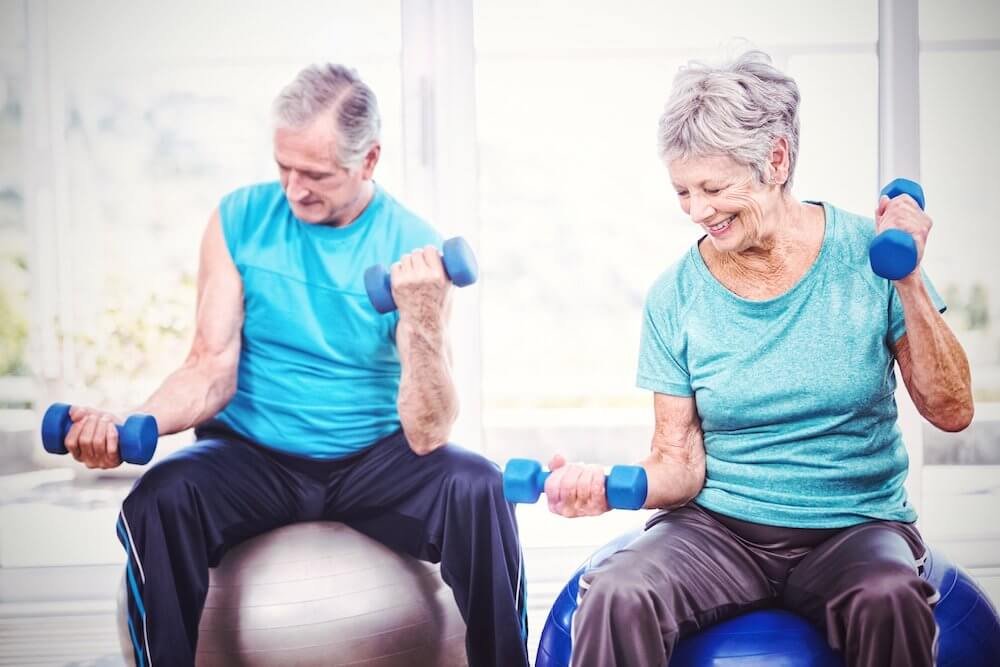
Now that you're avoiding those things you do that could be putting yourself at risk, the next step…. and THE MOST IMPORTANT STEP, is to improve your physical abilities.
The best way to do this is by increasing your overall activity levels and doing specific exercises to help prevent falls.
Not only will you decrease your falls risk by moving better, but you will also gain many other added benefits, including improved health and general well-being, looking and feeling younger and improved confidence.
It's never too late, or you are never too old to get active!
REMEMBER THIS: GETTING OLDER IS INEVITABLE; BECOMING FRAIL ISN'T!
As we get older, we must consider and accept factors out of our control. Changes in our body (physiological) do and will occur over time. We are never going to be like our much younger selves. We must accept this!
However, the main reason we see changes in our physical abilities as we get older is not because of the ageing process but because we do less as we age.
Common belief has it that "ageing" is the reason for these changes, but it's NOT!
Our life habits start involving less and less activity over time. As the years go on, we find ourselves sitting more and moving less. We find ourselves doing what's most comfortable and easiest.
With less movement and exercise, we start seeing a decline in physical abilities.
As time goes on, the tasks you have always done become more difficult. It's also quite common to be worried about falling and getting injured, leading to further avoidance of activity.
The decline in activity causes a decline in physical abilities over time!
The good news is: physical abilities can be retrained at ANY age!
This means that you can improve your physical abilities no matter your current capabilities or how old you are.
You just need to believe this and start getting active more so! And you don’t need to go it alone; a Physiotherapist can help!
If you start making a few changes, increasing your activity levels and exercise within your capabilities and progress over time, you WILL improve. You WILL get stronger, fitter and balance better!
You will begin seeing and noticing these changes.
Life will feel much more effortless!
Start exercising and start making improvements today!
When you improve your physical abilities, you want to focus on all aspects of physical fitness to help prevent falls.
The decline in physical abilities increasing the risk of falling and fall-related injuries, due to lack of activity and exercise, is illustrated in the diagram below.
Physical changes (risk factors) that can lead to a fall and injury.
HOW TO IMPROVE YOUR PHYSICAL CONDITION
[Note: Always speak to your doctor before starting any exercise program or coming to any conclusions about your health. I recommend you see a Physiotherapist for an assessment to determine your falls risk, areas to be worked on and for an individualised exercise program].
When you undertake physical activity, you can improve and maintain all of these aspects of physical fitness shown in the diagram above.
Anything caused by lack of use can be re-trained and improved.
You can improve your physical abilities and therefore decrease your falls risk.
So let's get started.
STEP 1) GET MOVING
You may have heard me say that one of the first and most important steps we should take to improve our health and life is to increase the amount of physical activity we are doing.
The same goes for preventing falls. The first and most crucial step in decreasing our chances of having a fall - is to just get moving!
We must get off the couch and move our bodies more often.
MOVEMENT IS HEALTH! MOVEMENT IS MEDICINE.
Find a physical activity that you enjoy doing or would like to do! And begin doing more of it!
You do need to do some extra specific exercises each week to improve your balance, strength, coordination, flexibility, cardiovascular fitness and posture (which we will cover below). Eventually, you'll start enjoying these too. But for now, focus on just increasing your activity levels each week.
By doing enjoyable activities, you'll get better results than any exercise program you don't enjoy doing. When it's enjoyable, you'll keep it up!
You'll get the results without the stress of doing something that feels like a chore and stick to it.
Consistency is the key, and enjoyable activities bring consistency.
Find an activity that excites you and get moving!
Some ideas: Walking in nature, swimming, playing with the grandkids more often, trying a new activity - Tai Chi, dancing, lawn bowls, bocce, ten pin bowling, tennis, aqua aerobics, golf, tennis, yoga, cycling. The ideas are limitless.
Find the inner child inside you! Get outdoors and enjoy what mother nature has to offer.
If you're stuck on choosing activities, I recommend walking every day for at least 10 minutes to start.
Have fun on your walk. Do different types of walks. Attempt different terrains. Walk up stairs, down stairs, walk on grass or in the shallows and sand of your local beach. Go on safe bush walks. Walk faster. Slower.
These different terrains train your body in different ways without you knowing it.
You are training your heart which will make you fitter; you are training different muscles in your body, which will make you stronger (even the little ones that help with balance); you are ensuring your joints don't stiffen up. You are also training your body to respond to different terrains. All abilities, when improved, will decrease your falls risk.
You are also doing wonders for your stress levels and mind; over time, you will improve your confidence.
Obviously, don't get carried away and do too much too soon and don't try anything out of your capabilities (no risky behaviours, remember). Always start small, but also challenge yourself a little and increase how much you walk or do the activity over time. Give time for your body to adapt to the exercise you are doing.
Take breaks. Don't wear yourself out or push yourself too hard. Ask a friend or family member to come along for safety and to have some company.
Take your walking aid if you need to. Be smart, be safe AND most importantly, enjoy it!
Always think of ways to incorporate more activity into your life and keep moving!
STEP 2) GET SPECIFIC, STAY CONSISTENT AND ALWAYS CHALLENGE YOURSELF
Once you've begun increasing your physical activity levels by doing activities you enjoy, it's important to incorporate specific exercises into your life each week. This will further decrease your falls risk and improve your physical abilities.
Your program should include a wide array of exercises to improve your balance, strengthen your whole body (with particular focus on your legs), improve your posture, flexibility, cardiovascular fitness, body awareness, and reaction time. These exercises will also keep your bones strong!
Once you begin incorporating specific exercises into your weekly routine, the next step is to make gradual progressions (continually challenging yourself), so you will continue to improve.
Ways to progress your exercises include increasing the number of repetitions, increasing the weights you are using, walking longer distances or doing more challenging exercises.
If you are new to exercise, the best place to start is with my 4-week exercise eBook, which covers all you need to get started. For a FREE copy, join the More Life Health Mailing list (click to Join); by signing up, you’ll have many other exercise videos, articles and more.
For exercises specifically for falls prevention, click HERE.
You will also find beginner exercise videos on this page HERE.
I also cover exercises for seniors in videos on the More Life Health YouTube Channel, so be sure you subscribe to the channel. Also, join the Facebook Support Community if you have any questions and to help you on your journey.
Let's start working on each aspect of your physical fitness to help prevent falls.
THE BEST EXERCISEs FOR FALLS PREVENTION
BALANCE EXERCISES TO PREVENT FALLS

Decreased balance, or becoming unsteady on your feet, makes it more challenging to carry on with your activities of daily life, making it much harder to remain upright without falling.
A loss of balance is one of the main reasons people fall over.
HOW OFTEN TO DO BALANCE EXERCISES TO HELP PREVENT FALLS
Improving your balance is essential to decreasing your falls risk. So it is imperative to perform specific exercises at least three times a week, ideally each day, to prevent falls.
Only five minutes each day of dedicated and focused specific balance exercises will do wonders in helping you prevent falls.
To improve your balance, CLICK HERE for all the balance resources you need.
Also, make sure to check out my in-depth article THE STEADY SENIOR - THE COMPLETE GUIDE TO GREAT BALANCE OVER 60 (CLICK TO READ), which will give you everything you need to test and help you improve your balance.
And CLICK HERE for THE 10 BEST BALANCE EXERCISES FOR SENIORS.
STRENGTH EXERCISES TO PREVENT FALLS

Loss of muscle strength, specifically in the legs, is another major factor causing one to fall.
To decrease your falls risk, you MUST increase your leg (and core) strength which will also make your day-to-day tasks much easier. We use our legs in almost every task we do.
HOW OFTEN TO DO STRENGTH EXERCISES TO HELP PREVENT FALLS
If doing strength exercises is new to you, you will start seeing a difference by completing them at least twice weekly. Progress to three times per week and then every day over time.
If using weights, resistance bands or other types of strength equipment, it’s always better to keep a day in between to allow your body to recover.
To improve your strength, CLICK HERE for all the strength resources you need.
Also, check out my in-depth article THE STRONG SENIOR: THE COMPLETE GUIDE TO GETTING STRONG AND STAYING STRONG OVER 60 (CLICK TO READ) which will help you get and stay stronger.
And CLICK HERE for the 10 BEST LEG EXERCISES FOR SENIORS.
IMPROVING FLEXIBILITY - STRETCHES TO PREVENT FALLS

Decreased flexibility makes movement more difficult, changing the natural movement pattern, which can increase falls risk.
To decrease your falls risk, you also want to improve your flexibility.
HOW OFTEN TO STRETCH TO HELP PREVENT FALLS
A simple 10-minute gentle stretch routine will do wonders to help you improve your flexibility and help you to feel better and will go a long way to help you prevent falls.
You will find 10-minute stretch routines on this page HERE - STRETCHES FOR SENIORS which also includes many other videos for stretches to help you prevent falls.
Also, check out my in-depth article THE SUPPLE SENIOR - REGAINING FLEXIBILITY AFTER 60 - A STEP BY STEP GUIDE (CLICK TO READ) to help improve your flexibility.
CARDIOVASCULAR FITNESS AND FALLS PREVENTION

With decreased fitness comes breathlessness and faster muscle fatigue. When you are more tired from the activity, you are doing and your muscles fatigue more quickly, this increases your risk of falling due to your inability to handle the demands that the task requires.
To improve your cardiovascular fitness, start slowly and progressively increase your activity levels AND begin doing the More Life Health exercise videos.
HOW MUCH CARDIO TO HELP PREVENT FALLS
To improve cardiovascular fitness, you want to exercise at least three times per week at an intensity that gets the heart rate up.
A simple way to know the intensity of the exercise you are undertaking you can use a Rating of Perceived Exertion (RPE) Scale.
To learn more about the RPE Scale, I cover this in the exercise section of my article: BETTER BREATHING: IMPROVING THE HEALTH OF YOUR LUNGS OVER 60 (CLICK TO READ).
A simple way to improve your fitness is regular brisk walks.
For more on walking and doing it safely, check out my article: ALL ABOUT WALKING: HOW TO WALK MORE WITHOUT PAIN!
TO DOWNLOAD and PRINT an RPE scale to use, you can do this HERE.
POSTURE EXERCISES TO PREVENT FALLS

Over a lifetime of poor postural habits and a lack of proper activity, changes in posture occur (such as rounded shoulders, forward head, etc.).
This change in posture changes your centre of mass, making it much harder to maintain balance.
To improve your posture, CLICK HERE FOR POSTURE EXERCISES and more to help you improve your posture, which can help you prevent falls.
Aim to incorporate these exercises into your exercise routines at least three times per week to see improvements.
OTHER FACTORS OF PHYSICAL FITNESS TO IMPROVE
REACTION TIME EXERCISES AND FALLS PREVENTION
When younger, if something unexpected happened, e.g., you were to step on uneven ground, you were bumped accidentally, or something like a cat or dog would get between your feet - you could react much more quickly. Your body would unconsciously react and undertake the required movements to respond to these unexpected situations.
If we do not continue to move sufficiently as we get older, the messages sent from our senses to our brain to evoke a response - become much slower and hence a slower reaction time. This means a higher chance of falling due to the inability to react, as required, to external situations.
PROPRIOCEPTION AND FALLS PREVENTION
Proprioception is the ability to sense or be aware of where our arms and legs are in space. Take, for example, lifting your foot to clear an obstacle on the floor but thinking your foot was much higher than what it actually was. This can cause a trip hazard.
Over time, this awareness can decrease, making it more challenging to know where our arms and legs are in regard to our environment; this can increase the risk of having a fall.
Your reaction time and proprioception will improve as you stay consistent with the exercises.
BEING OVER/UNDER WEIGHT AND FALLS PREVENTION
When we do less activity and consume excess calories, we'll put on weight (usually fat).
On the other hand, and less commonly, some people may lose weight from a lack of activity and calories. In an already frail person, this can cause many issues.
Being overweight or underweight can put you at a higher risk of falling. When overweight, movement may be more difficult, fatigue levels increase, and balance may decrease.
When underweight, there is usually a loss of strength and muscle mass, leading to a higher falls risk. There is also a higher chance of a fracture during a fall.
To maintain as close to optimal weight as possible, exercise and nutrition is essential. Stay consistent with the exercises and speak to your doctor or a nutritionist to get you started on a healthy diet to help.
BRITTLE BONES AND FALLS
This is not so much a contributor to falls but more a reason why injuries are more severe following a fall.
Healthy and strong bones decrease the chances of fracture following a fall.
For more on improving bone density, check out my three-part article on healthy bones, THE COMPLETE GUIDE TO STRONG BONES OVER 60 (PART 1).
HOW MUCH EXERCISE TO PREVENT FALLS
After reading this section, you may be a little overwhelmed at all these different components of fitness and what’s recommended to improve each component to decrease your risk of falls.
Keep it simple so you don’t get overwhelmed. It will all start making sense as you stay consistent and dedicate time each week to completing exercise.
I recommend completing exercises at least 3-4 times a week and aim to do at least 20-30 minutes on these days.
Always start slow and gradually increase the amount you are doing. Always give your body adequate rest between sessions.
And stay consistent. This is not a sprint! Treat movement as medicine for your body. Something you should be doing each week, without fail!
You can do it!
PHYSICAL EXERCISE AND FALLS SUMMARY
Being active and doing exercises is the most important step you can take to decrease your risk of falls.
Increasing your weekly physical activity is the first step to improving your physical capabilities.
The second step to decreasing your falls risk is doing specific exercises.
The third step is staying consistent and slowly progressing your exercise over time.
For exercises specifically for falls prevention, you will find them on this page HERE.
To make it easier for you to keep exercising, join the More Life Health Support Community and the More Life Health mailing list for a FREE 4-week exercise ebook to help get you started and regular workouts, health tips and more sent to your inbox.
For generalised exercise videos that cover all components of fitness, head to the Exercise section of the More Life Health website, which offers an array of exercises to get you started and keep you going.
I also cover exercises for seniors in YouTube videos on the Facebook page. So make sure you subscribe to both.
Following these workouts and increasing your physical activity will decrease your falls risk. Plus, give you many more added benefits that come with exercise.
STEP 3: IMPROVE YOUR VISION AND HEARING TO PREVENT FALLS
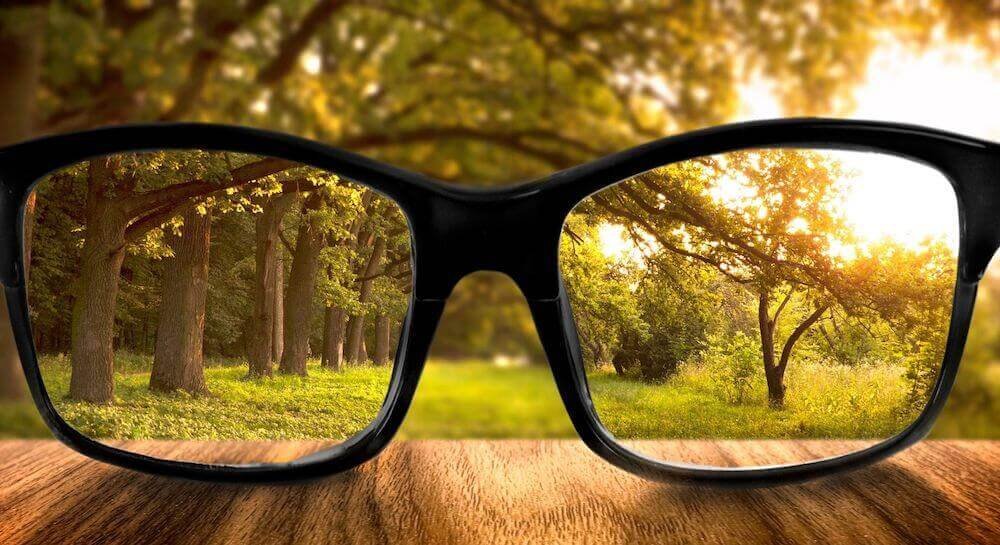
The next step in preventing falls is to ensure your vision and hearing are the best they can be.
I'm sure it is no surprise that low vision increases falls risk. A little more surprising, however, is that hearing loss can increase falls risk also.
Both vision and hearing decline as we age. However, the good news is that there are ways to improve your sight and hearing which will decrease your falls risk.
VISION LOSS AND FALLS IN SENIORS
There are many causes of low vision as we age; the good news is, in most cases, the causes are treatable. They can be fixed!
A significant cause of vision-related falls is cataracts which, after surgery, can improve vision and decrease falls risk.
Another cause of vision-related falls is wearing bifocal and multifocal/progressive glasses (glasses with different focal lengths in the same pair). Falls due to this issue are even seen in people who have worn these glasses for a long time.
However, this does NOT mean you need to immediately obtain single-vision glasses and throw away your multifocal ones!
Although the data is clear on this issue, the solution is not so straightforward and is dependent on several factors, e.g., your general health and mobility; if you have fallen in the last year; how often and where you use your glasses, particularly outside the home and if you have any problems with steps or stairs [1]. Based on these factors, you and your optometrist may decide that having an additional pair of single-vision glasses for use outside the home and/or on stairs may reduce your falls risk [2].
Bifocals, multifocal and reading glasses can impair the ability to see the distance between objects (aka depth perception) and the ability to distinguish two similarly coloured objects between each other or their environment (aka our contrast sensitivity).
When depth perception decreases, it is more difficult to know how far away items are. This makes it hard to navigate surroundings and increases the likelihood of bumping into objects, such as furniture or walls.
Additionally, depth perception allows us to determine how fast an object moves toward us. Think about how important this is when crossing a road or driving a car.
Decreased contrast sensitivity, on the other hand, makes it difficult to distinguish between objects. For example - trying to see a dark object in a dimly lit room or when stepping down from a curb/pavement when the pavement is the same, i.e., the contrast is poor between the curb and the street.
Or walking down a whole flight of the same coloured steps - with a decreased ability to differentiate the contrast of the steps, the stairs may start blurring together.
These three common tasks become difficult with a decline in contrast sensitivity.
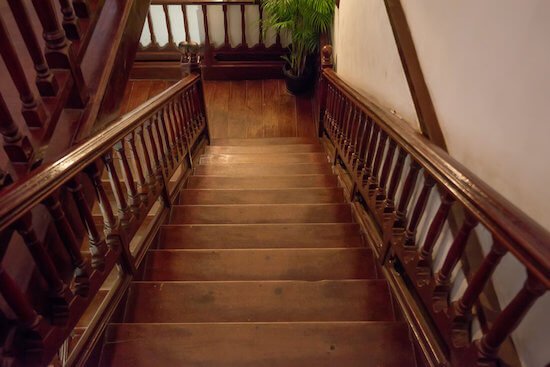
FALLS HAZARD: With poor contrast sensitivity, stairs like this become hard to differentiate.

SAFER STAIRS: Easier to differentiate, and with grip to help avoid slips.
MORE TIPS FOR DECREASING FALLS RISK & VISION
Get a yearly check-up by an optometrist to make sure there you don’t have any underlying eye issues.
As said earlier, the majority of low vision issues are treatable. For more on healthy eyes, make sure to read my article: HOW TO CARE FOR YOUR EYES AFTER 60.
Keep in mind that when you receive new glasses or a change in your lens prescription, your risk of falls increases temporarily.
Objects may now appear smaller and further away than they are, or it could be the opposite effect and objects now look bigger and closer than they are. This magnification can change the way you walk and can make it difficult on stairs.
If you have been given a new pair of glasses, or have new lenses, be aware that it may take some time to get used to them. It’s a good idea to wear them in a familiar place first, i.e., your home, before going into unfamiliar territory. Be patient and allow your eyes to adapt.
If you wear bifocal or multifocal glasses and spend a lot of time in outdoor activities, or in unfamiliar settings or have difficulty with steps/stairs it’s a good idea to speak to your optometrist about supplying a pair of single-vision glasses [3]. This is an effective way to help prevent falls.
To further optimise your vision with the help of an optometrist, there are certain alterations you can make around the house to help you see hazards and decrease your falls risk. We will cover this further in step 5 (Making Your House and Yard Falls Proof).
VISION LOSS AND FALLS SUMMARY
The majority of the causes of age-related low vision are treatable.
Aim to see an optometrist at least yearly.
Bifocal, multifocal and reading glasses increase falls risk.
Single vision lenses are an effective way to help prevent falls outdoors, on steps or stairs and in unfamiliar environments.
New glasses take a while to get used to. Wear your new glasses in familiar places first.
Ensure adequate lighting in low contrast areas such as stairs.
HEARING LOSS AND FALLS IN SENIORS

Many Health Professionals dismiss poor hearing for playing a part in falls, and 95% of the material for preventing falls neglects hearing loss as a point of focus.
However, hearing loss can play a role in putting you at risk of a fall.
In a 2012 study, researchers determined that even a small loss in hearing (from no hearing loss to mild hearing loss) can TRIPLE the risk of having an accidental fall. This risk increases with more significant hearing loss, making hearing loss a risk factor that must not be ignored.
When hearing is lost, a whole lot more energy is used up dealing with the added stress hearing loss places on someone. Fatigue sets in much sooner, making it more challenging to maintain balance and the adequate strength required to respond if needed.
Furthermore, with decreased hearing, not having the full ability to stay aware also increases the risk of falling.
HOW TO DECREASE FALLS RISK FROM HEARING LOSS
Improving your hearing can help you prevent falls.
The first step is to get your hearing checked regularly (every two years) by an audiologist.
If diagnosed with hearing loss, hearing aids most likely work to prevent falls in addition to other benefits, e.g., improved communication, health and quality of life [4, 5].
If you have hearing aids, make sure you wear them and make sure you regularly clean and service them. If you have difficulties doing this, get a friend or family member to help you.
HEARING LOSS & FALLS SUMMARY
Even a slight loss in hearing can dramatically increase the risk of falls.
Hearing loss places extra physical and mental stress on you and decreases your ability to respond to your environment.
Wearing hearing aids can improve balance and decrease falls risk.
Make sure to regularly clean and service hearing aids
STEP 4: The Best Shoes to Prevent Falls and How To Take Care Of Your Feet
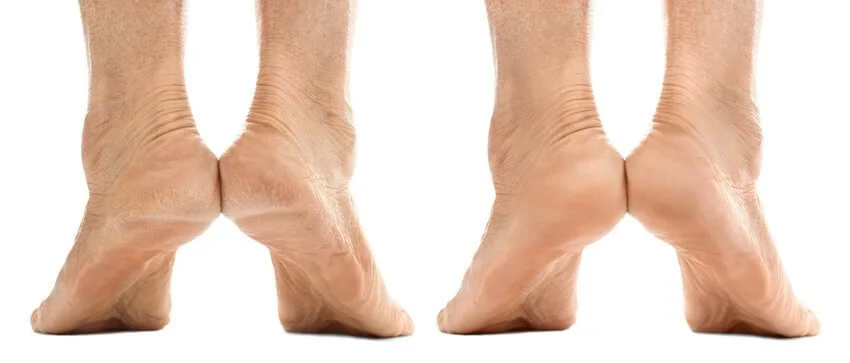
Do you ever take the time to look after your feet?
Or, have you ever stopped to think if your shoes could be putting you at risk of having a fall?
It’s a good idea to understand how the shoes you are wearing (and the health of your feet) could put you at risk of falling and how to provide your feet with some care to help prevent falls.
SHOES AND FALLS RISK IN SENIORS
The quality of your shoes and particular shoes can play a big part in increasing falls risk.
The characteristics of a shoe which could be putting you are risk of falling are:
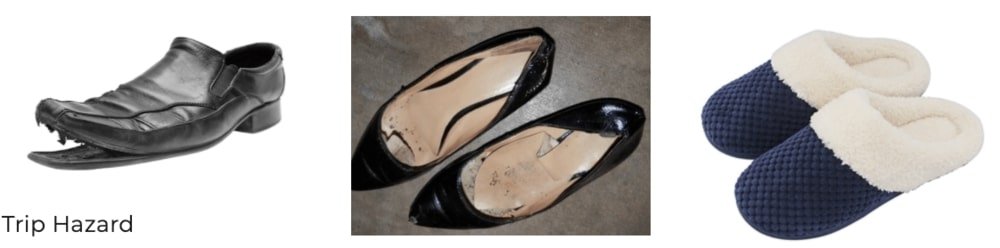
WORN, LOOSE OR BACKLESS SHOES/SLIPPERS
Worn or shoes stretched out of shape become a slip and trip hazard. When they become like this, you should replace them.
If your shoes are too big for your feet, or you spend a lot of time in your slippers or backless shoes, these shoes can slip off your feet, becoming a trip hazard and increasing your risk of falls.
THONGS (AKA FLIP FLOPS OR JANDALS)
In Australia, we call footwear like the below picture thongs.
In other parts of the world, they are called flip flops (USA) or jandals (NZ). And I am sure they have different names in different parts of the world.
If you're anything like me and love wearing thongs (the type that goes on your feet) during summer, you must know that these can be difficult to keep on your feet at times and can trip you up.
Safer alternatives are sandals with a velcro back strap, or buckle, which will allow you to move around freely and keep them on your feet.

Flip Flops (thongs) - a trip hazard

Safer alternative to flip flops (with fasteners)
SHOES WITH SOFT OR WORN SOLES
Shoes with worn or soft soles can cause slips, especially in wet weather.
If the soles of your shoes are worn thin or soft, get them re-soled or purchase a new pair.
HIGH HEELS OR PLATFORM SHOES
When wearing high-heeled shoes, there is less contact with the shoe to the ground. This makes you less stable and puts you at a higher risk of falling.
Some women find it hard to let go of wearing high-heeled shoes, but these shoes are not suitable for your feet, and by wearing safer shoes, you can decrease your falls risk.

Worn soles can cause slips

A falls risk, for obvious reasons
Replacing potentially unsafe shoes with safer shoes will go a long way in keeping yourself from falling.
When purchasing a new pair of shoes, it's a good idea to buy a pair of shoes that protect you from having a fall. So let's now look at what makes up a safe shoe to help you prevent falls.
What Makes a Safe Shoe
Firm heel cup - to improve stability while walking.
Laces, buckles or Velcro fastening - Hold the shoes to your feet, avoiding any tripping hazards. Velcro or clips are best for those with decreased hand or finger dexterity.
Firm but thin soles will give your brain great feedback when walking as it allows your feet to 'read' the underlying surface.
Textured sole/tread to prevent slipping.
Correct length to allow normal foot function.
Low and wide heel to increase contact with the ground.
Bevelled heel to prevent slipping.
Wide toe box - If you suffer from bunions or pain in the ball of your feet, a wider toe box (the section where your toes sit) can give your toes the room they need. This will provide greater comfort and can decrease falls risk.
Now I know these shoes won't always be as pleasant on the eye as other shoes, but they'll go a long way to keeping you on your feet.
OTHER FOOT-RELATED FACTORS THAT CAN CONTRIBUTE TO A FALL
Besides your footwear, other factors related to your feet could put you at risk of falling.
BARE FEET AND SOCKS
Bare feet and wearing socks make you more prone to slipping than with shoes on.
As we age, the grips on our feet can decrease.
If you’re at risk of falling, wear footwear with appropriate tread to help prevent slips
If you want to wear socks, grab some non-skid socks, which will help stop you from slipping.
ENSURE APPROPRIATE FOOTWEAR
Get into the habit of wearing appropriate and safe footwear for the type of activity you are doing.
CERTAIN FOOT CONDITIONS
Pain, decreased sensation, claw toes, bunions and ingrown toenails can increase your risk of falling by changing your gait and affecting your balance.
If you have any of the above issues, see your Doctor or Podiatrist, who can help eliminate and manage these foot conditions. A podiatrist can also fit you with appropriate shoes.
SIMPLE FOOT CARE ROUTINE FOR SENIORS
In addition to ensuring proper footwear and taking care of any conditions of your feet, you can improve the health of your feet to decrease your falls risk by undertaking simple foot care each week.
Here are some ways to help take care of your feet.
Inspect your feet and nails every week.
Cut your toenails regularly, or book in with a Podiatrist who can do this for you. (If you have a nail condition, a Podiatrist may be required to cut your nails).
Wash your feet using a mild soap daily.
Always dry your feet thoroughly after showering or sweating to prevent infection.
Apply a good quality moisturiser to keep the skin on your feet healthy and prevent any dry, itchy or cracked feet.
Wear appropriately fitted shoes with the features of a safe shoe (see diagram above).
Wear good quality, breathable socks.
Book and attend regular Podiatrist visits, if required.
SHOES, FOOT CARE AND FALLS PREVENTION SUMMARY
Particular shoes can put you at risk of falling.
To decrease your risk of falling, wear shoes that can reduce your risk and keep your feet healthy.
Walking without shoes, wearing socks without grip, and conditions of the feet can increase your risk of having a fall.
Following a simple foot care routine, like the one above, can decrease your risk of falling and keep your feet healthy and looking good.
Regular appointments with a Podiatrist can help keep your feet in good condition, and they can advise on appropriate footwear for you.
STEP 5: Simple Changes To Make In and Around Your Home to Prevent Falls

PREVENTING FALLS IN THE HOUSE AND YARD
It's now time we focus on making the environment you spend most of your time safer.
We will now identify hazards in and around your house that could put you at risk of falling.
We will then get into ways to eliminate the risk, decreasing your chances of having a fall.
Some of these tasks listed below will be too difficult to undertake on your own, so help will be required. Additionally, your doctor may be able to organise an Occupational Therapist to assess your home and help make the appropriate changes to decrease your falls risk, so speak to your doctor about this.
FALLS HAZARDS IN THE HOME
Before we go into specific risk factors common around homes and backyards, I want you to remember an acronym to help you be aware of environmental risk factors that could put you at risk of a fall.
That is, F.L.A.T.S.

FEET – Your feet could be putting you at risk of a fall. Wear appropriate footwear (see step 4) to ensure you don't fall.
If you like to wear socks, make sure they are non-slip socks and know that wearing no shoes on certain surfaces could increase your risk.
LIGHTS – Take extra care in low light areas and remember to put on your glasses, especially at night. (see step 3).
ACTIVITIES (RISKY ACTIVITIES) – Rather than performing behaviours that could be risky – ask for help (see step 1).
Specific assistive devices can help you with certain tasks while decreasing fall risk. (Step 9).
TRIPS – Remove clutter and keep your house clear of trip hazards such as toys, rugs and cords.
If you have one or more pets, always be aware of their whereabouts (discussed below).
SLIPS - Consider using non-slip products to remove risk in slippery areas. Mop up any spills quickly (the main areas of concern are your bathroom and kitchen).
We'll now get into the specific fixes you can make around the house to decrease your falls risk.
PREVENTING FALLS IN THE HOUSE
KEEP WALKWAYS TIDY AND FREE FROM TRIP/SLIP HAZARDS
Check that all carpets or rugs are fixed firmly to the floor so they won’t become a trip hazard. Don’t use throw rugs or small area rugs as they are a known trip hazard.
Remove or fasten loose electrical and telephone cords. Keep them away from walking paths. Use cable covers to cover loose cables that cannot be removed or secured (see next section).
Remove clutter -Always tidy up toys, paper, books, clothes, shoes etc., keeping them out of walking paths.
Your animal could be a potential trip hazard. Always keep a lookout for your pets and stay aware of their whereabouts when walking.
Put non-slip strips on tile and wooden floors. These can be bought at your local hardware store.
Arrange your furniture, especially low coffee tables and other items, so they are not a potential trip hazard.
Keep off newly washed floors. Allow them to dry.
Wipe up spills as soon as they occur.
If there is broken glass, clean it up immediately.
ELIMINATE THE NEED TO UNDERTAKE RISKY ACTIVITIES/TASKS
Keep those items you often use in easy-to-reach places or cupboards.
Use a “reach stick” to get items in hard-to-reach places.
Never stand on a chair, table or step ladder to get those items in hard-to-reach areas.
If you need to use a stool to step on, make sure it is sturdy with a handrail (see next section).
If you need to perform a task that could be putting you at risk of a fall, ensure you have someone to assist for safety reasons. Remember: it’s ok to ask for help (see step 1).
Ensure that your couch or your chairs are not bucket-style, making it difficult for you to get in and out. Your couch and chairs should be the right height for you to easily get in and out of.
As mentioned earlier, one of the most common places to fall is next to the bed when needing to move around at night (usually having to go to the bathroom in the middle of the night). Have light switches/lamps, telephone, your seeing glasses and mobility aid (if required) close to your bed to decrease your risk of falling in this situation.
ENSURE YOU CAN SEE WELL AT ALL TIMES
Avoid walking in the dark. Ensure there is adequate lighting in all places throughout your house and backyard.
Use night lights and consider motion-sensor lights.
Remember to wear your glasses at all times, especially at night. Put them on if you wake after sleeping and need to get out of bed.
Remember to use the lights and ensure the switches are in easy-to-reach places.
If lighting is poor, take extra care.
Do your best to avoid walking in the dark.
WEAR APPROPRIATE FOOTWEAR
See previous step (step 4) above.
PREVENTING FALLS IN THE BATHROOM (& KITCHEN)
ELIMINATE SLIP HAZARDS
Wipe up spills quickly.
Place non-slip mats in areas that are commonly wet. Consider using a non-slip mat or strips in the shower.
If using rugs on tiles, consider non-slip underlay or non-slip rugs.
Use FIRMLY FIXED grab rails on the inside of your shower, bath and near toilets. DO NOT use suction cup grab rails; these can be dangerous. Over time they may be unable to withstand the force placed upon them and become unstuck.
Keep the thermostat of your water heater set at 50 degrees Celsius (120 Fahrenheit) or lower to avoid scalding your skin and a frenzied reaction to the heat.
Place a night light in your bathroom.
If you have difficulty getting off the toilet, use a toilet seat riser to make it easier to get on and off.
PREVENTING FALLS ON STAIRWAYS
MAKING CHANGES TO YOUR STAIRWAYS TO PREVENT FALLS
Place handrails on at least one side of the stairs, preferably both sides. Handrails should extend the whole length of the staircase and beyond the first and last steps.
Ensure handrails on the stairs are tightly fastened.
Ensure stairs are free of clutter or trip hazards at all times.
Ensure adequate lighting in stairways. Improve the lighting on your stairs.
If you have difficulty distinguishing your steps from one another, even with good lighting, place brightly coloured tape on the steps for improved contrast.
Hold the handrails when going up and down stairs.
When carrying objects while moving up and down stairs, hold on to the object with one hand and use the handrail with the other.
Don’t let what you are carrying block your view.
Improve your leg strength and muscular endurance if you have difficulty walking stairs.
PREVENTING FALLS IN YOUR YARD
Falls occur more frequently outdoors than indoors (1).
Being outdoors is something everyone should be enjoying; however, the outdoors presents potential hazards.
There are trip hazards, possible slip hazards, different terrains, uneven footpaths, gravel, and possible holes (some hidden from view). There are curbs to step up, cars, bikes, streets to cross, different-sized steps, and kids on scooters or balls being kicked about. These are some of the many potential fall hazards!
It's always important to be alert when outside and take extra care.
HOW TO PREVENT FALLS IN THE YARD
ELIMINATE SLIP HAZARDS
Keep garden areas and backyard free from moss; it is slippery.
If certain areas of your yard are known to get wet and slippery (for example, your pool area), consider non-slip sealers for the tiles or place non-slip strips or mats around the pool area.
ELIMINATE TRIP HAZARDS
Look out for and eliminate any loose pavements, pots, toys or other trip hazards (such as exposed tree roots or backyard items).
TAKE CARE WHEN ON STAIRS
Examine your outdoor stairs and decide if any of the tips for altering indoor stairs (mentioned above) are required to prevent falls.
USE THE RIGHT ASSISTIVE DEVICES
Sometimes a walking aid may not be required when indoors, but when outside, due to the inconsistencies and unfamiliarity, one may be required.
Take a walker or walking stick (if required) to increase your confidence, help with balance, improve your walking and decrease your falls risk when outside.
WEAR APPROPRIATE FOOTWEAR WHEN OUTSIDE
See previous step (step 4) above.
STEP 6: Be Aware of Health Conditions and Medications that put you at risk of falls

HEALTH CONDITIONS AND FALLS PREVENTION
The next step in preventing falls is knowing how specific health ailments, medical conditions, and medications can put you at risk of falling.
By being informed and understanding the risks, you can take preventive measures to ensure you prevent falling the best you can.
HEALTH AILMENTS & MEDICAL CONDITIONS
Certain medical conditions can increase falls risk.
These medical conditions include Parkinson's disease, dementia, arthritis, osteoporosis, diabetes (impacting the sensation in feet), postural hypotension (drop in blood pressure when standing resulting in dizziness and/or fainting unexpectedly), foot problems, incontinence, vision and hearing loss.
Additionally, if you feel under the weather with a cold or flu (or other viruses) or are in pain, you are at a higher risk of falling.
In this section, I will be covering the most common:
COLDS & FLU AND FALLS
INFECTION AND FALLS
PAIN AND FALLS
DIZZINESS/VERTIGO/LIGHTHEADEDNESS/POSTURAL HYPOTENSION AND FALLS
INCONTINENCE & FREQUENT URINATION, AND FALLS
MEDICATIONS AND FALLS
COLD & FLU AND FALLS
When we get sick or are feeling under the weather, we are usually much weaker, our balance may be off, our muscles ache, and we may also experience dizziness.
This makes it not surprising that the incidence of falling is increased when sick with a cold or the flu.
When we are sick, our body is sending warning signals, letting us know it's not well and needs rest and recuperation to get back to good health.
It's the most crucial time to give our body the care it requires to ensure we get back to good health as soon as possible.
By this, I mean eating well, staying hydrated, getting sunlight, staying stress-free and resting up!
Besides small amounts of gentle walking and stretching, which will make you feel better; everything else can wait!
When you have a cold or flu, this isn't the time to be pushing yourself to continue with all the exercise and physical activity you've been doing or get into some heavy chores. Save this for when feeling better.
Understand that your falls risk increases when sick with the cold and flu.
Take caution, be patient, rest up and once feeling better, you can get back into your usual activities like you were once doing when not feeling under the weather.
INFECTION AND FALLS
Another health ailment that can hit unexpectedly and put us at risk of falling is infections.
The effect an infection can have on us as we get older usually comes as quite a surprise.
We think a minor infection, although important to get treated, is not such a big deal. We can just go to the doctor and take some antibiotics, which will take care of it.
However, among other symptoms, infections can lower blood pressure and cause dizziness and lightheadedness, all of which increase the risk of a fall.
This goes for ALL people. Although infections increase as we age and in those with dementia, these symptoms also occur in people under 65 [1].
The most common type of infection that leads to a fall is a urinary tract infection (UTI) [1]. This infection is most common in women, and susceptibility increases with age.
If you're feeling under the weather, it's always best to see your doctor and get checked for any infection. Know that if you do have an infection, you're at a higher risk of having a fall, so take extra care until the infection has subsided.
Healthy habits, exercising and eating well decrease the chances of infection. Keeping your pelvic floor muscles strong will also aid in helping to reduce recurrent UTI infections.
PAIN AND FALLS
Being in pain also increases your risk of having a fall. Pain can either be short-term from a recent injury or surgery (aka acute pain).
Or pain can also be long-term. Pain that has been with us for some time (aka chronic pain). Common chronic conditions that can cause pain over the long term could be osteoarthritis or osteoporosis.
When we are in pain, our bodies don't work like they are supposed to, and our bodies compensate in certain ways to avoid aggravating the painful areas.
ACUTE PAIN
When dealing with an acute episode of pain, it is another instance of your body trying to protect the area. What's required is resting the area, utilising any pain-management techniques and providing adequate nutrition to allow the body's tissues to heal.
As per your doctor, analgesia may be required, at times, to manage pain. If taking medication for pain, know that certain analgesia medications, especially the stronger ones, may have side effects which put you at an even higher risk of falling.
Speak to your doctor about this and, if taking medications, have greater awareness and take extra care during this time.
CHRONIC PAIN
On the other hand, for chronic pain or pain that has been with you for some time, REST is not the answer and a different holistic approach is required to get your pain under control. It can be done! Don't believe anyone who says you have to just put up with the pain; there is always something that can be done to help you with your pain symptoms.
For more about pain and to help you overcome it, read the four-part pain series here.
PAIN IS NOT AN INEVITABLE PART OF AGING. YOU DO NOT HAVE TO BE IN PAIN
By getting your pain under control, your chances of having a fall will decrease.
DIZZINESS, VERTIGO & LIGHTHEADEDNESs AND FALLS
Vertigo is a type of dizziness, which is the feeling that your head or the room is spinning, or lightheadedness, which is the feeling that you are about to faint. Vertigo has a rotational element. Lightheadedness has no rotational element.
As we age, our body systems lose effectiveness. This leads to disrupted sensation, balance and visual inputs to our Vestibular System (system of the inner ear). This system is responsible for helping us stay standing.
When this system is not working as it should, dizziness or vertigo can develop and the risk of falling increases.
Although many different medical conditions can cause dizziness, the leading cause is disorders of the inner ear, with Benign Paroxysmal Positional Vertigo (BPPV) being the most common cause. The good news is this condition is treatable [2].
Additionally, the effects of anxiety and depression and making changes in your life (e.g., taking new medications or wearing new glasses) may lead to dizziness, and further increase falls risk [3].
As mentioned earlier, this is not normal, and the underlying cause of the dizziness must be found and eliminated. Speak to your doctor, so the underlying issues are determined and treated.
By working with your doctor, or other specialists, to help treat dizziness, your risk of falling will decrease.
POSTURAL HYPOTENSION AND FALLS
Postural hypotension is caused by a drop in blood pressure when moving from lying down or sitting to standing. Due to this drop in blood pressure, dizziness or even fainting can occur, putting one at risk of falling.
If you have experienced these symptoms before, see your doctor immediately to get to the cause of this low blood pressure.
Always take your time when standing from a seated or a lying position. Never rush straight into walking.
Stand up. Take a few deep breaths, and assess how you feel before slowly walking.
For any cases of dizziness, you may require a mobility aid for safety when getting about.
INCONTINENCE AND FREQUENT URINATION
Problems with bowel and bladder control can impact the ability to stay active, healthy and independent.
Urinary incontinence (or when the bladder lets go) is a falls risk, and the following factors can cause this:
INCREASED RUSH COMBINED WITH DECREASED PHYSICAL ABILITIES
With decreased physical abilities such as poor balance, poor vision (especially at night), decreased lower limb strength and/or poor walking ability, reaching the toilet in time when needed may be challenging. Reduced physical abilities combined with the need to rush to the bathroom is a fall waiting to happen.
Additionally, with age, hand and finger function may decrease. This makes tasks, such as removing clothing for the toilet, more difficult; increasing the need to rush to get to the bathroom in time and the high possibility of making risky moves in this frantic movement.
On the other hand, you don't want to get caught in the cycle of doing less activity and being less social to avoid an embarrassing situation. Doing this leads to further loss of physical abilities and additional problems.
MEDICATIONS FOR INCONTINENCE
Some medications used to treat incontinence can cause postural hypotension, a factor that can cause a fall.
NEEDING TO GO TO THE TOILET AT NIGHT
Waking at night to go to the toilet puts you at higher risk due to the darkness, and it can also result in inadequate sleep, which is also associated with increased fall risk.
STRATEGIES TO REDUCE FALLS RISK FROM INCONTINENCE, FREQUENT URINATION & FALLS
Familiarise yourself with the strategies above and start actioning them.
Strengthen your pelvic floor muscles.
If incontinence is becoming an issue for you, speak to a doctor, continence advisor or specialist.
Improve your physical abilities (walking, strength and balance).
Improve your hand and finger function.
Do not avoid life. Keep socialising and continue with your normal daily activities.
Wear clothes that are easy to remove or get undone.
Use pads to avoid any embarrassing situations.
Keep the pathway to the toilet obstacle-free and leave a nightlight in the bedroom/bathroom at night.
If you wear spectacles, make sure you put them on at night when waking to go to the bathroom.
Take your time when going from lying/sitting to standing. Take deep breaths, and get your balance before moving.
For more on the pelvic floor, including pelvic floor dysfunction, managing incontinence, and pelvic floor strengthening exercises, read THE OVER 60s GUIDE TO THE PELVIC FLOOR & HOW TO STRENGTHEN THE PELVIC FLOOR.
MEDICATION AND FALLS
Another area regarding falls risk that needs to be covered is the medications taken.
There are two factors regarding medications and falls risk that require caution.
The first and the most risk factor is too high an initial dose when starting a new medication. When this is the case, the side effects could impair your physical abilities and give other unwanted symptoms increasing your risk of falling.
The second is the number of medications you take. Even taking just one medication may increase your risk of falling. This risk increases with each medication you take, and taking more than four medications raises your risk significantly [4].
REDUCING FALLS RISK & MEDICATIONS
The risks of falls can easily be minimised by being very careful when starting a new medication and taking extra care until you see what effect the medication will have on you.
If you take four or more medications or any medications for sleeping issues, depression or anxiety, speak to your doctor. Discuss having your medication reviewed and gradually reduced/discontinued to non–pharmacological alternatives if this is possible.
Natural/non-pharmacological alternatives to medications for sleeping issues, depression and anxiety include:
Getting more exercise/physical activity (step 3).
Getting your sleep habits in order (step 8).
More time spent on relaxation and mindfulness. Find what works for you to help you relax (step 9).
Getting support and reassurance – speak to family members and friends more often.
HEALTH AILMENTS, MEDICATION AND FALLS RISK SUMMARY
Specific health ailments and medical conditions, both acute and chronic, can put you at risk of falling.
Proper caution should be taken when unwell, and strategies to minimise the effects of each health ailment or medical condition should be undertaken.
Your doctor should discover the root cause of your health ailments so they can be treated sufficiently and your falls risk decreased.
More than one medication and certain medications can increase your falls risk.
If you take four or more medications or any medications for sleeping issues, depression or anxiety, speak to your doctor. Discuss having your medication reviewed and gradually reduced/discontinued to non–pharmacological alternatives if this is possible.
STEP 7: DECREASE YOUR FALLS RISK WITH GOOD NUTRITION

(Your SIMPLE GUIDE TO NUTRITION, CALCIUM, VITAMIN D, ALCOHOL AND THE EFFECT OF NUTRITION on FALLS)
It's important now we discuss nutrition and how we eat can improve our health and can also play a role in preventing falls.
We know that what we eat is very important for general health. But these same effects that good nutrition has on our health also decrease our chances of having a fall.
Healthy eating keeps our muscles strong, our minds alert and also gives our bones the nutrients they need to stay strong.
When we increase our physical activity and exercise, our metabolic demands increase. What this means is we should ensure we are getting adequate nutrition.
We want the nutrients required to keep us healthy and the energy to fuel our body, undertake daily activities and help make us stronger and healthier versions of ourselves.
Nutrition is a large and complex topic. Learning what's required to improve your life can take some time, but when you do and put what you have learnt into action, you will see the results.
I have written some simple-to-read articles on nutrition over the years and given guidelines to help you keep healthy and help decrease falls.
NUTRITION & PREVENTING FALLS
To get started with a basic understanding of nutrition, make sure to read my article:
Once done, also make sure to read my other articles:
HEALTHY EATING FOR SENIORS: HOW TO BEGIN EATING HEALTHY - THE FIRST STEP [PART 1]
HEALTHY EATING FOR SENIORS: HOW TO BEGIN EATING HEALTHY - THE FIRST STEP [PART 2]
And check out the Nutrition/Healthy Eating section on the More Life Health website.
There are also some vitamins and minerals (micronutrients) that aid in keeping your bones strong and can help with falls prevention.
CALCIUM AND FALLS PREVENTION
One of those is calcium.
Calcium is important in preventing falls, keeping your muscles strong, helping you move more efficiently and maintaining your bone strength.
For more on calcium, make sure to read my article on this important mineral here - CALCIUM IN OLDER ADULTS: HOW MUCH CALCIUM SHOULD YOU GET?
Another essential nutrient in preventing falls and keeping us strong and balancing well is vitamin D.
VITAMIN D AND FALLS PREVENTION
We make vitamin D when our skin is exposed to the sun. As we age, we tend to spend less time in the sun, especially in the winter months, making vitamin D deficiencies prevalent in seniors.
Vitamin D is essential for bone strength, muscle function, and preventing falls.
It assists in preventing falls by improving postural balance, improving movement and aiding in propelling and helping with navigation abilities during walking [1].
Aim to get 20 minutes of direct sunlight daily, avoiding the hottest part of the day. Make sure not to overdo it and burn your skin.
By getting a healthy amount of sun, you will keep your vitamin D levels topped up, helping to keep your muscles and bones strong, improve your balance and decrease your falls risk.
Some foods do also contain vitamin D in small amounts. These foods include oily fish (tuna, salmon, herring and mackerel), egg yolks, liver and some fortified products. If you live in a part of the world where it is difficult to get sun during winter, do your best to consume more foods containing vitamin D.
A common question I am often asked is: Should I supplement with Vitamin D plus calcium?
It has been shown that Vitamin D plus calcium supplements reduce fracture incidence, including hip fracture, following a fall [1]. I recommend getting your vitamins and minerals from real food, but supplements can help if your diet lacks these minerals.
Suppose you feel your diet may lack good nutrition and/or you may not be getting adequate vitamins and minerals (including vitamin D and calcium). In that case, I recommend you see a qualified nutritionist or your doctor for assistance.
I also cover more about calcium and magnesium and their role in stronger bones in PART 2 - THE COMPLETE GUIDE TO STRONG BONES OVER 60.
ALCOHOL AND FALLS PREVENTION

Finally, regarding what we put into our bodies and falls, I want to add some information on alcohol and its effect on falling.
Most of us enjoy a drink or two (maybe more), and it would be common sense to think that increased alcohol would put us at risk of falling.
And this is true!
However, there is evidence that light alcohol consumption may decrease your risk of falling.
I’ll explain the reasons why this could be:
Light alcohol consumption can increase confidence, help relieve stress, lift mood and is usually done in the company of others. All these factors have been shown to DECREASE falls risk.
Increased confidence in doing tasks usually equates to improved performance; thus, falls risk will decrease.
So there is little reason why you have to stop enjoying a few drinks to prevent falls.
Overconsumption of alcohol, however, will put you at an increased risk of falling. Excess alcohol consumption disturbs balance and affects judgement, and when under the influence, you may put yourself in risky situations that could lead to a fall.
These are the times that we need to take caution.
Excess consumption of alcohol is not conducive to good health or your fall risk. It’s best to limit your alcohol consumption, but if you enjoy drinking socially, there may be times you overdo it, so extra caution is required.
If you feel your drinking is out of control and something you’d like to get help with, you should speak to a Doctor or a qualified Professional.
But know that light alcohol consumption is ok and will not put you at higher risk of falls.
Enjoy yourself. Enjoy Life!
NUTRITION AND FALLS SUMMARY
What we eat is essential for good health, preventing falls and decreasing the risks of serious injury if you fall.
Eat a diet with adequate calories comprised of sufficient protein, carbohydrates and fats and high in vitamins and minerals. For more on nutrition, CLICK HERE.
Most of the population is not getting enough calcium and vitamin D, nutrients vital for health and bone strength.
Aim to get 20 minutes of sun exposure avoiding the hottest part of the day for adequate vitamin D.
Vitamin D and calcium supplementation have been shown to reduce fracture incidence.
Light alcohol consumption has been shown to not increase falls risk.
Heavy alcohol consumption can impair judgement and balance and increase the likelihood of risky behaviours, which could lead to a fall.
STEP 8: GET A GOOD NIGHT'S SLEEP NATURALLY, EVERY NIGHT

It's well known that when we are not getting enough sleep, we are not performing at our best. We are usually weaker, less alert, fatigued, and our mood is down.
Furthermore, lack of sleep can increase your risk of falling [1, 2].
By making sleep a priority and getting a good night's sleep each and every night, you are decreasing your falls risk, and your general health and wellbeing will also improve.
Getting a good night's sleep each and every night is one of the best things you can do to improve your health and will go a long way in decreasing your falls risk.
For tips on how to get a good night's sleep, read my article - SLEEP IS GREAT MEDICINE: HOW TO GET A GOOD NIGHT'S SLEEP OVER 60.
SLEEP AND FALLS IN SENIORS SUMMARY
There is no change in the amount of sleep needed as we get older. The amount of sleep required remains the same for all ages.
You can take many steps to improve your sleep naturally (i.e., enhancing your sleep environment, getting active, getting the right light, getting social, eating healthy, and reducing stress).
Speak to your doctor if you are having difficulty sleeping. If you are currently taking sleeping medications, let your doctor know you'd like to try a natural alternative.
STEP 9: SLOW DOWN AND BE MINDFUL TO PREVENT FALLS

Are there times when you are continually making silly mistakes or doing clumsy things? Maybe it's bumping into things, stubbing your toe or hurting yourself somehow? Dropping items or frequently losing something? Or leaving behind items at certain places?
Do you find yourself overthinking things? Do you find that your head can be kind of chaotic at times?
Perhaps you can't stop worrying?
If you're stressed with a busy mind, if you are not present, your mind is elsewhere. This is when mistakes or accidents usually happen. This is the time when you are most likely to have a fall.
Furthermore, stress directly affects balance. When you are stressed, balance and other physical abilities may not be as good as they could be. Something I see commonly in my patients.
With decreased physical capabilities - your falls risk will increase!
Additionally, people experience dizzy symptoms during periods of stress.
With a stressed, chaotic mind, life is just much harder.
If your mind is busy, you'll get many benefits from practising mindfulness daily or taking time out of your day to calm the mind.
When we are calmer, there is less stress, our physical capabilities improve, our balance is better, we are healthier, and everything feels easier.
Calm the mind, and you WILL become more aware of your body and what's around you. YOU WILL DECREASE YOUR FALLS RISK.
DECREASING STRESS AND RELAXATION THROUGH MEDITATION
It is important to improve your health and decrease your falls risk, that you are doing what you can to reduce stress.
Meditation is one of the best ways to decrease stress, calm the mind, and be more present.
Meditation doesn't have to be a very disciplined, monk-like practice.
Think of meditation as spending a set amount of time, with intention, on doing something good for yourself to help reduce stress. That's it! It's that simple.
I have previously written an article on meditation, including a simple meditation technique.
If you're interested in a simple meditation technique, you can use to decrease stress, calm your mind, get healthier and reduce your fall risk, CLICK HERE - DECREASING STRESS AND RELAXATION MADE EASY.
MINDFULNESS AND FALLS PREVENTION SUMMARY
Stress and rushing can increase falls risk.
Mindfulness/meditation can help decrease stress, make you more alert, aware, mindful, and present, improve physical capabilities, and reduce your risk of falls.
Don't neglect the mind-body connection.
STEP 10: Walking Aids & Assistive Devices - How they help and how they may put you at risk of falling

We should always strive to be in our best physical condition and health by being active as much as possible and exercising, regardless of age.
Sometimes, however, for various reasons, there may come a time when a little assistance is required to help keep you steady, active and living your life safe from falling.
That assistance might be the use of a walking aid. I have covered mobility aids, including the different types, how to use one and how to fit them correctly - CLICK HERE FOR YOUR QUICK GUIDE TO WALKING AIDS.
Furthermore, incorrect use of a mobility aid or not using one when you need one is also a common cause of falls.
There are some steps you can follow to ensure you are using your mobility aid correctly and will decrease your chances of having a fall.
Here are some tips to follow when using a 4-wheeled walker to prevent any issues:

Ensure your walking aid is suitable for your abilities. Don't think any walking aid will be fine. You require the one most suited to you.
Ensure the walking aid is fit to you correctly.
When getting used to your walking aid, have someone with you until you can walk safely on your own. This will help build confidence.
Ensure you wear appropriate footwear always when using your walking aid
Clothing – ensure clothes cannot come entwined with the wheels.
Tripping – Not only tripping over the walking aid itself but also clutter and hazards in the house.
Repair walking aids regularly. Have it serviced once a year; it's inexpensive and a simple tip. Chat to your local mobility needs store to have this organised.
Replace worn wheels, tips or glide skis. It's always good to have extra parts in case something fails. The most common issues are worn wheels, skis or handle grips, frayed brake cords, and brakes that are not working.
Tie down or remove any items sticking out of the walking aid that could get caught on objects when walking, e.g., items in your basket or brake cords that stick out.
Ensure you are walking with your walking aid correctly. When sitting down, get as close to chairs or furniture as possible before letting go of your walker.
If you're leaning over too much when using your walker, practice upright walking (rather than adjusting the height) and take more rest until you can walk longer with an upright posture. This will prevent or decrease any back pain you may be experiencing when walking.
When sitting on a walker, ensure the brakes are in a locked position. Place the walker against a wall for added stability.
When opening the walker after storing it, ensure it is locked in place (open) before using it.
OTHER ASSISTIVE DEVICES
There are other assistive devices on the market designed to help prevent falls. These items can go a long way in helping you prevent falls.
I have also covered 10 ITEMS THAT CAN HELP YOU PREVENT FALLS - make sure to check them out (COMING SOON).
WALKING AIDS, ASSISTIVE DEVICES AND FALLS SUMMARY
There may come a time that a walking aid is required for YOU to keep you moving well and prevent falls. Don't feel shame or embarrassment if this is the case.
Always see a Health Professional to have a walking aid prescribed and fitted.
Not all mobility aids serve the same purpose. Never borrow someone's walking aid unless you're sure it's the right one required for you after checking with a Health Professional.
Ensure your walking aid is fitted correctly and that you use it correctly and safely.
THE FINAL STEP
And there we have the 10 steps to decrease your falls risk... by a lot!
By implementing these 10 steps above and working on overcoming your fear of falling, you will have done all that you can to ensure you do not have a fall.
Finally, there is one last part we must cover! There is always that chance that you may still fall even if you do absolutely everything possible.
Continue onto the next part, Part 3, where we cover (in detail) how to sufficiently prepare yourself for a fall, what to do if you fall to avoid injury, how to get up off the floor and how to help someone off the floor safely.
SOURCES
TO VIEW ALL SOURCES USED IN THIS ARTICLE AND FOR ADDITIONAL RESOURCES, CLICK HERE.

THE ULTIMATE GUIDE TO FALLS PREVENTION FOR SENIORS - PART 1
Falls are NOT a normal part of ageing! They CAN be prevented!
Over my years working as a Physiotherapist specialising in seniors' health I have presented numerous times on falls prevention.
With falls being a huge problem facing everyone over the age of 65, I feel it's important to write this guide and get everything I know about preventing falls out to more seniors and do my bit in ending this problem.
THE GUIDE TO PREVENTING FALLS FOR OLDER ADULTS
As a Physiotherapist specialising in seniors' health, I have witnessed firsthand the harsh reality of falls.
Throughout my career, I have often been called upon as a first responder in aged care centres after someone has fallen, to assess for injuries, direct the appropriate response and help as needed.
I have also rehabilitated many patients following a fall-related injury, helping them improve their physical condition so they can return to independent functioning in their daily lives.
Furthermore, I have been heavily involved in falls prevention. This included implementing falls prevention plans and exercise programs in various settings while assessing thousands of patients' mobility, physical condition and falls risk.
Due to my expertise and experience, I have spoken numerous times at many nursing homes and community centres across Australia about how best to prevent falls.
With falls being a huge problem facing everyone over the age of 65, I felt it was important to write this guide about preventing falls and do my bit to further decrease this problem.
Before we get started and dive deep into how to prevent falls however, the first thing you must know is……. falls are NOT a normal or inevitable part of ageing!
I'll repeat... FALLS ARE NOT A NORMAL OR INEVITABLE PART OF AGEING!
Yes, falls ARE a huge problem facing older adults, but many things can be done to prevent them!
This doesn't mean avoiding everything you enjoy, everything fun, to ensure you don't fall…. NO!
Preventing falls simply means being aware and doing what's required to significantly reduce your risk of falling so you can go on living the life you want to.
Rather than ignoring this problem and putting it to the back of your mind in hopes that it won't happen to you or, in some cases, again, it's time to tackle this issue head-on, for good!
Once done, you can enjoy life as you wish in your golden years, without fear!
Now let’s get started preventing falls.
- Mike
[Note: To get the most out of this guide, make sure you spend the time to read it in its entirety. Once you have done this, you can skip through to any section by heading to the Falls Prevention main page and clicking on the appropriate links.
Also, please share this guide with anyone you feel would benefit from it, and make sure you sign up to the mailing list for a free exercise ebook, regular exercise videos for seniors, and more].
PART 1: THE IMPORTANCE OF FALLS PREVENTION
INTRODUCTION - HOW TO PREVENT FALLS
I like to think of preventing falls the same way we avoid a possible fire in our home or workplace.
We all have some risk of a fire occurring, especially when we cook, use electricity, iron, use the heater or get the fireplace going.
But what do we do to avoid a fire? We decrease our risk, and we decrease it A LOT!
Fire safety usually looks something like this:
STEP 1: We educate ourselves about the dangers of fire to ensure we remain aware.
STEP 2: We become aware of the risk factors of fire and eliminate them best we can, to prevent any fire from happening.
We prepare ourselves by undertaking proper fire safety. This includes keeping our house up to date with appropriate fire standards, e.g., installing smoke detectors, putting fire extinguishers or fire blankets around the place, familiarising ourselves with fire exits and knowing the emergency phone numbers.
We don't give up here; we take precautions to maintain fire safety to guard ourselves against a fire and put our minds at ease. This may include removing dry leaves from guttering during hot, dry periods, having the fire extinguishers checked as required or changing the battery on smoke alarms.
STEP 3: We still know there is always the chance of being caught in a fire even when we eliminate the risk. We make sure we know what to do if a fire breaks out. For example: get down low and GO, GO, GO! and call emergency!
We cover everything to decrease our risk of a fire happening and what to do to keep ourselves safe if one were to occur. We have done all we can.
We trust our plan. We trust our equipment. We trust ourselves and the fire service. We trust everything will be ok.
We don't sit around in a fireproof suit with a hose, waiting for a fire, all ready to go.
WE GO ON LIVING AND ENJOYING OUR LIVES WITHOUT WORRY!
This guide will take a similar approach to the fire prevention plan above to prevent falls. Carry on to the next section for the falls prevention plan.
THE FALLS PREVENTION PLAN
In PART 1 of this guide, we will go through the consequences of falls to ensure you remain aware and learn everything that could put you at risk of falling.
In PART 2: We will go through what changes to make and how to make these necessary changes to decrease your fall risk as much as possible. You will also work on becoming as healthy and in good physical condition as possible to help you prevent falls.
As it’s impossible to completely eliminate all risk of falling, there is always the chance that even if you have done everything you possibly could, you still fall. So we want to be prepared for this situation.
In PART 3, we cover how you can be prepared and what to do if you fall to handle the situation safely and effectively.
Once you have completed all parts of this guide, you will have peace of mind and confidence, knowing you have done everything possible to prevent falls, and be prepared.
Furthermore, you will get many added health benefits when you undertake what's set out in this guide. You will improve your physical abilities, you will be stronger, moving better, balancing better, you will be sleeping better, you will have decreased stress, you will feel better and much more!
WHY YOU SHOULD BEGIN PREVENTING FALLS TODAY
A FALL CAN HAPPEN TO ANYONE!
There was once a time I was walking through the dining room in a Residential Home, lost in thought about all the jobs I needed to get done before the day was out.
While rushing around the place deep in thought, I had failed to notice one of the cleaners had just mopped the floor.
I was also wearing shoes I shouldn't have been. The grips on the soles of my shoes were worn down. "I'll be right!" I thought to myself a few weeks earlier when I noticed the soles wearing thin. I liked these shoes, so I wasn't ready to replace them just yet.
It was lunchtime, and the room was packed with residents eating their lunch.
As I was walking through the room, suddenly I slipped. The next minute, I was down on the floor, on one knee in front of everyone.
I remember hearing one of the ladies shriek in fear, worried I'd been hurt and seeing other ladies jump when they saw it.
There was silence. Everyone was looking at me.
"Aren't you the guy that's meant to stop us from falling?" a man named Merv chimed in laughing, while I'm still down on one knee.
"I'm just stretching, Merv," I replied, jokingly, with a smirk on my face while faking a stretch.
Merv was right; I had fallen. The Physiotherapist, an expert on falls prevention, much younger than everyone else in the room, had fallen for all to see.
AND, this fall could have easily been prevented!
AND..... I knew my shoes were putting me at risk. It was not like these shoes were stopping me from replacing them or the slippery floor made me rush over it.
I just never thought it would happen to me.
A few of the ladies asked me if I was ok. I was fine, luckily. Not a scratch.
I got back up and got on with what I was doing.
Whoa, close call! That could have been much worse.
Luckily, I was young with good physical capabilities. If not, this could well have been a different story.
Most of us assume that an incident won't occur to us. We usually think, "that just happens to other people".
But, A FALL CAN HAPPEN TO ANYONE!
This story is to highlight the importance of falls prevention. Take falls prevention seriously, because you could fall too!
THE FACTS ABOUT FALLS
Roughly 30-50% of people over the age of 65 are at risk of falling; this risk increases to the higher end (50%) as we continue to age [1].
Once over 65 and having already fallen, this risk increases again [1].
Our falls risk increases for many reasons as we get older (covered below). Combine this with bones becoming weaker, our muscle mass decreasing and usually less fat covering our bones, the chances of a falls-related injury are increased and injuries sustained are usually more severe.
The most common injuries are fractures, with hip fractures being the most serious and occurring more commonly in women [2].
Furthermore, our recovery time following an injury increases as we get older, taking longer to get us back to where we once were.
Now, don't be too alarmed. The primary physical injuries - broken bones, cuts and knocks to the head occur in only a small percentage of falls. Most falls result in only minor cuts and bruises, if that.
But they can also be frightening and an unwanted fall cycle can be triggered, affecting life in other ways [See Diagram below].
From the above diagram, a fear of falling can develop after a fall.
Due to this fear of falling, physical activity is usually undertaken less (or in some cases avoided), leading to decreased physical abilities. Consequently, the risk of falling is further increased.
The cycle continues, and it becomes increasingly difficult to undertake the activities required for daily living.
As you can see, falls have both physical and mental effects. They can cause injury and disrupt quality of life in a big way.
You may have also read or heard the very scary statistics or some horror stories about falls and associated fractures, which can compound this fear of falling. I won't go into these statistics. A simple search will find them.
Yes, these statistics can be frightening, and we must do all that is possible to ensure we prevent falls, which is 100% possible. However, there is no need to get caught up in these statistics surrounding falls.
In my career as a Physiotherapist, I have helped rehabilitate hundreds, after a fall, and it is very rare someone does not make a full recovery. Those that don't are usually much older and/or frail and tend to have limited cognitive abilities.
Worrying about the dangers of falls is impractical for preventing them.
Any fears causing you to avoid movement or certain activities are holding you back from living life and making progress in preventing falls. These fears usually require more than just an understanding to overcome. However, they are possible to be overcome and you can make big progress.
Overcoming the fear of falls is complex, I have written an article covering it a little, and how to overcome it here: OVERCOMING THE FEAR OF FALLING
You can get to the bottom of why you are falling and improve these areas of your life causing your falls. These improvements will help prevent any more falls.
You want to be doing everything to ensure you're not avoiding any movement or activities in your life, but of course, taking precautions if/and where necessary.
It starts by changing your focus from avoiding falls to doing what's required each day, getting yourself in the best physical and mental shape to prevent falls and eliminating or minimising the factors putting you at risk (discussed next section).
This Falls Prevention article aims to help you to continue living your life the way YOU want to and doing what's required to prevent falls. This is the key to a good falls prevention plan and the key to overcoming falls.
From this point onward, we will stop focusing on the scary what-ifs of a fall. Instead, we will focus on the things within your power that CAN be changed to prevent falls, which we will cover in this article, and we will start putting these into action.
To do this, let’s now take a look at what could put you at risk of falling.
What’s Putting You at Risk of Falling - Risk Factors For Falls
To prevent falls, it's important to be aware of the different factors that could be putting you at risk of falling [1, 2, 3, 4].
Once identified, every risk should be eliminated or minimised, one by one. We will discuss all the risk factors in greater depth in the upcoming sections.
Factors that could be putting you at risk of falling are:
Physical Changes
Decreased physical abilities (e.g., decreased vision, decreased balance, strength, proprioception and gait issues)
Chronic health conditions (e.g., vertigo, arthritis, dementia, diabetes, incontinence, stroke)
Behaviours
Risk-taking behaviours out of one’s capabilities
Lack of awareness of one’s own risk of falls - cognitive decline
Fear of falling leading to avoidance behaviours
Habits
Lack of activity/exercise
Poor sleep patterns
Inadequate nutrition
Alcohol abuse
General lifelong habits which now pose a risk
The Environment Around You
Hazards around the home (indoors and outside)
Other indoor and outdoor risk factors
These hazards above include trip and slip hazards, uneven surfaces, poor lighting or glare and no handrails on stairs or grabrails in bathroom
Medications
Certain types of medication (and quantity of medication) pose a fall risk
Clothing/Equipment
Loose-fitting, long or baggy clothing
Footwear - worn, incorrectly fitted or not appropriate for the foot (e.g., heels)
Wrong or incorrectly fitted mobility aid
Not using mobility aid or other assistive equipment prescribed by Physiotherapist/Occupational Therapist
In the next chapters, we will look at eliminating or minimising these risk factors, so your falls risk decreases by a large extent.
Here is a diagram that sums up the risk factors of falling. Have a read and see if any could be putting you at risk of a fall.
Falls Risk Factors
Now we have identified the risk factors that could be putting you at risk of falling. It’s now time to start working on eliminating the risk factors to prevent falls.
We will cover all you can do to prevent falls, including exercise and more in the next section, PART 2: 10 STEPS TO PREVENT FALLS FOR GOOD
SOURCES
TO VIEW ALL SOURCES USED IN THIS ARTICLE AND FOR ADDITIONAL RESOURCES, CLICK HERE.
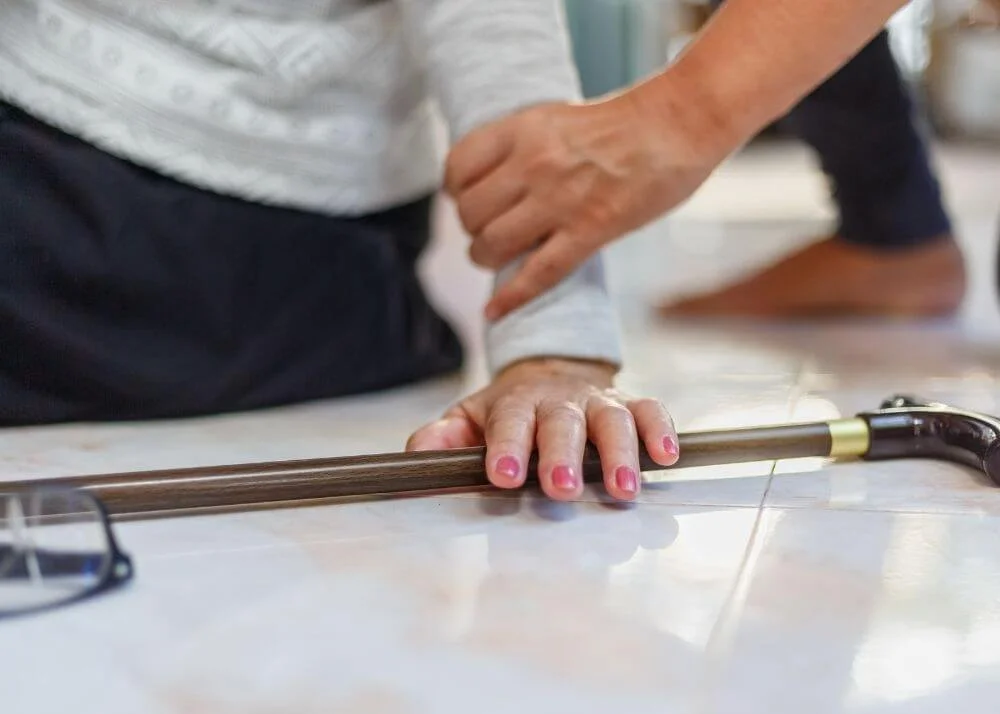
PREVENTING FALLS - OVERCOMING THE FEAR OF FALLING
A fear of falling is common among older adults, especially if physical capabilities start to decline (i.e., weaker legs or increasing unsteadiness when walking) or after a fall.
Fear is healthy and normal. Everybody experiences fear.
Fear is our mind's way of alerting us to the dangers present, and it can protect us from entering dangerous situations.
However, if the fear is uncontrollable, something that you think about a lot and is negatively impacting your life, this fear must be dealt with.
RETURN TO FALLS PREVENTION HOME
HOW TO OVERCOME THE FEAR OF FALLING
IDENTIFYING A FEAR OF FALLING
Do you lack confidence doing activities you once did with ease in fear you may have a fall?
Or have there been times when you have limited or avoided certain activities you once did effortlessly due to fear?
These activities could include anything; crossing the road, going outside or maybe going to the shopping centre makes you feel a little uneasy.
If you answered yes to the above questions, you have a fear of falling.
However, you're far from being alone.
In a study on the prevalence of fear of falling in older adults, 90.5% of the subjects reported a fear of falling in at least one activity.
A fear of falling is common among older adults, especially if physical capabilities start to decline (i.e., weaker legs or increasing unsteadiness when walking) or after a fall.
WHY A FEAR OF FALLING CAN DEVELOP
There are many reasons why the fear of falling can develop.
It could be you are feeling not as steady on your feet as you once were. Maybe you are feeling weaker doing certain activities. Perhaps you've heard stories of friends having a fall and don't want the same happening to you. Or, maybe you've had a fall and, understandably, don't want it to happen again.
Falls can be a scary ordeal, especially when older and the body isn't as strong, steady, mobile and reliable as it once was.
Fear is healthy and normal. Everybody experiences fear.
Fear is our mind's way of alerting us to the dangers present and it can protect us from entering dangerous situations.
However, if the fear is uncontrollable, something that you think about a lot and is negatively impacting your life, this fear must be dealt with.
You want to be able to keep up your physical activity and your life.
When you start limiting activities and avoiding life due to your fears, your physical abilities decrease and your chance of falling increases.
When you start managing and overcoming this fear, you can improve your physical abilities and continue to do those things you love.
Your falls risk decreases. You can live the life you want to.
HOW DOES THE FEAR OF FALLING CAUSE MORE FALLS
You may think that worrying about something will make you more cautious and decrease your risk of falling, but this is untrue.
The fear of falling will make you overthink every move and you may begin avoiding the activities that keep you moving well.
When you do less activity over time, your body becomes weaker and your balance worsens.
When physical abilities deteriorate, daily life becomes more difficult. This makes it more challenging to do the physical activity that will get you strong and decrease your risk of falls.
Confidence is lost and it's common to become overly cautious, regardless of what the physical abilities actually are.
A negative falls cycle develops (see below). Remember this fall cycle discussed in PART 1 of the ULTIMATE GUIDE TO FALLS PREVENTION FOR SENIORS.
Activities in life are avoided and balance/stability issues increase; again, further increasing falls risk.
This downward spiral also impacts mood and well-being; thus decreasing social interactions. It's a vicious cycle that needs to end.
BE CONFIDENT AND GO ON LIVING LIFE
Overcoming the fear of falling isn't as easy as just snapping out of it and getting on with life.
Your mind is sending out warning signals out of your voluntary control. This fear is real and must be overcome like any other fear.
And it can be.
Firstly, by reading all the steps in the Falls Prevention guide (and implementing all strategies), your confidence will increase, and your fears surrounding falling will begin decreasing.
But more may need to be done.
You may know that you are capable of undertaking your daily activities and understand your fears are irrational.
But fear is an emotion, and when big emotions grip us, we can become powerless. We always automatically revert to what's safest and what's comfortable.
To be free of the fear, you start by changing your thoughts surrounding it; this is done by listening to and feeling your worries about falling, then reframing them.
Once you have reframed your worries, you now focus on the new reframed thoughts, especially when your fears arise. And gradually do more and more activities that help build your confidence.
A TASK TO HELP OVERCOME THE FEAR OF FALLING
The goal of this task is to decrease your fears surrounding falls. By doing this, you will reduce your falls risk.
You will become less sensitive to your fears until they do not have control over you. By letting go of these fears, you will remain cautious (healthy), just not overly cautious (unhealthy), which leads to a decreased quality of life and increases fall risk.
After completing this step, you will be more confident and can get on living life.
Take your time during this step; it will be worth it. Now let's begin.
Write down EVERY fear or thought you have about falling in EVERY situation and reframe them into something positive.
Example 1) If I fall, I may injure myself.
REFRAME: I have spoken to my doctor, and he says it's ok for me to walk. I have done everything to decrease my falls risk as set out in this guide. I am doing my exercises. I am eating well and moving well; I will walk within my capabilities and take a rest if I feel tired. I will live my life. I will be ok!
Example 2) If I fall, I will look stupid in front of people.
REFRAME: I will not fall. I am walking to the best of my abilities. I have done everything possible to prevent falls.
However, if something unexpected happens and I do fall, people do not care about how I look and would be more concerned if I am ok.
I can deal with it. I will live my life.
Example 3) If I fall, I may not be able to get up.
REFRAME: I am now always prepared if I do fall. I am also doing everything to improve my physical abilities. If I do fall, I know help will be on the way.
Example 4) If I ride my bicycle, I may fall.
REFRAME: The last time I fell off my bicycle was right before I started to pedal. Now, before I start pedalling, I make sure that I am balanced and that no clothing, straps, etc., can get caught in the pedals or gears. In addition, I have done strengthening and balance exercises, thereby decreasing my falls risk. I will continue to enjoy riding my bicycle!
Now it's your turn. Think of ALL the reasons why you fear falling. Go through them one by one, answering the question "I am afraid of falling because?"... Then reframe the fear.
Continue for as many fears as you have surrounding this!
This process of reframing, repeating these new reframes, and taking small steps to do what you fear is known as desensitisation. Over time you will be desensitised to the fear.
This is one of many techniques to help you overcome the fear of falling
Remember, you will also need to continue to do the activities required that you want to be doing. Take your time with this and gradually increase your confidence. If you need extra guidance, get help from a professional (e.g., Physiotherapist).
With a slow and controlled approach, you'll start making significant progress.
It won't be long until you're on your way to overcoming your fears and back to doing more of what you most love to do.
IF YOU'VE FALLEN BEFORE
If you've previously fallen and the fear is constantly on your mind and is impacting your life, I recommend you speak to a psychologist or a counsellor.
A fall can be just like any traumatic event. The sooner you come to peace with the past event that once happened to you, the better your life will be.
As said earlier, educate yourself on falls, eliminate the risk factors for falls, put safety measures in place and improve your physical abilities.
Read everything within this guide and implement the strategies. Then continually challenge yourself by doing the things you fear, gradually, and your confidence will begin to increase. Your fear of falling will start to dissipate.
To speed up the process, work with a Physiotherapist, Psychologist or other suitable Allied Health Provider.
FEAR OF FALLING SUMMARY
A fear of falling is common in seniors.
A fear of falling can put you at a higher risk of falling.
By implementing a falls prevention plan and doing what's required to help decrease your falls risk, you can increase your confidence surrounding a fear of falling.
Many psychological techniques can help you overcome the fear of falling - one technique is desensitization.
If your fear of falls persists or you want help with overcoming your fear of falling, speak to your doctor or a psychologist or counsellor.
A physiotherapist can help you improve your physical capabilities, and will help guide and assist you through the process to getting stronger and balancing better, which will help build your confidence.
SOURCES
TO VIEW ALL SOURCES USED IN THIS ARTICLE AND FOR ADDITIONAL RESOURCES, CLICK HERE.

YOUR QUICK GUIDE TO WALKING AIDS
We should always strive to be in our best physical condition and health by being active as much as possible and exercising, regardless of age.
Sometimes, however, for various reasons, there may come a time when a little assistance is required to help keep you steady, active and living your life safe from falling.
That bit of assistance might be the use of a walking aid.
Walking aids can give benefit in many ways.
FIRST PUBLISHED: 11/15/2017. LAST UPDATED: 8/7/2022
INCLUDES HOW TO FIT A WALKING AID
WHAT’S COVERED IN THIS ARTICLE:
We should always strive to be in our best physical condition and health by being active as much as possible and exercising, regardless of age.
Sometimes, however, for various reasons, there may come a time when a little assistance is required to help keep you steady, active and living your life safe from falling.
That assistance might be the use of a walking aid.
Walking aids can give benefit in many ways.
If you find you are becoming unsteady on your feet, they can provide stability to keep you standing. They can allow you to walk further if you are short of breath or fatiguing. And, they can make it easier for you to get around when in pain, recovering from injury or following surgery.
When these benefits of using a walking aid are felt, your confidence will also increase, knowing that getting about your day will be safer and easier.
All these benefits — yet many people still feel reluctant to use one, usually due to thoughts of it being a sign of losing independence or the shame of identifying with their use.
There is no need to feel either. When using a walking aid, you aren't losing any independence. Using a walking aid allows you to remain independent by keeping you safe from falling, allowing you to continue to do the things you want to do with greater ease.
If you have been told by a Health Professional that using a walking aid is required, drop any shame surrounding using one. Do not worry about what others think. Use it to allow you to get more out of life and use it confidently!
Let's now look at the common walking aids used and in which instances they are suitable.
Note Before: Always see a Physiotherapist before making any decisions about a walking aid. They will determine if you need one, which type is required and fit one for you.
Never borrow a walker from a friend or family member unless you're sure it's the right one required for you, it's the perfect fit, and it is in good condition.
TYPES OF WALKING AIDS
WALKING STICKS/CANES

Walking Sticks
Walking sticks can come in different shapes and sizes.
They can come with one, three or four points (see diagram).
They can be adjustable and even foldable to easily store away.
Walking sticks can provide added stability when moving about and can give confidence when entering unfamiliar or uneven territory.
If you feel yourself reaching for furniture now and then, a walking stick could benefit you.
As with any walking aid, ensure your walking stick is adjusted correctly for you.
ROLLATOR FRAME/FOUR-WHEELED WALKER
Rollator/4-Wheeled Walker
A rollator frame (or four-wheeled walker) is a medical device that helps people with mobility issues to walk independently.
It typically has four wheels, a seat, handrails and usually a basket you can put your belongings in. A rollator can be folded up for easy transport and storage.
Rollator frames are an excellent option for those who need a little extra help getting around but don't want to use a wheelchair. They provide support and stability while still allowing for some independence.
There are a few things to consider when choosing a rollator frame.
First, think about the size and weight of the person using it. Second, consider the terrain on which the frame will be used. A basic frame will suffice if it is used mainly on flat, even surfaces. However, a frame with bigger wheels and more features (such as suspension) might be necessary if it is used on rugged or hilly terrain.
TWO-WHEELED FRAME

Two-Wheeled walker
These walking aids are a mix of the Four-Wheeled Walker/Rollator (covered previous) and the Pick-Up Frame (covered next).
They often have skis on the back to allow continuous movement (no lifting required) when walking.
They should be used for times when you need to place some weight onto the walker (but not all) when walking causes you to become fatigued or unsteady on your feet.
They should not be used outdoors or on rougher terrain.
Some people use this walker as an alternative when travelling due to its lighter weight than the Four-Wheeled Walker/Rollator (above).
PICK-UP FRAME
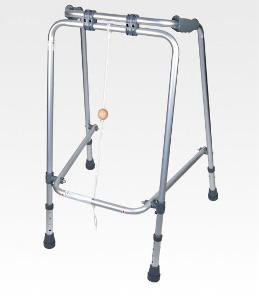
Two-Wheeled Walker
This walker has no wheels and is picked up for every step. This walker does not allow for continuous movement.
These walkers are used when you need to place a significant amount of weight on the walker, with less weight through your legs (e.g. after a hip or knee replacement surgery).
Or, if you have limited walking ability and only walk very short distances. This could be due to painful joints in the legs, or other reasons.
As this walker has to be picked up and placed for every step, it can get tiresome if walking for longer distances.
It is not appropriate for times when only a little balance support is needed while walking. A two or four-wheeled walker is better in these instances.
HOW TO FIT A MOBILITY AID
It’s not uncommon to see walking aids fitted incorrectly.
Most of the time, they are set correctly by a Health Professional, but over time it’s very common for them to lose their correctly fitted settings.
Or, they are purchased without any education on how to use and fit them correctly.
It is recommended you see your Health Professional to have your walking aid fitted correctly. However, if required, here is a quick guide to assist you in fitting your walking aid.
Fitting A Walker and a Walking Stick
STEPS TO FIT A WALKING AID:
Wear your everyday shoes and place your arms by your side.
Keep your shoulder relaxed and not elevated.
Set the height of the walker/cane to your wrist crease. Bring the walking aid up to the crease of your wrist and lock the clip/screw in.
You should have a 20°-30° bend in your elbows when using the walker/cane and standing upright.
Once you have adjusted the length correctly, check that all clips/adjustments are fully locked.
WHICH SIDE TO USE A WALKING STICK ON
When using a walking stick for injury, weakness or pain, hold the walking stick on the opposite side of the injured leg or the stronger, unaffected leg.
If you are using a walking stick for balance, hold it in your stronger hand or what’s most comfortable. This will give you more control and stability.
Whichever reason you’re using a walking stick for. Make sure to practice using it before venturing out into the world.
SAFETY TIPS WHEN USING A WALKING STICk/FOUR-WHEELED WALKER
When using a mobility aid, you must use the walking aid properly and avoid any issues that could cause a fall.
For tips on properly using a walking aid to prevent falls, check out Step 10 of THE ULTIMATE GUIDE FOR FALLS PREVENTION FOR SENIORS.

Strength and Balance Workout For Seniors - 20 Minutes, with Weights,
In this video, we go through some gentle mobility, exercises for the whole body with weights, balance and a quick cool down
Intermediate 20-Minute Workout For Seniors
Follow along with me (Mike - Physiotherapist) for these whole-body exercises to strengthen your body and improve your balance, it goes for 20 minutes, is of intermediate level (all in standing - not for beginners) and we use hand weights. Enjoy and let me know how you went below!
In this video we cover:

Give this exercise a go and let me know how you went.
- Mike
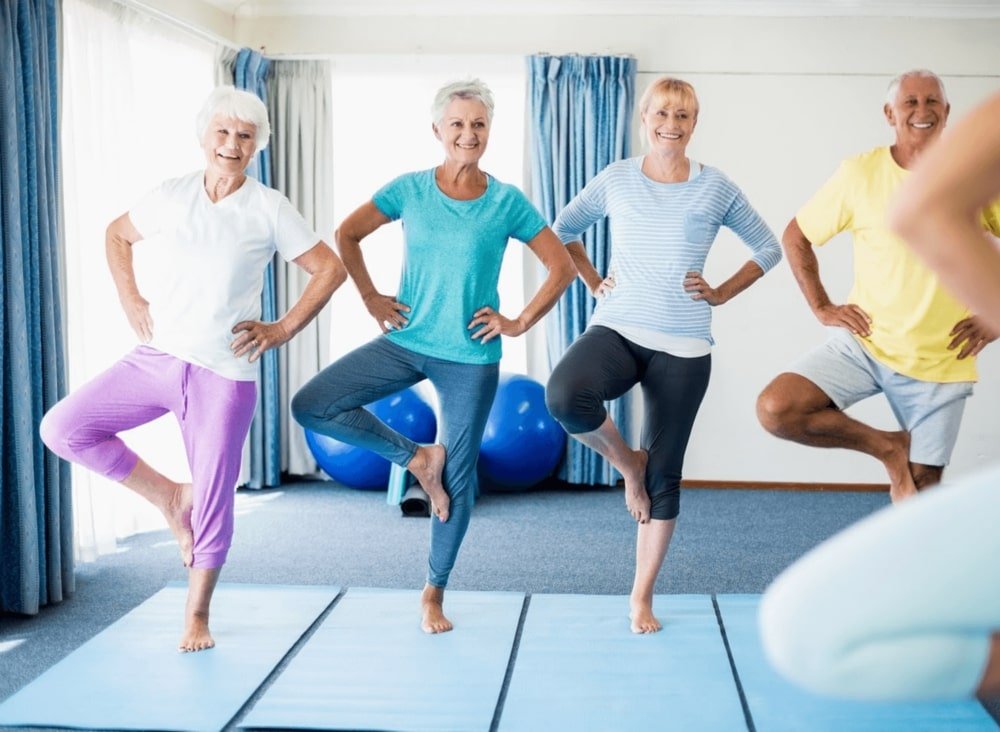
The Steady Senior: The Complete Guide To Great Balance Over 60
Training balance is a great way to achieve your health and fitness goals, to prevent falls and keep you getting the most out of life. In this article you'll LEARN what is necessary to improve your balance (PART 1), How to test your balance in your own home (PART 2) and everything you need to improve your balance (PART 3) all in the comfort of your home.
FIRST PUBLISHED: 22/5/2017. LAST UPDATED: 10/2/2024
Good balance is essential to keep you steady on your feet, prevent falls and ensure you get the most out of life!
With good balance, you can go about your days effortlessly!
As we get older, however, it's common for our balance to worsen, which means life becomes harder (and not to mention more dangerous)!
But, BALANCE IS A SKILL! A SKILL THAT CAN BE RE-TRAINED AT ANY AGE!
And,
YOU CAN IMPROVE YOUR BALANCE, NO MATTER YOUR CURRENT CAPABILITIES!
In this guide, I will teach you all you need to improve your balance, show you how you can test your current balance and give you all that is required to begin balance training and keep you balancing well, for life!
All in the comfort of your own home!
You don't need special equipment, and you don't need to join a gym.
It's easy, and it can be enjoyable.
Oh, and by applying what's in this guide, not only will you build great balance, the same exercises help you get stronger, fitter, look better, feel better and increase your confidence!
We are going to make some real progress!
So let's get balancing well!
WHAT WE WILL COVER IN THIS GUIDE:
PART 1: ALL ABOUT BALANCE FOR SENIORS
1.2 HOW YOUR BODY KEEPS YOU UPRIGHT
1.3 WHY BALANCE WORSENS WITH AGE
PART 2: HOW TO TEST YOUR BALANCE
2.1 EQUIPMENT TO IMPROVE AND TEST YOUR BALANCE
2.3 HOW TO KEEP TRACK OF YOUR BALANCE
PART 3: HOW TO IMPROVE YOUR BALANCE OVER 60
STEP 2: DO SPECIFIC BALANCE EXERCISES
THE BEST BALANCE EXERCISES FOR SENIORS
STEP 3: ALWAYS CHALLENGE YOURSELF
STEP 4: HOW TO BE MORE MINDFUL
Before we get started, remember, this guide will only help you if you apply these strategies. Just reading what's here and trying the exercises maybe once will not help you improve your balance.
If you want to improve your balance, read the article and undertake what's set out in this article.
Pledge to incorporate at least 5-10 minutes of balance work into your life a few times each week. Make it simple. Make it fun!
To make it easy for you; I create workouts for mailing list subscribers. So make sure you join up!
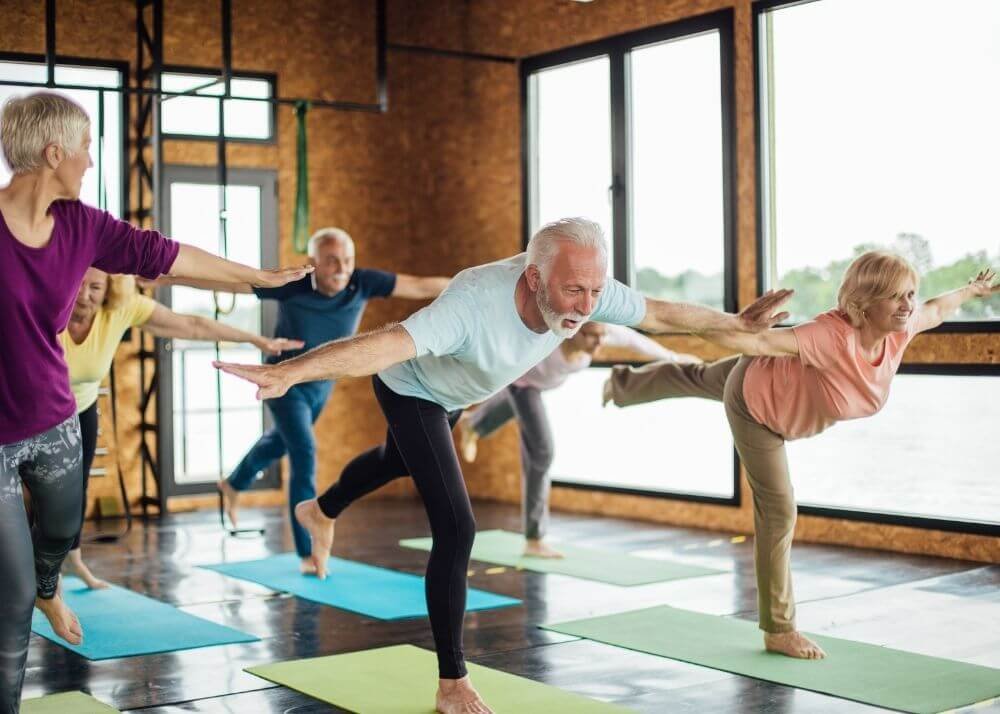
PART 1. ALL ABOUT BALANCE FOR SENIORS
1.1 WHAT IS BALANCE
If you had to guess what balance is, most would probably guess something along the lines of “being able to stand upright, without falling”.
Which is good, and all you need to know! However, a better definition is this:
“BALANCE is the ability to maintain the line of gravity of a body (vertical line from the centre of mass) within the base of support with minimal postural sway” [1].
Let’s break this definition down, so it’s easier to understand.
When you gain a better understanding of balance, you know why we do the exercises to improve balance and why we could, or do, fall.
Diagram 1: To lose balance my sway has to move past my limits of stability.
1) Centre of Mass – The easiest way to think of our centre of mass is the point where our weight is concentrated most (orange circle in diagram 1). The lower our centre of mass, the easier it is to stay balanced.
2) Base of Support (BOS) - The area beneath a person that includes every point of contact that the object or person makes with the supporting surface [2, 3].
In this photo (yellow line), my feet are together- a reduced base of support, which means less stability.
A wider base of support increases our stability.
Standing with our feet apart makes standing a whole lot easier because it increases our stability.
Using a cane or a walker makes us sturdier, why? Because we have increased our base of support by increasing the area within the support surface (that being the floor).
3) Sway - The horizontal movement (red arrows at the top of diagram 1) between each side of the centre of gravity (green line) even when a person is standing still [1].
What happens when we are trying to balance in challenging positions? We sway from side to side.
Here is another picture to help you understand everything a little better:
Diagram 2: By standing on one leg my base of support is decreased. Less sway is required for me to become unstable and lose balance.
By decreasing our base of support, (standing on one leg), we decrease stability. It is much easier to sway outside of the limits of stability (blue lines). It now becomes easier for us to lose balance and fall.
We can also decrease the base of support in exercises, to make them more challenging, which, over time, will help improve balance.
To increase our base of support, we can hold onto the chair in front of us to provide more stability and lessen our chance of falling.
There are two types of balance; static balance and dynamic balance.
1) Static Balance - The ability to balance while at rest, e.g., standing still on the spot. (The diagrams above are examples of static balance.)
2) Dynamic Balance - The ability to balance while moving, e.g., walking or reaching forward.
Both types of balance are equally important and both need to be practised to have great balance.
Your aim should be to become as stable as possible by doing balance exercises consistently, without having to rely on any assistive devices (walker, cane, etc.).
An aim that is entirely possible by putting in the work of doing the correct balance exercises.
[Note: Only stop using an assistive device if it is safe to do so. Always get a professional opinion to decide on this].
1.2. HOW OUR BODY KEEPS US UPRIGHT
So how does our body keep us upright? Notice I didn't say "how do we stay upright?"! That's because balance is usually an automatic process (unless compromised in some way).
For every task we undertake, our body automatically receives information from our senses. This information is from our muscles, joints, ligaments and other sensory receptors such as touch, pressure, temperature and pain.
Sensory information also comes from our visual system (our eyes) and our vestibular system (our ears).
This sensory information is sent to our Central Nervous System (CNS) to be processed.
The CNS then cues our musculoskeletal system (system for our muscles, bones, ligaments, joints) into action to perform the appropriate movement.
When we are walking (or undertaking any other tasks), our central nervous system continually sends signals to our musculoskeletal system.
If we were to come across uneven terrain or obstacles or were to trip, for example, during our walk, our musculoskeletal system will receive the information via our CNS and make the correct postural adjustments to maintain our balance and keep us from falling.
This is an automatic process that all happens very, very fast, but slows as we age!
As this process slows, combined with the loss of other factors, e.g., decreased leg strength or proprioception (perception or awareness of the position and movement of the body), it becomes increasingly difficult to maintain balance.
When you train balance and improve balance, this process becomes more effective, ensuring you stay on your feet.
Decreased eyesight (or closing your eyes) or conditions of the inner ear (vertigo, Meniere's disease, ear infections, or prolonged dizziness), also affect balance.
Additionally, certain medications and hypotension (low blood pressure) - leading to dizziness and lightheadedness - can also affect our balance.
1.3 WHY BALANCE WORSENS WITH AGE
As I mentioned above, the process of maintaining our balance slows or deteriorates as we age.
There are factors out of our control that we must accept.
That is, changes in our body (physiological changes) do happen because of ageing itself. We will never be like our young 20, or 30-year-old selves.
However, the good news is, the primary contributor to these physiological changes is not due to ageing in itself, but because we do less as we age.
As we start reaching adulthood, the pressures of life take hold, and we find ourselves with more obligations.
We also get into some poor habits (e.g., sit more often in lousy postures), and we do less and less activity.
A lot of us put these physical changes we see (such as decreased balance, posture and strength, etc.) down to ourselves getting older.
However, the majority of the time, these changes occur because we do less activity throughout the years.
It’s simply because we sit more and move less, that we see a lot of these changes in our physical condition.
We are creatures of comfort designed to do what is most comfortable and, after time, it becomes increasingly difficult to do more activity.
These physical changes we see from lack of use include:
Generalised weakness throughout the body.
A generalised decrease in fitness (our whole body becoming less fit, leading to faster muscle fatigue and shortness of breath).
Decline in posture, changing our centre of mass.
Decreased reaction time.
Decreased balance.
It’s time to accept that the main reason staying active and upright has become tougher and you are not moving as well as you could be is not because of ageing itself but because we have progressively done less and less activity.
You must get it out of your head that decreased balance and, also falls, are a normal part of ageing. This is a myth.
Your BALANCE CAN BE IMPROVED, and FALLS CAN BE PREVENTED
Now that we know this, we should do everything in our power from now on to improve our balance and keep it that way for the many benefits it will bring us.
PART 2: TESTING YOUR BALANCE

You do not need to go to a Professional (e.g., a Physiotherapist) or join a gym to get your balance tested.
You DO, however, have to be careful and take the correct steps for safety reasons.
And... You can also get a more comprehensive test when getting your balance tested by a professional. It is also a good idea so you can rule out any vestibular or visual issues as the cause of any balance problems.
However, when done safely (with a helper and the correct equipment), testing your balance at home is a great way to take your health into your own hands and start making changes.
I've chosen some simple tests you can do to test your balance, and I'll show you how to do them as safely as possible, in the comfort of your own home.
2.1 HOW TO TEST YOUR BALANCE
There are many tests we can use to measure balance.
The aim of testing your balance is to get a rough guide on how well you can balance, and then use these measures as a guide of progress after doing balance training.
I have chosen four tests to give you a rough guide of your balance.
However, before we get into the tests, there is some basic equipment you will need:
EQUIPMENT YOU WILL NEED:
To test and train your balance sufficiently, I recommend the following:
· A tape measure
· Masking tape - Preferably coloured as it is easier to see.
· Timer - You can use the timer on your mobile phone.
· Chair – Standard chair with arms. Not a couch.
· Sturdy piece of furniture - (e.g., kitchen bench, rail, etc.).
· A Wall.
· A helper – grab a family member, friend, exercise partner, whoever to help take measures.
BALANCE TESTS
Now let's get into the testing.
TEST 1 - FOUR POINT BALANCE TEST
Equipment For Test: You will need a timer and a chair
Details of Test:
This first test is a test of our static balance (balance while stationary). This test will challenge your balance in four increasingly difficult foot positions.
How To Perform The Test (photos below):
1. Standing next to the back of a chair or a rail or sturdy piece of furniture, (e.g., kitchen bench) for safety reasons.
2. Starting by holding onto the chair and taking up the first foot position of the test (see below).
3. When you are ready, take your hands off the chair and start the timer.
Do this test without holding onto the chair.
4. During the test, you can move your arms to retain balance (holding onto the surface if required). Once your feet move out of position, the test is stopped and the time recorded in the chart below.
5. If you can safely manage the position for 30 seconds, you can continue on to the next challenging foot position and continue until the final (4th) foot position.
Alternate feet for the single feet stances.
6. Record your results in the table following this section.
NOTE: If you are unable to manage 30 seconds for this foot position, stop the test and record your time.
If you are unable to maintain 30 seconds for foot positions 1 and 2, keep practising these movements, train these movements each day, until you can safely manage 30 seconds for each before continuing.
If you are not improving, see your doctor or Physiotherapist for a more personalised program.
FOOT POSITION 1) Feet Side by Side:
Feet as close together as possible, side by side.
Chair or rail close by for safety reasons.
Hold for 30 seconds, or as long as possible.
If you can hold for 30 seconds, safely move on to the next position.
FOOT POSITION 2) Semi Tandem Stance:
Standing with the big toe of one foot in the arch of the other.
Toes facing forward.
Chair or rail close by for safety reasons.
Hold for 30 seconds, or as long as possible.
If you can hold for 30 seconds, safely move on to the next position.
Alternate Feet.
FOOT POSITION 3) Tandem Stance
Standing with heel on one foot touching toes on other.
Chair or rail close by for safety reasons
Hold for 30 seconds, or as long as possible.
If you can hold for 30 seconds, safely move on to the next position.
Alternate Feet.
FOOT POSITION 4) Single Leg Stance
Standing on one leg.
Chair or rail close by for safety reasons
Hold for 30 seconds, or as long as possible.
If you can hold for 30 seconds, safely move on to the next position.
Alternate Feet.
Understanding Your Results:
Scoring 30 seconds on each test means your balance is good for this test.
No matter your capabilities, you can always be improving. To do this, you must challenge your balance even further by making the balance training harder (discussed later).
There is always work we can do.
Scoring less than 30 seconds on any of the tests, do not be hard on yourself; it just means you need to be practising your balance more so.
Do not be concerned if you score less on one side compared to the other side (i.e., your left foot vs your right foot); this is common.
If you are over 60 and score less than 10 seconds on the tandem stand, you are at increased risk of falling.
No matter your results, write them down with an aim to improve them after your training period.
TEST 2 - STANDING REACH TEST
Equipment For Test: You will need a chair, a bare wall, a tape measure and a helper for safety reasons.
Note before: You can stick a tape measure on the wall to make this easier for you.
Details of Test:
The standing reach test is used to assess our balance when standing and reaching for objects [4].
How To Perform The Test:
1. Standing perpendicular to a wall, place a piece of tape on the wall at the level of your shoulder. This is to reference your start position.
2. Keep a chair within reach for safety reasons.
3. Now stand perpendicular to the piece of tape and roughly 15 cm from the wall, facing straight ahead and feet hip-width apart.
4. Now with the arm closest to the wall, lift your arm to 90 degrees, parallel to the floor. Keep your hand in a fist and stay relaxed, with your feet or torso not moving out of position.
Mark the position of your knuckle on the wall, with a piece of tape. This is the start position (position A).
5. Now reach out in front of you as far as safely possible, keeping your arm parallel to the floor.
Ensure you remain balanced without your feet coming out of position. This is the final reach position (position B).
6. When you have reached out as far as you can, have the person helping you mark where the knuckle of your fist is with a piece of tape.
Ensure you don't overreach and lose your balance.
A - B = Reach Distance
7. Using the tape measure, measure the distance from the two tape points and record the results in the table following this section.
8. Complete a practice run and then have three attempts of this test.
9. Average the results of the three tests and record your results for later use.
Understanding Your Results:
Scoring less than 18.5 cm indicates you have an increased risk of falling.
No matter your results, write them down with an aim to improve them after your balance training.
TEST 3 - TIMED UP AND GO (TUG TEST)
Equipment For Test: Chair, Tape Measure, Tape, Helper
Details of Test:
The TUG is another test of our balance and our mobility.
In this test, you will stand from a chair, walk 3 metres over a line, turn around, walk back to the chair and sit down.
How To Perform The Test (photos below):
1. Ensure you have a friend or family member with you to help you with this test.
A friend can take a more accurate reading of the time it takes you to do the test and, additionally, if your balance is not so good, it’s good to have them there for safety reasons.
As with all balance tests, ensure they do not assist you with any parts of the test, but it is a good idea to have them standing alongside you.
2. Place your chair in an open area of your house, on flat ground without any obstacles or trip hazards in the way.
3. Using your tape measure, mark 3 metres from the chair and place a piece of tape to mark this spot.
4. Start seated in the chair, with your hands on the armrests and back against the backrest.
5. Your helper will say “GO” and will start the timer. You are to stand from the chair, walk to the line, turn around, walk back to the chair and then sit back down. Walk at your normal pace.
6. Once your buttocks have touched the chair, the test is complete, and your helper will stop the timer.
7. Complete a practice run of the test to get the hang of the test but give adequate rest before the scoring test to ensure you are not tired.

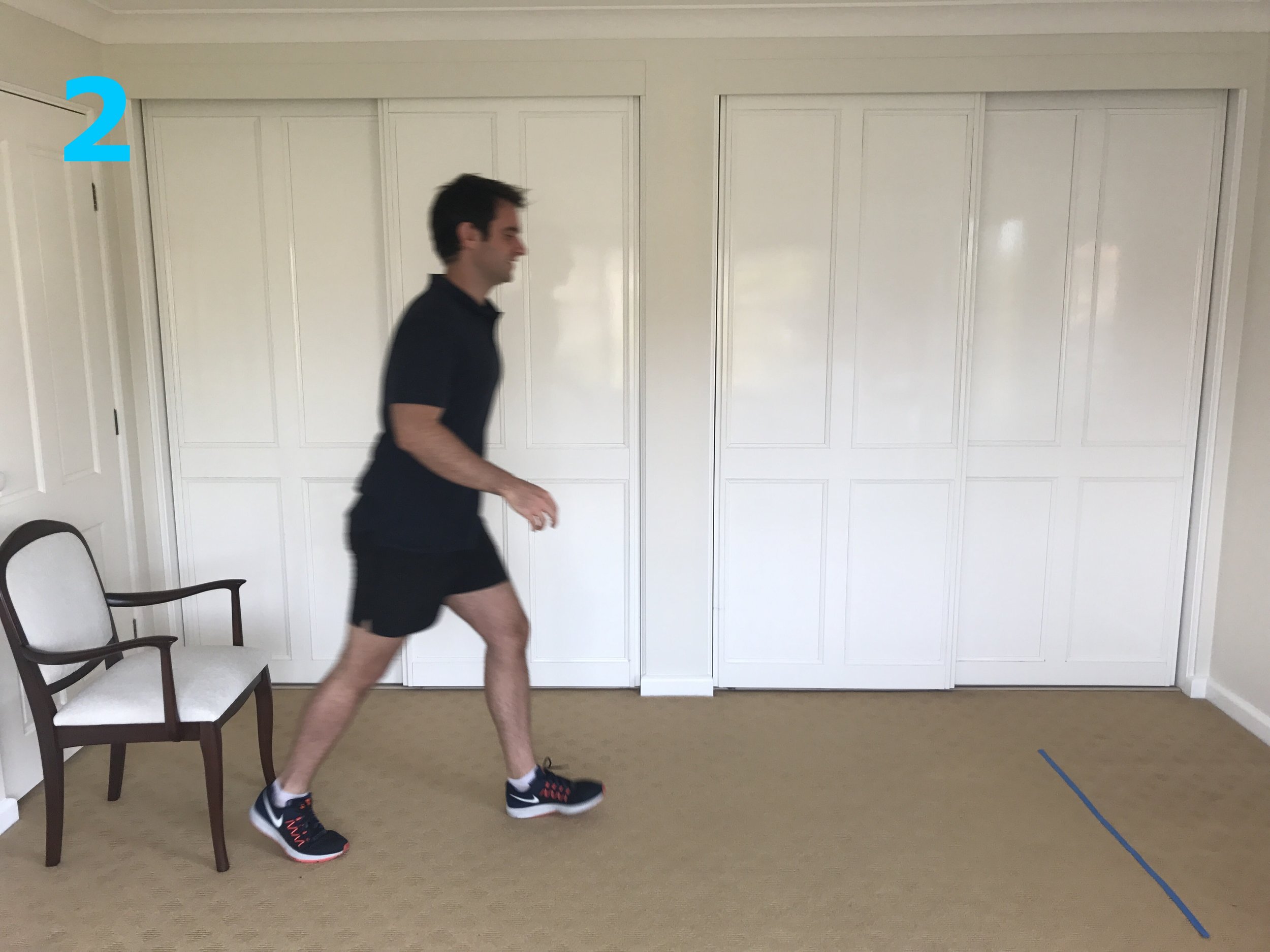
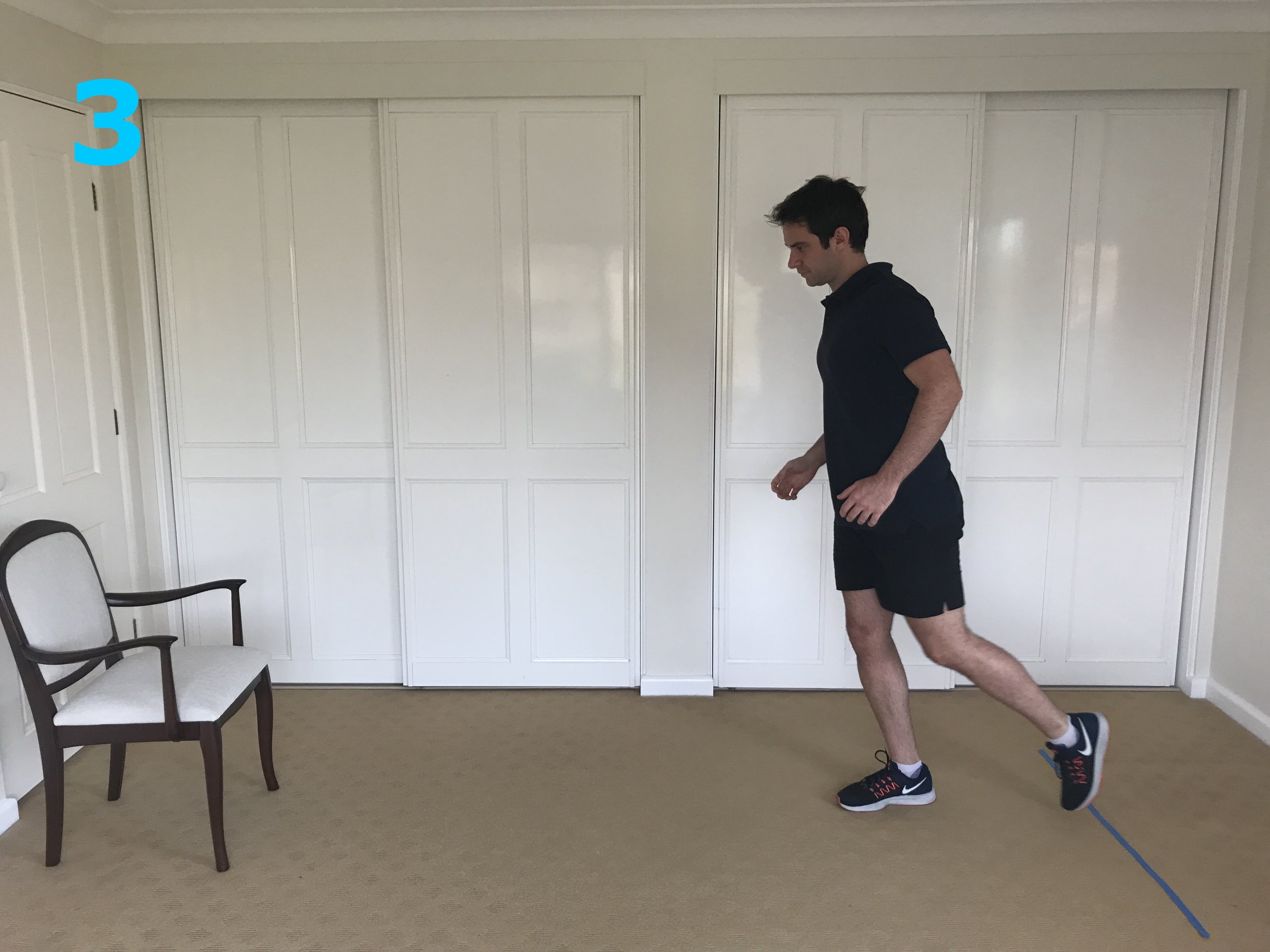
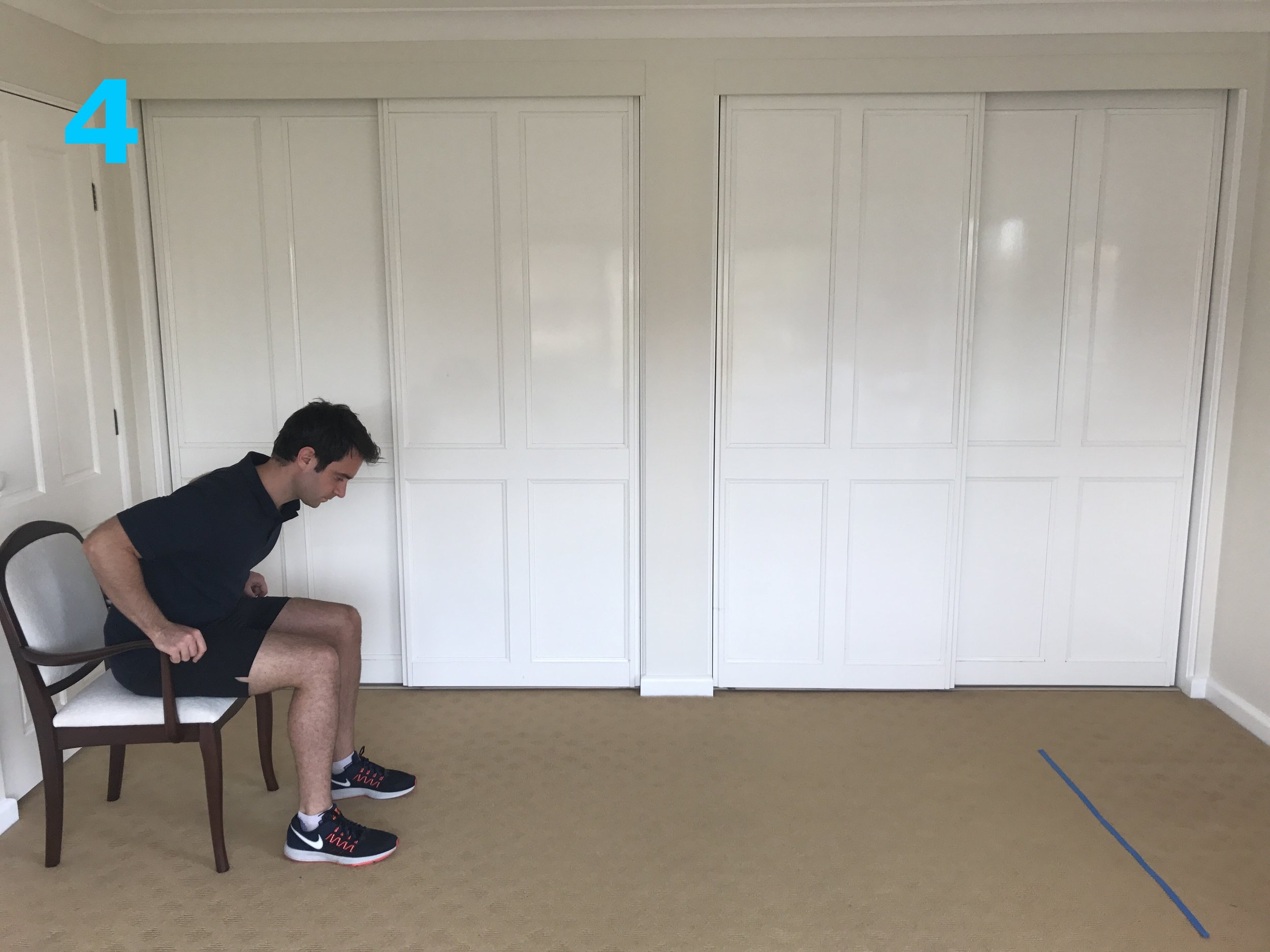
8. Perform this test twice and average your results.
Note: If you usually use a walking aid of some sort (for example walking stick, walker), use this during the test.
Understanding Your Results:
Studies have shown that if your time is over 13.5 seconds, you may be at a greater risk of falling [5].
No matter your results, write them down with an aim to improve them with balance training.
TEST 4 - Sit to Stand For Five Test
Equipment Needed For Test: A Chair, A Timer, A Helper.
Details of Test:
This test is used to test our lower limb strength and power. It is a functional test as sitting and standing from a chair is something we do many times during the day.
This test measures how long it takes you to stand up and sit down five times.
How To Perform Test:
1. Have a helper to time you or hold the timer in your hand.
2. Start seated on the chair.
3. You’re going to time how long it takes you to stand up and sit down [You will start the test (and the timer) as soon as your buttocks leave the chair. And stop the timer (finish the test) when your buttocks are on the chair after the fifth stand].
4. Place your arms across your chest, not holding onto the armrests. Feet hip-width apart.
[If you need to hold onto the armrests, this is fine. However, note it down. You will most probably find after training and improving your balance and strength you will not need to hold on anymore.]
5. When standing up - ensure your knees and hips are straight, and the back of the knees aren’t touching the chair.
6. Ensure when you sit down it is in a controlled manner, not flopping down into the chair.
7. Practice one stand and sit before commencing the five attempts, to get the hang of the test, but do not tire yourself.
7. Perform this test and record all results for later use.
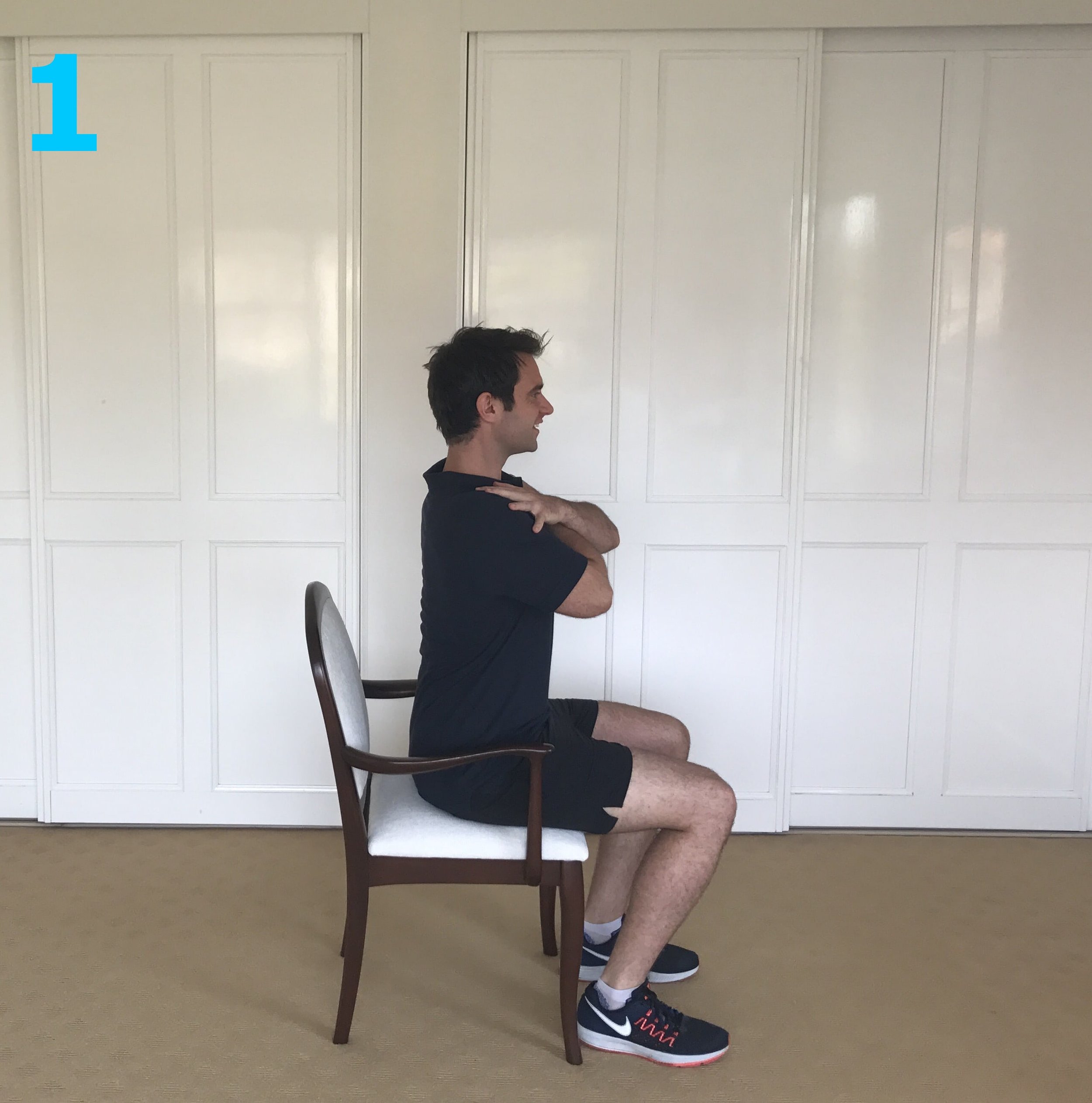
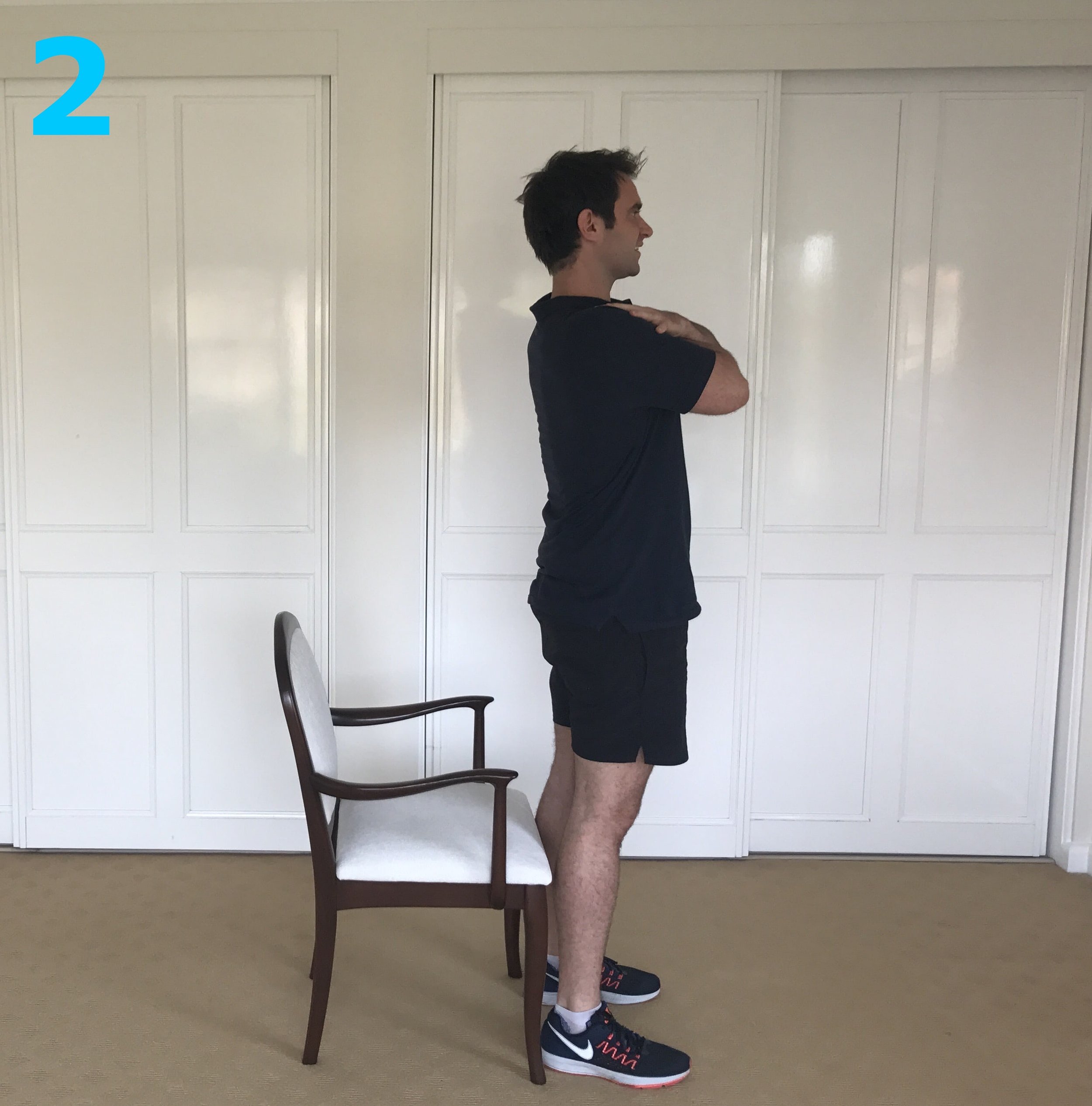
Understanding Your Results:
The normal measures for age ranges are as follows [6]:
60 to 69 years old: 11.4 seconds to complete the test.
70 to 79 years old: 12.6 seconds to complete the test.
80 to 89 years old: 14.8 seconds to complete the test.
No matter your results, even if you can’t perform one sit to stand. Write it down with an aim to improve them after training your balance.
2.3 TRACKING YOUR BALANCE
When you start performing balance exercises consistently, you will begin feeling the differences in many ways.
You'll be more confident going about your day and movement will be effortless.
However, if you are super keen and want to track how much you are improving with your balance, I have created a table to help you track your results. To download this table, click the button under the video below.
After training (next section), you can then retest and compare your results to see how you are progressing.
If you found you had some trouble with these tests, this is fine. These tests are only a guide to check your balance and track your progress.
On the other hand, some of you may find the tests very easy and scored quite well in them.
Great. It means your balance is at a level where you can function well in your day-to-day life. However, this doesn't mean you shouldn't do balance exercises.
No matter what stage you are at with your balance, there are always ways to challenge yourself and be improving. With exercise comes many benefits.
For an easy to follow balance tracking video, watch the video below.
Also, you can track and record your balance by downloading the below.
Now we’ve got an idea of where your balance is at, let’s now start improving your balance!
PART 3: HOW TO IMPROVE YOUR BALANCE FOR SENIORS
STEP 1 - GET MOVING
The first and most important step in improving our balance and our quality of life is to get active. You need to get off the couch and get your body moving.
Movement is health. Movement is medicine.
Being active or exercising doesn't have to be boring or a chore.
Do what you can to make it easy. Do what you can to make it fun. Do whatever it takes to ensure you'll stick to moving more. Consistency is what's most important.
Go for a walk in nature, go for a swim, try a new activity if you can (examples - Tai Chi, lawn bowls, ten pin bowling, aqua aerobics, golf, tennis) the ideas are limitless, just get moving, within your capabilities.
My recommendation is to go walking every day outdoors for at least 10 minutes.
Have fun with it. Mix it up. Go on different walks. Attempt different terrains. Walk up stairs. Down stairs. Walk on grass or in shallows, and sand of your local beach. Go bushwalking. Walk faster. Slower.
Have fun and find the inner child we all have inside of us. Get outdoors and enjoy what mother nature has to offer.
Don't get carried away and do too much too soon, however. Don't try anything out of your capabilities.
If you're walking up many stairs for the first time in a long time, take breaks, use the rail and ask a friend or family member to come along for safety and to have some company. Take your walking aid if you need to.
Hurting yourself or falling would make both of us unhappy.
So make sure you slowly progress your walks, mix it up and continue to challenge yourself each week.
Yes, you're at higher risk of falling by getting off the couch, but done safely and when you enjoy the activity, you stay consistent.
There are many reasons why staying active is essential for better balance and better physical health.
You are training your heart which will make you fitter; you are training all the muscles in your body which will make you stronger (even the little ones that help with balance), you are ensuring your joints don't stiffen up, you are training your body to respond to different terrains. You will be decreasing your falls risk and improving your balance.
START NOW!
Get the all-clear from your doctor and begin with at least 10 minutes a day of some physical activity that you enjoy. Only 10 minutes, you can do it!
Always be thinking of ways you can incorporate more activity, or exercise, into your life.
STEP 2 - DO SPECIFIC BALANCE EXERCISES
Now we are moving more; we are going to incorporate some balance exercises into our life to directly improve our balance.
When performing these exercises, ensure you focus on proper technique; this is the golden rule for any exercise.
Quality is more important than how many of the exercises you can do, how fast you do them or how much weight you lift (if doing some resistance training).
With that in mind, if you feel the exercises do not feel right, causing pain or at first sign of fatigue, stop them.
You want to ensure you are performing the exercises correctly, working within your capabilities and, at the same time, challenging yourself, so you are getting the most out of the exercises and hence, improving your abilities.
THE BEST BALANCE EXERCISES FOR SENIORS
Specific balance exercises are essential to improve your balance and you want to be performing the best exercises to make greater improvements in a shorter time.
CLICK HERE FOR THE BEST BALANCE EXERCISES FOR SENIORS
Make sure you have read this entire article, from the beginning, before progressing to these next steps.
Additionally, for videos you can follow along with to improve your balance, head to the balance section of this website (click here) and follow along with the balance videos.
STEP 3 - ALWAYS CHALLENGE YOURSELF
For some of you, performing these balance exercises may be too difficult. For others, they could be too easy.
A one size fits all program is not possible. We are all unique people with different capabilities.
The good news is, by understanding more about your balance and your base of support, you can modify the exercises to make them easier or more challenging depending on your capabilities.
Remember that if we increase our base of support, we are more stable. When we decrease our base of support, we are less stable.
If any of the exercises are too hard and you find yourself swaying too much, we can take it back a little and make it easier by increasing our base of support.
If you find the exercises are too easy, it’s time to make them harder, to challenge yourself.
Always take note of your support base for each exercise as it’s a good way to see how much we can progress and improve each week.
Here are some ways to vary our base of support to make it easier and harder.
Each variation starts at less challenging to more challenging:
Using Walking Aid: e.g. - Walker, Four Point Cane, Single Point Cane
Change Upper Body Supports: e.g. - Two Hands, One Hand, One Finger, No Hands
Change Feet Position: e.g. - Legs Wider Apart, Legs Closer Together, Semi Tandem, Tandem, Single Leg Stance
Change Surface: e.g. - Stable Ground, Foam Pad, Pillow, Cobble Surface, Wobble Board
Other ways we can challenge our exercises are by:
Challenging our hearing systems (vestibular) and visual systems.
Challenging Hearing System – Turn Head from side to side.
Challenging the Visual System – Close Eyes.
Add challenges/tasks: e.g., catching a ball, solving problems, holding a glass of water, turning your head, adding resistance bands or dumbbell, adding a foam board.
Examples:
If you find the single-leg stance too easy, you can close your eyes or turn your head to each side during the exercise. This will make it more challenging.
You can also add in a pillow or a foam board.
If you are finding the single-leg stance too hard, you can make the exercise easier by holding on with one hand and working up to the time required.
STEP 4 - HOW TO BE MORE MINDFUL
I want you to think for a second and tell me, are you one to lose things?
Are you easily forgetful? Have you been known to be clumsy? Bump into things?
If so, I hate to break it to you, but you have a busy mind.
When our minds are busy, we are less present, and we tend to do careless things.
We've always got bruises because we bump into things. We can never find our wallet or keys. We trip because we didn't see that garden hose in front of us.
We are away with the fairies and mindfulness is our tool to bring us back.
Mindfulness is not usually something thought of when trying to improve our balance.
However, it is something I want you to really think about and take seriously.
Mindfulness techniques are growing in popularity, and it's not just a modern trend. There is increasing evidence of the benefits of mindfulness to wellness and other areas of life. In short, it works.
As with everything else I've mentioned on your journey to good balance, you must ensure you are doing what you can to decrease stress and have a clear head/calm mind, every day.
Stress directly affects our balance.
Higher stress levels can cause a decrease in balance performance. Additionally, many patients report an increase in dizzy symptoms during periods of stress.
In a calmer mind, there is less resistance; we are stronger, everything feels easier. When we have a busy mind, everything is harder.
Calm the mind, and we become more aware of our body and our environment around us. Our balance improves and our chances of falling will decrease.
It took me a long time to get into meditation myself to decrease stress. Once I began, stayed consistent and noticed results, I got hooked.
Consistency is the key to any mindfulness practice and 10 minutes is the perfect place to start.
I recommend 10 minutes of meditation each day from now on. You will still get improvements in balance without the meditation and by just doing the exercises; but if you want to make improvements in all areas of your life, this is a great tool to improve your health.
MINDFULNESS TECHNIQUES:
There are plenty of apps and guided meditations online.
Alternatively, here is a mindfulness technique you can use:
When alert, not sleepy, sit in a comfortable chair with your feet flat on the floor. Get comfortable but do not lay down. You don't want to fall asleep.
Set a timer for 5-10 minutes of undistracted time. No distractions, whatsoever. Complete focus. I meditate for 20-minute sessions, but when I first started, I did 10 minutes for quite some time. When you start seeing the benefits and enjoying meditation, you will want to increase the time you sit down.
Play soothing music or sit in silence during your session. A simple YouTube search can help with this.
Ok, now you're ready to go. Start by taking a deep breath all the way in through the nose, and all the way out through the mouth. Repeat this five times with your eyes open
It's now time to close your eyes.
Now take slow controlled breaths in through the nose and out through the mouth. Nice and slow. Continue these slow, controlled breaths.
Continue to focus on the breath. Your mind will wander, this is ok. Do your best to bring your attention back to the body, focusing on relaxing all areas of your body and letting go of any tension or resistance.
Once you start to feel yourself relaxing, shift your focus to the top of the head and slowly move your attention all the way throughout the body, to your feet and back. Focus on relaxing each and every part of your body.
Repeat with the focus on your breath and relaxing all areas of your body for the time set.
Note: It does not need to be perfect. Don't worry if you are struggling. Sit in silence, relax and just enjoy the quiet time. Over time, you will get better.
If you are having a difficult time concentrating, spend the first couple of sessions (maybe a week) just sitting down in silence and processing your thoughts. Listen to them; let them go.
This whole process will get easier with consistency, so vow to make it a daily habit, and you WILL see the results.
ENDING NOTE
There we have it, the guide to improving your balance.
By incorporating all these strategies into your life, you'll begin seeing significant changes in your balance. Stay consistent with the exercises, and it won't be long before you have great balance and are doing more each day, getting more out of life and also decreasing your falls risk.
Good luck on your journey to better balance!
- Mike
SUMMARY TO IMPROVE YOUR BALANCE
To ensure you are on your way to great balance and to make sure you have covered everything, tick the boxes below when done.
🔲 Learn what's necessary to improve your balance.
🔲 Test your balance.
🔲 Include more physical activity in your daily life.
🔲 Perform balance exercises weekly (preferably daily) and make sure you follow along with my exercise videos.
🔲 Become more mindful daily.
🔲 Ensure you are eating and sleeping well.
🔲 Challenge yourself with your balance as you make progress, be patient and stay consistent.
Do you need to improve your balance?
Have you improved your balance by performing these exercises?
I’d love to hear from you.
Leave a comment below, or join the More Life Health Facebook Support Group.
SOURCES
TO VIEW ALL SOURCES USED IN THIS ARTICLE AND FOR ADDITIONAL RESOURCES, CLICK HERE.

25 Minute Full Workout - Arm, Leg & Cardio Exercises for Seniors
In this video, we go through arm exercises, leg exercises, and cardio (HIIT) for seniors all in one workout.
beginner to intermediate 25 Minute Exercises For Seniors
Follow along with me (Mike - Physiotherapist) for these arm, leg and cardio (HIIT) exercises for seniors all in one workout. No need to change over from the shorter workouts if you want a longer workout. It goes for 25-minutes, working your whole body.
It is of beginner to intermediate level, and we use hand-weights for some exercises. You can still do the exercises without hand weights.
In this video we cover:

Give this exercise a go and let me know how you went.
- Mike

Simple Leg Exercises For Stronger Legs
In this video, we go through a simple leg workout that you can do daily to strengthen your legs.
Daily Leg Exercises for Seniors
Follow along with me (Mike - Physiotherapist) for these leg exercises that you can do daily to strengthen your legs.
Strong legs are essential to good movement and preventing falls. By spending a short amount of time each day, you can get those legs strong and keep them strong, and you WILL feel the difference.
Here is a simple and short 7-minute new exercise video, to get you moving and your legs strong.
In this video we cover:
Give this simple leg exercise a go and let me know how you went.
- Mike

Beginner Seated HIIT Workout for Seniors (10 minutes)
In this video, we go through a beginner's style HIIT (cardio) workout to improve your fitness and also help with weight loss.
Low Impact Cardio Workout For Seniors
I want to remind you, that when it comes to exercise, there is no finish line.
Although you may not want to hear this, exercise is something you must do consistently to keep your body in the best physical condition.
To keep your body stronger it takes consistent strength exercises each week, or you may find your muscles becoming weaker.
To keep your body balancing well, requires movement and balance exercises or you may find yourself becoming more unsteady on your feet.
To keep your body fit, it takes exercise that gets your heart rate up, or you may find yourself becoming shorter of breath with less activity.
I could apply this to all the components of physical fitness, but in short, if you keep your exercise up, you’re going to get and keep, the benefits. If you don’t, you’re going to lose it!
On the topic of getting and keeping fit, I want to introduce you to a type of cardio known as High-Intensity Interval Training (HIIT).
“HIIT” workouts involve short periods of high(er) intensity exercise alternated with periods of rest or recovery.
By doing these types of workouts, you can get increased health benefits (such as increased fitness and weight loss) with less time spent working out.
This week, we are going to go through a beginner’s seated HIIT workout. Click below to get moving with me.
In this video we cover:
This is a beginner style HIIT workout, it only goes for 10 minutes, so give it a go and let me know how you went.
- Mike

Arm Exercises For Toned Arms
In this video, we cover these simple exercises you can do to build muscle in your arms, which will lead to stronger and more toned arms.
Exercise For Stronger and Toned Arms For Seniors
A couple of years back I received an email saying something along the lines of: “Hey Mike, what exercises should I do to get rid of my bat wings?”.
My first thought… “what the hell are bat wings and why does this lady have them?” 🦇
It didn’t take me long to work it out. ‘Bat wings’ were the name given to the back of the upper arms when there is a build-up of fat, making them flabby.
This was the first time I had heard of this. I had heard of ‘tuck shop arms’ before, but never ‘bat wings’.
Since then, I’ve heard it many times.. Apparently another name for this area is ‘bingo wings’.
Anyway…. whatever you refer to this area as, whether you’re a man or a woman, we all want stronger and more toned arms.
There are some simple exercises you can do to build the muscle in your arms, which will lead to stronger and more toned arms……. helping get rid of those bat wings.
Which is exactly what we go through today. Click below (or HERE), for a 10-minute video to strengthen and tone your arms.
In this video we cover:

When the exercises become too easy, you can increase the repetitions, or increase the weight of the hand weights you are using.
There is also an advanced exercise in this video, which is not for everyone but I give a modification if you can’t do it.
For another workout for toned arms. Click HERE.
- Mike

Daily Exercises For Healthy Shoulders
In this video, we cover these quick and simple exercises for stiff shoulders are for everyone to help with, and can also help prevent, stiff shoulders.
Daily Shoulder Exercises FOR SENIORS
Carrying on from the last video of specific exercises for frozen shoulders, these quick and simple exercises for stiff shoulders are for everyone to help with, and can also help prevent, stiff shoulders. It only goes for 5 minutes and can be done daily.
In this video, we do a neck stretch (to help loosen the neck if it is tight), and some gentle shoulder exercises.
This exercise video can be done by anyone, it’s quick and simple and if you like it you can add it to your playlist to do weekly.
For specific exercises for frozen shoulder. Click here.
In this video we cover:

Do your best and any questions ask below!
- Mike
THE 9 BEST EXERCISES FOR FROZEN SHOULDER FOR OLDER ADULTS
In this video, we cover the best exercises to help relieve pain and stiffness from Frozen Shoulder (Adhesive Capsulitis).
When you think of the shoulder joint, the joint you’d most probably be thinking of is the glenohumeral joint. The glenohumeral joint is the joint mainly responsible for moving the arm.
Adhesive capsulitis, or frozen shoulder, occurs when the shoulder capsule (the connective tissue surrounding the shoulder joint) becomes inflamed and therefore thicker which causes increased stiffness. “Itis” = Inflammation.
There are solutions to help with the pain and loss of range of motion with frozen shoulder, and certain exercises and stretches can be done to help with a more successful recovery.
Although these exercises are targeted for frozen shoulder, you can complete them for generalised stiffness of the shoulder also.
With these exercises, you want to stretch to the point of tension but not pain (a very small amount is ok).
Pre-Exercise Considerations
Before you jump into any new exercise routine, there's something super important to consider – chatting with your healthcare provider. Think of them as your personal coach. They'll help you figure out the best game plan and ensure you're doing exercises that are safe and effective for your specific situation.
Now, onto some tips for getting started safely with your exercises:
Warm-Up: Have you ever noticed how athletes warm up before a big game? That's because muscles perform better when they're warm. So, start with a gentle warm-up to get those shoulder muscles ready for action.
Start Slow: Think baby steps if you're just diving back into exercise. Start with simple, low-impact movements. You don't want to go from zero to hero and end up feeling sore or, worse, injured.
Listen to Your Body: Your body knows best. If something feels off or painful (and not in a 'good workout' kind of way), it's time to take a step back. Pain is your body's way of waving a red flag.
Stay Consistent: Consistency is key. It's like watering a plant – do it regularly, and you'll see it thrive. The same goes for your exercises. Regular movement can work wonders for easing that frozen shoulder.
Enjoy the Process: Last but not least, have some fun with it! Put on your favourite tunes, find a workout buddy, or exercise in your favourite part of the house. It's all about making the experience enjoyable.
There you have it – understanding Frozen Shoulder and getting ready to tackle it head-on with some safe exercises. Remember, you've got this, and your shoulders will thank you for it!
Top 9 Exercises for Frozen Shoulder in Seniors
For some more on frozen shoulder, including the exercises in written form.
In this video we cover:
Exercises For Frozen Shoulder - Adhesive Capsulitis exercises
Do your best and any questions ask below!
- Mike

Adhesive Capsulitis - The “Frozen Shoulder”
Adhesive capsulitis, more commonly known as “frozen shoulder”, is a condition characterised by pain, stiffness and an increased difficulty (or an inability) to lift the affected arm.
With frozen shoulder, what was once simple activities like over head, tucking in a shirt or doing up a bra can become impossible.
The good news is, frozen shoulder is not permanent. It does take some time (usually ranging from 9 months to 3 years) however, it will resolve itself and a full, functional recovery is usually made.
There are solutions to help with the pain and loss of range of motion with frozen shoulder.
In this article, we will take a look at what frozen shoulder is and what you can be doing to help this condition - including the best exercises (including a video) to help.
The Best Exercises For Frozen Shoulder
Adhesive capsulitis, more commonly known as “frozen shoulder”, is a condition characterised by pain, stiffness and an increased difficulty (or an inability) to lift the affected arm.
With frozen shoulder, what was once simple activities - like lifting something overhead, tucking in a shirt or doing up a bra can become very, very difficult.
The good news is, frozen shoulder is not permanent. It does take some time, usually ranging from 9 months to 3 years; however, it will resolve, and a full, functional recovery is usually made.
There are solutions to help with the pain and loss of range of motion with frozen shoulder, and certain exercises and stretches can be done to help with a more successful recovery.
In this article, we will look at what frozen shoulder is and the best exercises you can do (video included) to help with this condition.
CONTENTS OF ARTICLE:
A QUICK LOOK AT THE SHOULDER JOINT
Our shoulder is made up of three bones: Our clavicle (the collar bone), our scapula (the shoulder blade) and our humerus (the upper arm bone).

The three bones of the shoulder
Our shoulder also consists of two joints - the glenohumeral joint and the acromioclavicular joint.
When you think of the shoulder joint, the joint you’d most probably be thinking of is the glenohumeral joint. The glenohumeral joint is the joint mainly responsible for moving the arm.
The glenohumeral joint is a ball and socket joint. What that means is the end of the upper arm bone (the humerus) is shaped like a ball. The ball-shaped part of the humerus fits nicely into a shallow, cup-like socket of the scapula, known as the glenoid. Hence gleno (glenoid) - humeral (humerus) joint.
Where the humerus and scapula meet are covered with smooth, elastic cartilage, allowing for smooth movement.

The shoulder joint
The ball and socket mechanism allows for the variety of movements we can do with our arms. Compare this to the knee joint, which allows only a few movements.
The shoulder joint is encapsulated by connective tissue to protect and support it, known as the shoulder capsule.
WHAT IS ADHESIVE CAPSULITIS (FROZEN SHOULDER)
Adhesive capsulitis, or frozen shoulder - occurs when the shoulder capsule (the connective tissue surrounding the shoulder joint) becomes inflamed and therefore thicker which causes increased stiffness. “Itis” = Inflammation.
Frozen shoulder can arise spontaneously without a known cause, this is known as primary adhesive capsulitis or secondary which occurs with a known cause.
Secondary adhesive capsulitis can occur after a trauma/injury to the area, from a period of immobilisation, or a complication arising from shoulder surgery.
STAGES OF FROZEN SHOULDER
Adhesive capsulitis follows three stages:
The Freezing Stage - This is when the joint starts to stiffen.
In this stage, movement of the shoulder causes pain, and the range of motion of the shoulder begins to become limited.
The Frozen Stage - This is when the joint plateaus at its stiffest.
In this stage, pain eases. However, the shoulder stiffness increases, and it becomes more difficult to use the arm.
The Thawing Stage - This is when the shoulder starts to recover.
In this stage, the range of motion of the shoulder begins to improve.
RISK FACTORS FOR FROZEN SHOULDER
Frozen shoulder most commonly affects women over 40.
Other factors which increase the risk of a frozen shoulder is a long period of immobilisation of the shoulder joint. This could be from a past shoulder or arm injury, stroke, or recovery from surgery.
Certain diseases also increase the risk of frozen shoulder, including diabetes (as mentioned above), cardiovascular disease, hyper/hypothyroidism, Tuberculosis and Parkinson's disease.
SYMPTOMS OF FROZEN SHOULDER
The main symptoms of frozen shoulder are increased difficulty moving the arm, stiffness and pain. The pain usually worsens over time.
Common difficulties associated with frozen shoulder include:
Difficulty, or inability, reaching behind the back to put on a belt, tucking in a shirt, or doing up a bra.
Difficulty, or inability, reaching above shoulder height.
Difficulty, or inability, putting on a seatbelt or reaching to the side.
Inability grasping for something quickly.
Pain when sleeping or laying on your side.
One of the first indicators of frozen shoulder is commonly pain in the shoulder at night time.
NOTE: These symptoms may or may not be frozen shoulder, and a thorough assessment will be needed to determine your condition. If you have the above symptoms, see your Doctor or Physiotherapist.
WHAT TO DO FOR FORZEN SHOULDER FOR BETTER RECOVERY
Frozen shoulder usually resolves in nine months to three years.
In the initial stages, the freezing and the frozen stage, pain management may be required. Your doctor may recommend and prescribe anti-inflammatory medication and analgesia.
Analgesia can be combined with other methods of pain management.
Ice or heat can help with a flare-up of pain (IE you have overused the arm in some way aggravating the area).
Other pain management techniques could include gentle massage of the neck or shoulder or TENS (transcutaneous electrical stimulation), which is small, battery-operated device that reduces pain by sending small electrical signals.
To ensure a better recovery, it's important to also focus on restoring your body to the best health possible, which I touch on in many of my articles. Ways to do this include getting a better night's sleep, reducing stress and eating a healthier, nutrient-dense diet.
This will help improve the health of your body and decrease overall inflammation.
Additionally, exercises focused on improving the shoulder's range of motion and eventually strengthening the shoulder, and surrounding areas as pain levels improve should be the cornerstone of treatment.
We will now get to the best exercises for frozen shoulder and a video of exercises you can follow along to.
THE BEST EXERCISES FOR FROZEN SHOULDER - SHOULDER MOBILITY EXERCISES FOR SENIORS
With exercises for frozen shoulder, you want to stretch to the point of tension but not pain.
You do not want to aggravate the area, as aggressive stretching beyond the pain threshold can result in inferior outcomes, particularly in the early phase of the condition.
Using a heat pack on the area before doing these exercises will help warm up the area and loosen your muscles.
Note: Remember to consult your Doctor or Physiotherapist to ensure these exercises are appropriate for you. A physiotherapist can help you with specific exercises and apply manual treatments to assist in recovery. If these exercises cause an increase in pain or other symptoms, stop the exercise and make sure to speak to your Doctor or Physiotherapist.
NECK STRETCH
Neck muscles connect to the shoulder. It helps to stretch the neck muscles as this area can become tight and take on tension.
1. SIDE FLEXION NECK STRETCH


How To:
Sitting up tall in your chair, in good posture.
Bring your ear down to your shoulder as close as you can, keeping your face looking to the front.
You will feel the stretch in the opposite side of your neck.
You can increase the stretch by applying a gentle pressure with your hand on the side of your head.
Hold this position for 30 seconds and change sides.
SHOULDER RANGE OF MOTION EXERCISES
2. SHOULDER ROLLS


How To:
Sitting up tall in your chair, in good posture.
Bring your shoulders up back and around in a rolling motion
Complete this 5 times.
3. PENDULUMS


How To:
Standing next to a bench or behind a chair. Lean over as far as comfortable.
Relax your shoulders.
Allow your affected arm to hang down.
Swing the arm in a small circle — about a foot (30 centimetres) in diameter. You can hold a light weight (0.5-1kg) to increase the stretch.
Perform 5-10 revolutions in each direction.
Also swing your arm back and forth gently. Repeat 5-10 times.
As your symptoms improve, increase the diameter of your swing, but never force it.
4. ACTIVE ASSISTED SHOULDER FLEXION WITH WAND (LYING)
This exercise uses your unaffected arm or a stick (pipe or a piece of dowel - any light weight stick) for assistance.


How To:
Lay on a flat surface (the floor or a firm bed).
Keep your legs and arms straight.
Hold onto your stick in both hands, with your arm straight
Lift your arms vertically and backward as far as you comfortable can to the floor (towards your head and over) with the help of the unaffected arm.
Or, without the stick, use your unaffected arm to hold the elbow of the injured arm to help guide the arm towards the head or into the overhead movement.
Keep reaching until a stretch is felt.
Repeat 5-10 times.
6. ACTIVE ASSISTED SHOULDER EXTERNAL ROTATION WITH WAND (SEATED)
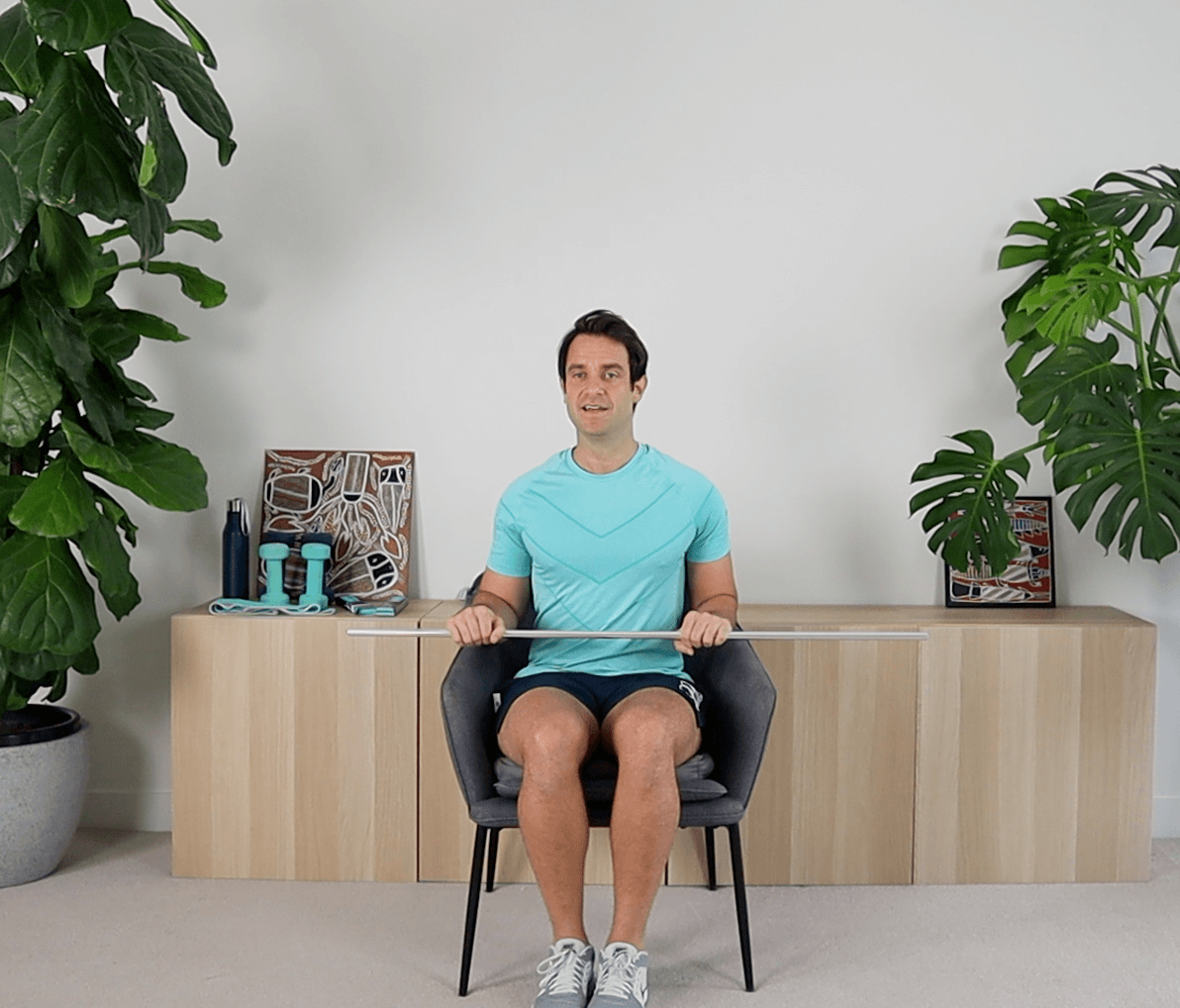

How To:
Similar to the previous exercise.
Sitting up tall in your chair with good posture, keep your elbows tucked in at your side at a 90-degree angle, holding onto your stick.
Rotate the affected arm out away from your body using the unaffected arm.
Repeat 5-10 times.
7b. WALL CRAWLS - FLEXION

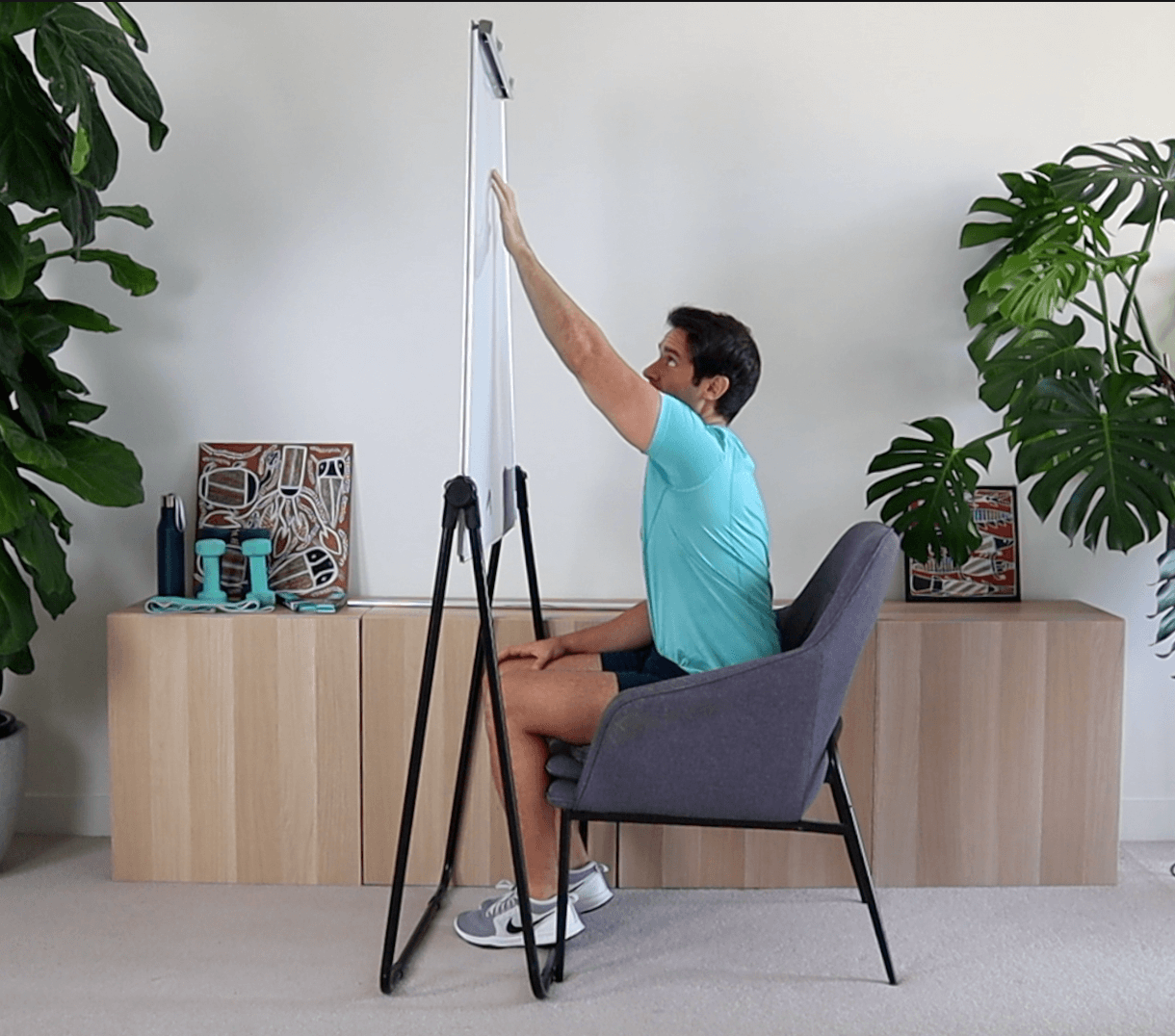
How To:
Face a wall.
Reach out and touch the wall, at the height you are able to, with the fingertips of the affected arm.
Keeping your elbow slightly bent, slowly walk your fingers up the wall like a spider. Use your fingers, not your shoulder muscles.
Do this until you've raised your arm to shoulder level or as far as you comfortably can.
Slowly lower the arm (with the help of the good arm, if necessary) and repeat.
Perform this exercise 5-10 times.
7c. FINGER WALL CRAWL - ABDUCTION


How To:
As per the previous exercise, this time, face side on to the wall.
Reach out and touch the wall, at the height you are able to, with the fingertips of the affected arm.
Keeping your elbow slightly bent, slowly walk your fingers up the wall like a spider. Use your fingers, not your shoulder muscles.
Do this until you've raised your arm to shoulder level or as far as you comfortably can.
Slowly lower the arm and repeat.
Perform this exercise 5-10 times.
8. TOWEL STRETCH
The ability to place a hand behind the back becomes difficult with a frozen or stiff shoulder. This exercise helps stretch the shoulder for movements reaching behind the back.
How To:
Holding onto a rolled-up towel on the unaffected side, bring your arm over your head so the towel hangs behind you.
Now grab the other end of the towel behind your back with your affected arm.
Use your good arm to gently pull up, allowing the affected side to feel a bit of a stretch.
Hold for 10 seconds and repeat for 2-3 sets. Increase the time as you are able to.
9. POSTERIOR CAPSULE STRETCH


How To:
Sitting up tall in good posture.
Place your arm on your opposite shoulder, use your unaffected arm to lift your affected arm at the elbow, and bring it up and across your body.
Apply gentle pressure to stretch the shoulder.
Hold the stretch for 30 seconds.
SHOULDER STRENGTHENING EXERCISES
10. SCAPULA RETRACTIONS
This exercise gently stretches the front of the body (chest muscles) and is a basic strengthening exercise for the scapular muscles.

How To:
Sitting up tall in your chair, in good posture.
Squeeze your shoulder blades together and hold for 5 seconds.
Repeat for 5 times.
11. ISOMETRIC SHOULDER EXTERNAL ROTATION
This will help strengthen the shoulder muscles.
How To:
Sitting up tall in your chair, in good posture.
Keep the elbow of your affected arm tucked in at your side and at a 90-degree angle.
Now place your hand of the unaffected arm on the wrist of the affected arm
Apply a gentle pressure inwards on the unaffected arm and resist with the affected arm pushing out, keeping the arm in position.
Hold this for 5-10 seconds.
Repeat for 5 times.
FROZEN SHOULDER EXERCISES FOR SENIORS - SHOULDER RANGE OF MOTION EXERCISES (VIDEO)
DAILY SHOULDER EXERCISES VIDEO
SOURCES
1. Adhesive capsulitis of the shoulder: review of pathophysiology and current clinical treatments https://www.ncbi.nlm.nih.gov/pmc/articles/PMC5384535/2. Upper extremity: emphasis on frozen shoulder https://pubmed.ncbi.nlm.nih.gov/17141009/3. Physical therapy in the management of frozen shoulder. https://www.ncbi.nlm.nih.gov/pmc/articles/PMC5917053/
5 Best Exercises For Lumbar Spinal Stenosis
In this video, we cover the best exercises to help relieve pain associated with lumbar spinal stenosis.
Exercise Routine For Lower Back Pain
Follow along with me (Mike - Physiotherapist) for these 5 best exercises to help relieve pain associated with lumbar spinal stenosis.
Although this video is made specifically for those with spinal stenosis, they are still great exercises for your lower back. So why not give them a go!
If the amount of repetitions is not enough for you, you can add in some more.
If you have spinal stenosis (or back pain), make sure to build up the repetitions gradually over time. You do not want to overdo it.
For more on spinal stenosis, make sure to read my article: All about spinal stenosis & what you can do about it.
In this video we cover:

Do your best and any questions ask below!
- Mike
All About Spinal Stenosis & What You Can Do About It!
The word “stenosis” is used in medicine to describe a narrowing of a passage of the body.
In spinal stenosis, as you may have already guessed, the narrowing is of an area of the spine.
The symptoms associated with this condition can make daily life difficult. However, it’s important to understand that chronic pain (and other chronic symptoms) are usually caused by multiple factors. NOT solely from the diagnosed issue itself (in this case, spinal stenosis).
There are also many effective treatments available.
By taking the right steps and seeking the right Health Professionals, YOU CAN GET RELIEF!
Relieving Spinal Stenosis
(Includes Best Exercises For Spinal StenosiS)
The word “stenosis” is used in medicine to describe a narrowing of a passage of the body.
Spinal stenosis, as you may have already guessed, is the narrowing of an area of the spine.
Spinal stenosis is a condition that can more commonly affect those over 60. It can lead to various symptoms, including lower back pain, weakness in the legs or arms, numbness in the buttocks or legs, or balance and mobility issues.
The symptoms associated with this condition can make daily life difficult. However, there are many effective treatments available and by taking the right steps, YOU CAN GET RELIEF!
In this article, we are going to look at spinal stenosis and what you can do about it! (including exercises, with an exercise video that will help).
WHAT’S COVERED IN THIS ARTICLE:
Note: Do not self-diagnose based on the information in this article. If you are experiencing any of the symptoms discussed in this article, make sure you see your Doctor or Physiotherapist before coming to any conclusions.
UNDERSTANDING SPINAL STENOSIS (TO BRING RELIEF)
ABOUT OUR SPINE
To better understand spinal stenosis, a little knowledge of the spine is needed. Let’s take a look at that now.

The Regions of the Spine
Our spine is a strong structure that supports our upper body. It keeps us upright and standing straight.
It’s also a flexible structure that allows certain movements. It can bend forward (flexion), bend backward (extension), twist to each side (rotation) and bend to each side (lateral flexion).
Our spine comprises 29 smaller bones that run from our neck to our pelvis (to the tail bone).
There are seven bones in the cervical region (the neck), twelve in the thoracic region (the upper back), five in the lumbar region (the lower back) and five bones, which are fused (and don’t move), in the sacral region (the pelvis).
These bones are called vertebra or vertebrae (plural).
Between each of our vertebrae are intervertebral discs which act as little cushions and provide shock absorption.

Vertebrae, Intervertebral discs and spinal cord
The intervertebral discs also allow our spine to move.
In the middle of our spine, a column of nerves runs through these bones. This column of nerves is our spinal cord. The space in which the spinal cord sits is known as the foramen.
The spinal cord is quite delicate and it is protected by the surrounding vertebral bone and other tissues.
Nerves of the spinal cord branch off at every level of the vertebrae to allow signals from the brain to reach the rest of the body.
ABOUT SPINAL STENOSIS
Throughout life, changes to the spine can occur for various reasons.
These changes can cause the spaces the spinal nerves pass through to become narrowed (aka spinal stenosis).
Any narrowing where the nerves pass through can pinch the nerves leading to pain and neurological symptoms that can affect walking, balance and sensation, and cause paralysis.
Spinal stenosis can happen in any part of the spine but most commonly occurs in the lumbar and cervical regions.
Lumbar stenosis is the most common type of spinal stenosis.
CAUSES OF SPINAL STENOSIS
Changes to the spine that cause spinal stenosis are:
OSTEOARTHRITIS
Over the years, our joints experience wear and tear, otherwise known as osteoarthritis. Osteoarthritis is the most common cause of spinal stenosis.
Osteoarthritis can cause the spaces the nerves pass through (the foramen) to become narrowed.
The wear and tear can also lead to abnormal bone growth, called osteophytes or bone spurs, which can cause narrowing of the foramen and put pressure on the nerves.
INTERVERTEBRAL DISC ISSUES
Additionally, as we get older, the discs between our vertebrae lose height and become dehydrated (this is why we lose height as we age).
As the discs become thinner, there is now increased pressure on the spinal joints, and it can also lead to narrowing of the foramen.
The intervertebral discs can also bulge, pushing into the spinal canal, leading to spinal stenosis.
LIGAMENT THICKENING
Another cause of spinal stenosis is a thickening of the spine's ligaments, caused by osteoarthritis and inflammation. [1]
SYMPTOMS OF SPINAL STENOSIS
With spinal stenosis, the symptoms vary between each person.
The most common symptom is pain radiating down the legs. This pain is usually felt in both legs but can occur in only one.
The pain is usually aggravated when hyper-extending the back (leaning/bending backwards). See diagram below.

Position of most pain - extending.
Additionally, prolonged walking or standing also commonly increase the symptoms.
Other common symptoms of spinal stenosis are numbness and weakness in the legs, which can lead to balance and mobility issues.
On the other hand, certain positions relieve pain, which is characteristic of spinal stenosis.
Bending forward relieves the pain (e.g. leaning forward on a table when standing, or a shopping trolley, or walking aid, when walking).
HOW IS SPINAL STENOSIS DIAGNOSED
If you are experiencing any symptoms discussed above, see your doctor or Physiotherapist for an appropriate assessment and diagnosis.
Your doctor may order medical images/scans (X-ray and/or MRI).
As mentioned at the beginning of this article, there is no direct link between the severity of stenosis seen on medical imaging and symptoms. One may have severe stenosis on scans and no pain, and another can have mild stenosis on scans and severe pain.
How is this possible? Because scans CANNOT tell you what is causing your pain. Pain is caused by a variety of reasons.
Scans can, however, give an idea of what is going on in your back, which helps with recovery.
Therefore you mustn't get too caught up in the results of your scans or the diagnosis of spinal stenosis. Instead, turn your attention to applying what's required to remedy your pain.
I cover medical imaging and beliefs around pain in detail in my articles on chronic pain. You can find all these articles HERE. In Part 1 of my Pain Series articles - Pain is More than Meets the Eye we look at pain from a different angle and Part 2: The Real Causes of Pain - I demonstrate, backed with studies, that what is identified on scans is not the sole cause of your pain.
Once you have an idea of what is causing your pain, your doctor will help you decide on the appropriate treatment. A conservative, exercise and lifestyle-based approach is usually the first line of treatment for spinal stenosis.
Now let's get to what you can do to help bring relief from spinal stenosis.
GETTING RELIEF FROM SPINAL STENOSIS
We have now covered that multiple factors contribute to pain and other symptoms in spinal stenosis and other chronic, painful conditions.
I discuss these factors that usually contribute to chronic pain and other symptoms in more detail in my article: “Overcoming Pain - Empty Your Cup” - (click to read).
When symptoms from spinal stenosis are increased, the best solution is to rest and avoid what is aggravating them.
At these times, management techniques can help also. These techniques include analgesia (speak to your doctor about this), heat packs, heat rubs/creams, cryotherapy (ice), herbal remedies, TENs (Transcutaneous Electrical Stimulation), ultrasound, acupuncture, cupping, stretching, amongst many others.
Rest and analgesia are not long term solutions and will eventually lead to further issues.
Exercise, along with other lifestyle changes, on the other hand, are long term solutions!
A gradual return to movement and activity is necessary as symptoms improve.
Additionally, other factors such as changing your views surrounding pain, shifting your focus on leading a healthier life, reducing stress, sleeping better, eating healthily, getting moving/exercising and doing specific exercises (covered in the next section) will help you overcome your symptoms.
I discuss lifestyle changes in more detail in my article “Overcoming Pain - Empty Your Cup Article”. And, In Part 4 of the Pain Series articles, “Overcoming your pain”, make sure to check them out.
The articles I have linked to above will give you new ways to think about your pain and solutions to begin living a healthier life and help bring relief from your spinal stenosis.
There are also many health professionals and clinics that can help you with your condition. So speak to your doctor or Physiotherapist or seek the right Health Professional for you who can help.
Being in pain/suffering is NOT a normal part of aging. There are many things you can do to help bring relief. You do not have to put up with the symptoms of spinal stenosis.
EXERCISING TO IMPROVE SPINAL STENOSIS
When in pain, the urge may be to avoid exercise altogether. In the beginning or during a flare-up of symptoms, this is ok.
However, exercise and movement are vital to manage and help overcome spinal stenosis (and any painful, chronic condition). This will ensure you remain moving well and your muscles and joints stay strong and flexible.
I recommend seeing a Physiotherapist if you are experiencing symptoms from spinal stenosis (or any back pain for that matter) as they can determine what physical issues could be contributing to your pain and develop an individualised exercise program for you.
They will also teach you specific exercises, ensure you are doing them correctly, keep track of your progress and modify your exercises where need be.
EXERCISES THAT MAY AGGRAVATE SPINAL STENOSIS
Avoiding any body movements can lead to further issues - such as increased stiffness and weakness.
However, with all painful conditions, there may be specific movements at times that will aggravate your pain, especially when symptoms are increased.
As discussed earlier, extension movements, movements leaning backwards, are common positions that cause pain with spinal stenosis.
I am demonstrating some movements in the extension position in the pictures below.

Seated lumbar extension

An increased lumbar extension stretch - Hyperextension
On the other hand, flexion movements (covered in the next section) will help ease your symptoms of spinal stenosis.
Also, stretches in standing may increase symptoms. Seated or lying stretches may be better.
Other activities that may aggravate symptoms of spinal stenosis are strengthening exercises (free weights), other high-impact exercises (for example, dancing, jogging or certain sports) and long walks (longer distances and time).
Although you may need to avoid, limit or modify certain exercises or activities initially, it does not mean you have to avoid them for good. These activities and exercises mentioned above bring many health benefits.
Free weights can be an excellent tool for a stronger body and help with back pain, provided they are performed correctly, and you have a clearance from your doctor or Physiotherapist.
Walking is another excellent form of exercise, and exercise everyone should be doing as they are able. Start with shorter, gentle walks before progressing. For more on this, make sure to check out my article on walking HERE.
It is important to have a healthy outlook on your pain. Aim to return to your previous levels of activity, and then eventually moving beyond that and doing more types of exercise as your symptoms and movement improve over time.
EXERCISE CHOICES FOR SPINAL STENOSIS
There are always alternate exercise options if you cannot do certain activities or exercise due to your pain or other symptoms.
One of those options is swimming or exercising in water (hydrotherapy).
Although swimming puts you in a more extended position, most people experience less or even no symptoms due to the non-weight bearing, low impact nature.
Swimming allows you to exercise your body with decreased stress/impact.
Additionally, if you are having difficulty doing exercises due to pain, exercising in water (known as hydrotherapy) can allow you to exercise your body without increasing symptoms due to your increased buoyancy (or decreased weight-bearing) in the water.
Furthermore, heated pools can help relax muscles and reduce pain, which will make the exercises more manageable and allow a greater range of movement compared to when out of the water, leading to more benefits.
After some time exercising in water, land-based exercise will begin feeling easier.
Other types of exercise that may help with your pain include smaller walks (building this up over time), yoga, pilates, or riding a stationary bike.
BEST EXERCISES FOR SPINAL STENOSIS
5 BEST EXERCISES FOR LUMBAR STENOSIS
Here are the best exercises you can do to help bring relief from your symptoms of spinal stenosis. There is an exercise video in the next section, which you can follow. The video will make it all easier.
If you have trouble getting up or down off the floor, I recommend doing these exercises on a firm bed.
Aim to complete these exercises once per day.
Go at your own pace and repeat for the repetitions stated below.
As you continue with the exercises, gradually increase the repetitions, time and sets over time.
Note: Remember to consult your Doctor or Physiotherapist to ensure these exercises are appropriate for you. If these exercises cause an increase in pain or other symptoms, stop the exercise and make sure to speak to your Doctor or Physiotherapist.
1. KNEE TO CHEST FLEXION STRETCH (DOUBLE)

How To:
Lie on your back, with your body comfortable and relaxed.
Bring both your knees to your chest and hug them, keeping your spine relaxed throughout.
Hold this position for 10 seconds and then slowly lower the legs.
Repeat 5 times.
2. SINGLE KNEE TO CHEST FLEXION STRETCH

How To:
Similar to the exercises above, this time drawing one leg up at a time.
Lie on your back, with your body comfortable and relaxed and legs extended.
Bring one knee to your chest and then bring it closer to your chest by placing your hands either at the back of the thigh or just below the knee.
Hold this position for 5 seconds and then slowly lower the leg, and alternate legs.
Repeat 5 times each side.
3. LUMBAR ROTATIONS


How To:
Lie on your back, with your arms by your side and with your knees bent at 90 degrees,.
To begin keep both feet flat against the floor.
Slowly rotate the knees to the left side as far as you can, then slowly rotate the knees to the right side.
The soles of your feet will lift off the ground when doing this exercise.
Repeat this for 5 repetitions each side.
4. BRIDGE

How To:
Lie on your back with knees bent at 90 degrees , your arms by your side and palms against the floor.
Squeeze your buttocks and raise the hips off the ground to bring the torso into a straight diagonal line.
Hold this position for 5 seconds then slowly lower your bottom back to the ground.
Repeat 5 times.
5. SEATED LUMBAR FLEXION

How To:
Sit in a firm chair with both feet on the floor.
Slowly bend yourself forward and reach towards the floor.
Hold the fully bent position for 5 seconds.
If you need to increase the pressure, hold your ankles and move into the stretch a little more.
After holding for 5 seconds, release and return to the full, upright seated position.
BEST EXERCISES FOR LUMBAR STENOSIS (VIDEO)
3 BEST EXERCISES FOR CERVICAL STENOSIS
Exercises for cervical spinal stenosis also work to improve the strength and flexibility of the neck and upper back.
Here are some upper back and neck exercises for spinal stenosis.
1. BACKWARD SHOULDER ROLLS
How To:
Sitting up nice and tall in your chair with your feet flat on the ground.
Lift your shoulders up toward your ears and then roll them back and down.
Now relax into the starting position.
Repeat this rolling motion.
Complete for 10 repetitions.

2. SEATED SHOULDER SQUEEZES

How To:
Sitting upright in your chair in good posture.
While seated, draw your shoulder blades together, hold for a second or two, and then lower back to the start position
Repeat for 10 repetitions.
3. CHIN TUCKS


How To:
Sitting upright in your chair in good posture
Maintaining this upright posture retract your chin out and slowly tuck your chin all the way in.
Do not move your head up or down during this movement.
Ensure you maintain the upright seated posture
Repeat for 10 repetitions.
SOURCES
Spinal Stenosis. https://www.ncbi.nlm.nih.gov/books/NBK441989/

Simple Breathing Exercises For Seniors | Improve Your Breathing
In this video, we cover breathing exercises for seniors which you can do to help you improve your breathing.
5 Simple Breathing Exercises For Seniors
Join me (Mike - Physiotherapist) for this exercise video where we do 5 simple breathing exercises which you can do to help you improve your breathing.
Healthy lungs are essential for optimal functioning through all stages of life, but, just like all areas of the body, our lungs are not immune to changes as we get older.
However, when we get a better understanding of our lungs and our respiratory system and what can happen through the years, we can take charge of our health and do what’s necessary to improve the health of our lungs.
There are many things that you can be doing, right now, to improve your lung health.
Click HERE for my most recent article on improving lung health over 60!
In this video we cover:
Do your best and any questions ask below!
- Mike

Better Breathing: Improving The Health of Your Lungs Over 60
Healthy lungs are essential for optimal functioning through all stages of life, but, just like all areas of the body, our lungs are not immune to changes as we get older.
However, when we get a better understanding of our lungs and our respiratory system and what can happen through the years, we can take charge of our health and do what’s necessary to improve the health of our lungs.
There are many things that you can be doing right now to improve your lung health.
So today, we will do exactly that! We are going to go through everything you need to improve the health of your lungs!
THE KEYS TO HEALTHY LUNGS FOR SENIORS (INCLUDES BREATHING EXERCISES)
Our lungs! An amazing and hard-working organ!
With each breath of air we take in, our lungs extract the oxygen we need to fuel our body. With each breath out, our lungs expel carbon dioxide, a waste product of the cells of our body doing their work.
Healthy lungs are essential for optimal functioning through all stages of life, but, just like all areas of the body, our lungs are not immune to changes as we get older.
However, when we get a better understanding of our lungs and our respiratory system and what can happen through the years, we can take charge of our health and do what’s necessary to improve the health of our lungs.
There are many things that you can be doing, right now, to improve your lung health.
So today, we are going to go through everything you need to do this.
In this article, we will look at how the lungs work, we will cover how our lungs change as we get older and look at a few lung conditions that are more common as a result of aging.
We will then go through what to do right now to improve your lung health (and your overall health). We will cover, in detail, exercising for better lung health (in general and with a lung condition). Finally, at the end of the article, we will go through some specific breathing exercises (with a video you can follow along to) to help improve your lung health and breathing.
CONTENTS:
NOTE: Try not to skip any parts of this article. Doing what’s important for your health does take more time and effort, but the results are ALWAYS WORTH THE EFFORT. So, take the time to read this article from start to finish, and, if you know anyone who would benefit from this article, make sure to send it on.
Now, let’s begin!
HOW YOUR LUNGS WORK
To understand what can happen to your lungs as you get older and what you can do to keep your lungs as healthy as possible, we will look now at the lungs and how they work in a bit of detail.
Our lungs serve two main functions. 1) To take oxygen in the air we breathe and circulate it around the body, which is vital for all cells, and 2) remove waste gases (carbon dioxide) from the body. This process is vital for life.
I’m sure you know we have two lungs: The right lung and the left lung.
When we take a breath in, the air moves down our trachea (windpipe) into the bronchi, which is the first branch of the trachea. The bronchi allow air to move both in and out of the right and left lungs.
THE LUNGS (RESPIRATORY SYSTEM)
The bronchi divide into increasingly smaller branches, known as the bronchioles. At the end of each bronchiole, there are clusters of microscopic, balloon-shaped air sacs, known as alveoli.
[For a better understanding see the diagram above of the respiratory system].
As we breathe, oxygen from the air is absorbed into the blood. The now oxygen-rich blood flows to the heart and is pumped to each cell, for fuel, throughout the body. As the cells of our body do their work, carbon dioxide, made by the cells, moves into the blood and returns to the heart.
The heart then pumps this carbon dioxide-rich blood to the lungs, passing into the alveoli, which then travels back out the trachea and is exhaled through the mouth or nose.
Our lungs expand with inhalation, as the alveoli fill with air and shrink with exhalation as carbon dioxide is expelled.
You’d most probably assume that the lungs contain muscles to aid in this expansion and contraction. This is not the case! Our lungs contain no muscles.
However, a strong, dome-shaped muscle is beneath the lungs known as the diaphragm. The diaphragm is the primary muscle that aids in the expansion and contraction of the lungs when we breathe, and separates our chest and abdominal cavities.
Additionally, other accessory respiratory muscles (of the abdomen and ribcage) aid the diaphragm in inspiration and expiration.
Our lungs are also supported and protected by our rib cage, which moves slightly to help our lungs expand and contract.
WHAT HAPPENS TO OUR LUNGS AS WE GET OLDER
Our lungs reach full maturation and function around the age of 20-25. [1]
After this, there is a slow, gradual decrease in the function of our lungs and respiratory system due to the normal changes of aging.
These changes occur to the lungs themselves, the muscles and bones which assist our breathing, and a decrease in immune system function over the years can also cause lung issues.
CHANGES TO THE RESPIRATORY SYSTEM WITH AGING:
CHANGES TO THE LUNG
The alveoli (air sacs) become larger and lose elasticity (decreased elastic recoil during inhalation/exhalation). [2]
CHANGES TO THE MUSCLES (AND OTHER SOFT TISSUES)
The diaphragm weakens.
The accessory respiratory muscles weaken and may stiffen up.
Other soft tissues can also weaken and become stiffer causing increased stiffness of the chest wall.
CHANGES TO THE BONES
Bones become thinner and change shape. Due to this, the ribcage can’t expand and contract as efficiently during breathing.
CHANGE TO THE IMMUNE SYSTEM
Our immune system’s function decreases with age, leading to an increase in inflammation, making it more difficult for the body to fight lung infections. [3, 4]
These changes, combined with being frequently exposed to many environmental toxins over the years (i.e. respiratory infections, air pollution, occupational dust/chemicals, smoke etc.), can take their toll on our lungs. Our lungs become less efficient and more susceptible to inflammation and infection. [5]
Although this may all sound a little worrisome, the changes are mostly natural, are gradual over the years and also subtle. It will only be when exercising that you will notice a difference, such as a decrease in fitness (increased shortness of breath or muscle fatigue) when exercising.
The changes of the lungs described above CAN BE IMPROVED IN SOME WAY, NO MATTER YOUR CONDITION RIGHT NOW! Which we will get to in the upcoming sections.
[If you notice sudden changes with your breathing, however, this includes increased shortness of breath (even when resting), or you are having difficulty keeping up with people your age, or you have persistent respiratory symptoms (for example - a cough that won’t go away) - make sure to see your doctor].
Before we get into what you can do to improve your lung health, let’s now go through some lung conditions in seniors. As I know, some of you reading this may have these conditions.
COMMON LUNG CONDITIONS OVER 60

Lung conditions can occur and do become more common as the years go on. These conditions can make it difficult to function each day.
There are many conditions that can affect the lungs, too many for me to cover them all in this article, however, here are some more common lung conditions that can occur in seniors:
ASTHMA
Asthma is when the lungs’ airways become inflamed and narrowed to the point that breathing is difficult.
Asthma is characterised by difficulty breathing, a dry hacking cough, wheezing and a tight chest.
This narrowing of the airways in asthma is reversible and those with asthma can lead a normal, active life with a healthy lifestyle and proper treatment.
BRONCHITIS (ACUTE)
Acute bronchitis is an infection, that lasts less than three months, of the lining of the bronchial tubes.
Acute bronchitis is usually caused by a viral infection (cold or flu) or sometimes by a bacterial infection.
The most common symptom of bronchitis is a productive cough (brings up mucus). Coughing can become constant and turn into wheezing or difficulty breathing.
CHRONIC OBSTRUCTIVE PULMONARY DISEASE (COPD)
An umbrella term for the lung diseases emphysema and chronic bronchitis.
EMPHYSEMA
In emphysema, the walls between many of the alveoli (air sacs) are damaged. As a result, the alveoli lose their elasticity and shape and become baggy.
This damage can also destroy the alveoli walls, leading to fewer and larger alveoli instead of many tiny ones, reducing the amount of airflow into the lungs and even more so the amount out.
Shortness of breath is the main sign of emphysema. At first, it may be only after exercise. Eventually, it can happen at rest.
CHRONIC BRONCHITIS
In chronic bronchitis, the lining of the airways stays constantly irritated, inflamed and swollen (longer than three months). This leads to thick mucus forming in the airways, making breathing difficult.
Most people who have COPD have both emphysema and chronic bronchitis. However, due to the difference in the severity of each condition from person to person, the general term COPD is used.
COPD Is progressive and is usually caused by smoking (or passive smoke) or exposure to other lung irritants such as air pollution, chemical fumes, or dusts.
PNEUMONIA
Pneumonia is an infection of one or both of the lungs. The infections are usually caused by bacteria or a virus. However, sometimes it can be caused by fungi.
The infection leads to inflammation of the alveoli and the alveoli filling with fluid and pus, making it difficult to breathe.
Symptoms include fever, chills, shortness of breath, a chronic, wet cough and chest pain when breathing or coughing.
Those who smoke or have other chronic disease are more susceptible to pneumonia.
These are some of the more common lung conditions. There are many effective treatments out there for these conditions and many treatments to ease the symptoms.
If you have been diagnosed with a progressive lung disease, there are always things you can do to improve your situation, with many programs and/or Professionals out there that can help. So do not lose hope!
In the next sections, we will cover what you can do to improve your lung health.
IMPROVING LUNG HEALTH OVER 60
Beyond getting active (which we will cover in later sections), there are some steps you can take to improve the health of your lungs throughout your life, these are:
DON’T SMOKE
We all know that smoking is terrible for our lungs. Smoking also compounds the effects of aging.
If you’re a smoker, although this is not easy to do after years of this habit - if you want to improve your lung health and prevent it from worsening - YOU MUST STOP SMOKING!
There are plenty of good programs and apps out there that can help you quit and many people have successfully quit using these programs. You can also speak to your doctor about quitting next time you visit who will be able to guide you.
AVOID TOXIC FUMES - STICK TO CLEAN AIR
Air pollution - both indoor and outdoor, secondhand smoke, chemicals and dust (both in the home and workplace) can cause damage to your lungs.
Avoid secondhand smoke, stay away from harsh chemicals and avoid breathing in damaging fumes (e.g., cleaning and gardening products). Wear a quality mask if these products are unavoidable.
Stick to clean air as much as you can. If you can make a move to a place with cleaner air, you will do great things for your lungs.
I know that it's not so easy to make a move to a place of cleaner air, so consider taking day trips out in nature or to places with cleaner air.
MAINTAIN A HEALTHY WEIGHT & EAT HEALTHY
In obese and overweight people, there is a strong correlation between lung function and body fat distribution.
Obesity causes compression of the lungs, the diaphragm, and the chest cavity, leading to restrictive pulmonary damage. Additionally, excess fat decreases respiratory system compliance, increases pulmonary resistance and reduces respiratory muscle strength. [6]
On the other hand, being underweight has also been associated with decreased pulmonary function parameters due to low muscle mass and reduced strength and force of the diaphragm and accessory respiratory muscles. [7]
Do what you can to ensure you maintain a healthy weight.
GET MOVING - REGULAR EXERCISE
Regular exercise will strengthen your respiratory and skeletal muscles and improve your lung and other body systems' efficiency.
If you are new to exercise, it's just about getting started, staying consistent and progressing over time.
It is important you gradually build up the amount of exercise you do with any type of exercise, ensuring you don't overdo it.
Aim to spend more time moving and less time seated or lying - gradually building this up.
[We will cover exercise in more detail in the next section]
IMPROVE YOUR OVERALL HEALTH
Our body systems are working together, so it is crucial to improve your overall health. Think about other aspects of your health that you can improve and set out on improving them.
This includes:
Maintaining a healthy weight and getting moving (discussed above).
Minimising junk food and eating a healthy diet full of nutrient-dense foods, so you’re getting all your needed vitamins and minerals and energy. (For more on healthy eating, click HERE).
Decreasing stress and worry. Anxiety, worry, fear, and other strong negative emotions take their toll on health and make breathing more difficult. If you are constantly under stress, speak to your doctor about this. Also, set time aside each day for relaxation and letting go of stress. There are plenty of good apps that can help with this.
Adequate sleep - make this a priority. If breathing difficulties affect your sleep, speak to your doctor about this. (For more on this, click HERE).
Other steps for improved health include getting adequate sunlight, socialising and proper hydration.
GET REGULAR CHECK-UPS
Regular check-ups with your doctor are very important, even when feeling well.
Lung issues can sometimes get unnoticed until it gets serious.
Make sure you see your doctor every six months for a regular check-up.
HOW TO EXERCISE TO IMPROVE LUNG HEALTH

When exercising to improve your lung health, there are some guidelines to follow that will bring the most benefit.
However, try not to get too caught up in it all and wanting to get everything perfect. What’s most important is to just get moving more so, especially if new to exercise.
The more you move (without overdoing it), the better your lungs and respiratory muscles will function, and your fitness will improve. The less you move, the less efficient your lungs and respiratory muscles will be (decreased fitness). It’s as simple as that!
Remember, when you spend less time seated, and more time on your feet, your lung function and overall health will improve.
You ALWAYS want to work your way up to more activity over time, however. Start small and gradually build on this. Slow and steady to get to your goals.
When you do too much too soon, this is where problems (and injuries) can arise.
This section will go through how to exercise to ensure you’re improving your lung health safely and effectively. In the following section, I will cover the basics of exercising with a lung condition.
EXERCISE FOR HEALTHIER LUNGS
We’ve established that getting moving more is the key to healthier lungs. However, sooner or later - once you’ve got the hang of it, or you notice what you’re doing isn’t giving you the results that you want - you’re going to have to change things up to keep getting results.
There are some guidelines to follow to do this.
To determine how to exercise for improving lung health, we will make this easier by following the F.I.T.T Principle. (Frequency, Intensity, Time and Type).
HOW OFTEN SHOULD SENIORS EXERCISE TO IMPROVE LUNG HEALTH (FREQUENCY)
To exercise for better lung health, you want to be exercising at minimum, three times per week and optimally five times per week of exercise that gets that heart rate up and lungs working. Again, you would build up to more over time.
You’d also want to be doing strengthening exercises at least two days, preferably three days, per week.
Being active on most days, preferably all days in some way, is best. The more you’re moving the better.
It does not have to be a specific type of exercise. You can choose the exercise or activities you enjoy (we will get to this soon).
HOW HARD SHOULD SENIORS EXERCISE TO IMPROVE LUNG HEALTH (INTENSITY)
The intensity of exercise is how hard you exercise during each session. Or, how much you are exerting yourself.
To improve your fitness and lung function, a certain level of stress needs to be applied to the body and respiratory system.
A simple way to know the intensity of the exercise you are undertaking, you can use a Rating of Perceived Exertion (RPE) Scale. [See below].

RPE SCALE - To download click above.
To use this scale to determine exertion during exercise, you simply ask yourself, “how hard does this exercise feel to me” based on the numbers and how difficult the exercise feels as per the scale.
If the exercise feels too easy (point 7-9), increase the intensity of the exercise to increase the number/points. If the exercise feels too difficult (point 16+), decrease the intensity of the exercise to bring the number down.
As you can see, this is a simple way to determine and track how much you are exerting yourself during exercise (or the intensity) without using technology and heart rates.
For optimal results to improve your lung health, you want to ensure you are exercising for a set time at moderate intensity. This would be an RPE of 13 (somewhat hard - slight breathlessness, can talk - 70%) to 15 (hard - increased sweating, able to push and still maintain proper form - 80%).
This may sound confusing, but once you’ve downloaded the table and had a look, it’s quite easy to work out.
You then would want to stay consistent at this level 3 to 5 times per week.
As you stay consistent with the exercise, you will find you are doing more exercise to stay in that 13-15 range.
TO DOWNLOAD and PRINT an RPE scale to use, you can do this HERE.
HOW LONG SHOULD SENIORS EXERCISE TO IMPROVE LUNG HEALTH (TIME)
We now know how much we should be exercising each week and at what intensity.
We now need to determine how long to exercise for each session, each day and each week.
When exercising to improve lung function, aim for 30-60 minutes per session. Or aim to achieve 150 - 300 minutes per week of moderate-intensity physical activity each week.
You can break this up during the day into shorter sessions if you have difficulty with longer, continuous exercise.
As stated earlier, some exercise is better than nothing, and on some days, you will find it hard to get moving. That’s ok! Do your best! And always be nice to yourself. :)
WHAT TYPE OF EXERCISE SHOULD SENIORS DO TO IMPROVE LUNG HEALTH
Now, it’s about deciding on what type of exercise to do.
When it comes to the type of exercise - the world is your oyster! :)
There are so many different types of exercise you can do. Get creative.
You can choose between the many MORE LIFE HEALTH EXERCISE VIDEOS. (Click for videos). Or longer exercise routines HERE.
Make sure you’re also signed up to the More Life Health Mailing list to get a FREE 4-week exercise ebook that you can follow along with to help get you started. (CLICK to Join)
Another type of exercise is walking. Walking is an excellent type of exercise to help improve your fitness, and you can vary the difficulties and intensities. Make sure to check out my article on walking HERE.
You can also go hiking, swimming, to the gym, treadmill, cycling, rowing, taking an aerobics or swim aerobics class.
Maybe it’s gardening, playing golf, tennis or playing with the grandkids.
Whatever it is, there are plenty of ways to get moving and to make it enjoyable.
But remember - no matter the type of exercise — always build it up. And always speak to your doctor before undertaking exercise.
If you’re stuck or want to get ideas of what others are doing, join the More Life Health Support Community for help. You can do this by clicking HERE.
PROGRESS THE EXERCISE AS YOU IMPROVE, SO YOU CONTINUE TO IMPROVE
Once you have been exercising for some time and you’re well into the swing of things, your body will be improving.
You’re now consistently exercising - you’re working your skeletal muscles, working your respiratory muscles, working your heart muscles and your lungs and other body systems.
By doing this, your body and lungs are becoming more efficient, and you now have improved tolerance to the demands and stressors of daily life.
Eventually, the exercises will become too easy as your body adapts. To continue to improve your health and fitness, you must gradually increase the exercise.
You do this by increasing the distance, speed, weight, repetitions, or sets, so you continue to challenge yourself and continue to make improvements towards your goals.
IMPROVING LUNG HEALTH - EXERCISE SUMMARY:
FREQUENCY of exercise:
3-5x per week of exercise that increases the heart rate.
2-3x per week of strengthening exercise.INTENSITY of exercise:
Moderate intensity exercise - 13-15 Rating of Perceived Exertion (RPE).TIME spent on exercise:
30-60 minutes per session (or per day if unable), or 150-300 Minutes per week.
Some exercise is better than no exercise.TYPE of exercise:
The world is your oyster - get creative.GRADUAL PROGRESSION of exercise:
Stay consistent. When you do this, the exercise will become easier. It's now time to progress the exercise gradually so you continue to improve.
EXERCISING WITH A LUNG CONDITION
When you have a lung condition, the thought of exercising can be intimidating and scary, especially when you haven’t done much exercise previously.
Breathlessness can also be scary, and fears can arise around this.
This fear causes many to avoid activities that may increase that breathlessness. With the avoidance of exercise and therefore less activity, your body will become weaker, and the body systems will become less efficient.
As time goes by, it then becomes even more challenging to exercise. The feelings of breathlessness increase as your body now requires more oxygen to work at less effort, and the cycle repeats. The less active you are, the more your symptoms will increase.
I have just described the cycle of inactivity and this can be common in those with a lung condition—[See diagram below].

Negative Cycle of INACTIVITY
This cycle of inactivity demonstrates why getting moving is so important when you have a lung condition.
When you exercise, your musculoskeletal, respiratory and cardiovascular systems are all being worked, which are vital to improving your lung health.
To overcome and avoid this cycle of inactivity and turn it all around, it starts with being aware and overcoming those fears of breathlessness.
Breathlessness during exercise, although uncomfortable, is normal and will help improve the condition of your body and your lungs.
The next step is to get active and remain active.
You do not have to do a lot of strenuous exercises. The key is just to get started and gradually build it up in the same way as we described in the last section.
You don’t overexert yourself, but you go at your own pace and stay consistent.
You don’t want to overexert yourself with exercise. Take it slow. You are in no rush and here for the long term. Doing too much too soon will have the opposite effect.
Once you begin and stick to it, this all gets much easier.
When you do this - you’ve beat the cycle of inactivity and the opposite happens!
As a result, you feel your body getting more conditioned. You feel stronger with less breathlessness (your body is now using less oxygen for the movement and is more efficient). The fitness of your lungs and heart are improved.
You will notice the activities you do, both during the exercise and in your daily life, which were once strenuous, are now getting much easier, and overall you feel much better.
You slowly and gradually build it up as you feel your body adapting to the exercise, and you're getting stronger and fitter. You see the importance of exercise and physical activity, which motivates you to continue. So you do!
A positive activity cycle is your new relationship with exercise, and it becomes the norm. [See diagram below].

Positive Cycle of ACTIVITY
Exercising with a lung condition does not have to be something done on your own.
If you are new to exercise and have a chronic lung condition, I recommend you see a Physiotherapist or join a Pulmonary Rehabilitation Program in your area. Doing this is the best (and safest) way to learn how to exercise if you have a chronic lung condition. It will ease a lot of fears you have around your exercise also.
Additionally, your exercises will be prescribed to you based on YOUR current health status and the goals YOU want to achieve.
These programs can be one-on-one or group sessions and are run by Health Professionals in your area.
Your doctor will speak to you about joining a program like this. Or if they haven’t, bring this up to your doctor next time you speak. Or your can do a quick google search to see if there are any pulmonary rehabilitation programs in your area, and give them a call to find out more.
Getting up and moving more is the key to improving your condition when you have a lung condition.
Aim to spend less time sitting and more time exercising. We are not built to be sitting so much.
There are many ways to go about your exercise if certain ways aren’t working for you. There ARE ALWAYS ways that will work, it is just about finding these ways.
One way is you can break up the exercise during the day into shorter sessions if having difficulty with longer, continuous exercise. You don’t need to do 30-60 minutes at once, 5x per week. Especially to begin with. Break it down, start small and build it up, gradually over time.
Do your best to stay positive. You can and will make progress!
If you’re having trouble with your exercise, working with a professional can help put your worries at ease and help make everything much more manageable and help you get the most out of your exercise.
BREATHING EXERCISES FOR IMPROVING LUNG HEALTH
These exercises below are specific exercises designed to help improve your breathing, strengthen the muscles of your respiratory system and help you relax, which will also help improve your breathing.
You can do these exercises once or twice a day.
NOTE BEFORE: If you feel light-headed or dizzy when doing these exercises, stop the exercises. As with all exercise, make sure you see your doctor before undertaking these breathing exercises.
BREATHING EXERCISES FOR SENIORS
To begin, make sure you’re sitting upright in a chair, you’re comfortable, with your shoulders back and down and your body relaxed.
EXERCISE 1: RELAXATION
This exercise is to help you relax in general and before beginning the exercises. Breathing will be more difficult when more anxious, worried or stressed. Try these breathing exercises throughout the day to help you relax!
HOW TO
Begin in the relaxed position above, with good posture. Gently close your eyes.
Breathe in gently through your nose and then out gently through your nose.
If you can't breathe out through your nose, breathe out through your mouth instead -if you breathe out through your mouth, it's better to breathe out with puckered lips or using 'pursed-lip' breathing - to slow your breathing.
Keeping your body relaxed throughout - as you breathe out, let go of any tension in your body.
As you continue, gradually try to make each breath slower.
Continue until you feel relaxed and ready to move on.
EXERCISE 2: DEEP BREATHING WITH INSPIRATORY HOLD
Deep breathing exercises help get the air into all lung lobes and can help to loosen any mucus making breathing easier.
HOW TO
Sitting in the upright posture described above, with your shoulders back and down. Relax - relax your chest and shoulders.
Take a slow, long deep breath in through your nose.
Hold the air in your lungs for 2-3 seconds before breathing out (this is known as an inspiratory hold).
Breathe out slowly, gently and relaxed. Don't force the air out.
Repeat 3 – 5 times.
If you feel light-headed or dizzy, stop the exercises and take a break - focusing on relaxing your body.
EXERCISE 3: ABDOMINAL BREATHING
Abdominal breathing helps strengthen your diaphragm and other accessory respiratory muscles.
HOW TO
Sitting in the upright posture, with your shoulders back and down. Relax - relax your chest and shoulders.
Place one hand on your chest and the other hand on your belly.
Inhale, taking a long, slow deep breath through your nose and towards the hand on your belly, whilst your chest remains relatively still.
You should feel the air moving through your nose into your abdomen, lifting your hand on your belly up and expanding your sides at the waist.
Now exhale slowly with puckered lips (or the pursed-lip position) and feel the stomach contracting.
Repeat 3 – 5 times.
EXERCISE 4: QUICK SNIFFLES
This exercise can help strengthen your diaphragm and accessory respiratory muscles.
HOW TO
Sitting in the relaxed position described above, with your shoulders back and down. Relax - relax your chest and shoulders.
Close your mouth
Breathe in and out of your nose quickly.
Repeat for 15-30 seconds.
BREATHING EXERCISES FOR SENIORS (VIDEO)
Do you have a lung condition? Or trouble with your breathing? Have you made improvements with your breathing? Or do you have a story you want to share? What have you found to help with your breathing and improve your lung health? I’d love to know. Let me know in the comments below!
SOURCES
CLICK HERE TO VIEW ALL SOURCES USED IN THIS ARTICLE.

Exercises To Improve Your Posture | Posture Exercises For Seniors
In this video, we cover seated and standing posture exercises for seniors and we go through a simple self-massage technique and some relaxation.
Seated and Standing Posture Exercises for Seniors
Join me for these seated and standing posture exercises and we go through a simple self-massage technique and some relaxation!
In this video we cover:

Do your best and any questions ask below!
- Mike

Pelvic Floor Exercises For Seniors (For Women And Men)
Use this video to help give relief from your symptoms and improve the strength of your pelvic floor (important if you have issues with incontinence).
Kegel Exercises For Strengthening The Pelvic Floor
Join me (Mike - Physiotherapist) for some exercises and more to help strengthen the muscles of your pelvic floor.
Use this video to help give relief from your symptoms and improve the strength of your pelvic floor (important for incontinence).
Learn more about what a pelvic floor is.
Understanding the Pelvic Floor
We're going to talk about something that is often overlooked - the pelvic floor.
Picture this: deep within your pelvis, there's a group of muscles playing a huge role in your body, kind of like unsung heroes. These muscles support your bladder, bowel, and, for women, the uterus. Pretty crucial stuff, right?
Now, you might wonder why we don't talk about these muscles more. Well, they're a bit shy, hidden away, but they are key players in your body's support system.
As we age, just like any other muscle, they can lose some of their oomph. That's why keeping them in tip-top shape is extra important, especially for seniors.
Benefits of Pelvic Floor Exercises for Seniors
Okay, so why should you, as a senior, befriend these pelvic floor exercises? First off, they're like a secret weapon against incontinence. Yes, those annoying trips to the bathroom might become less frequent!
But wait, there's more. These exercises can also help reduce pelvic pain and even improve your bedroom life – talk about a win-win!
Imagine having more control over your bladder and bowel movements. It's like gaining a new level of freedom in your golden years. Plus, if you've had any surgeries down there, these exercises are fantastic for recovery and strength.
And the best part? You can do these exercises discreetly, anywhere and anytime. No special equipment or gym membership is needed. It's all about giving those hidden muscles a little TLC.
Preparing for Pelvic Floor Exercises
Before you jump into these exercises, let's make sure you're all set. First things first, it's a good idea to have a chat with your doctor. They can give you the green light and any specific advice tailored for you.
Next up, find a comfy spot. You can do these exercises lying down, sitting, or standing – your choice. The key is to be relaxed and focused. Wear comfortable clothing that won't restrict your movement.
Now, identifying your pelvic floor muscles is crucial. A neat trick is to try stopping your urine flow midstream next time you're in the bathroom. The muscles you use to do that? Those are the ones we're focusing on.
Remember, like any exercise, start slow and be patient with yourself. It's not a race; it's more like nurturing a plant. A little care each day, and you'll soon notice the benefits!
In this video I explain a bit about the pelvic floor, how to locate the pelvic floor and we go through exercises for the pelvic floor (which can help with issues that could develop in this area), and more! So make sure to check it out!
If you were eagerly waiting for this video, thank you for your patience and I hope this video helps you!
Remember to stay consistent with the exercises to get results.
In this video we cover:

Do your best and any questions ask below!
- Mike

Full Workout To Improve Muscular Endurance For Seniors
In this video, we go through an intermediate full workout muscle endurance exercise video working the whole body to get stronger, improve your muscular endurance and fitness.
Improve Muscular Endurance (Intermediate Level) - with weights
Join me (Mike - Physiotherapist) for this full endurance workout. We get straight into it today!
I have added the upper-body and lower-body endurance exercises together with a warm-up and cool down - This video uses hand weights and a resistance band and we do higher reps for a little more intensity. Make sure to start with lighter weights for this video. If new to weights I would not recommend starting here, start at my introduction to weights exercise video.
Get stronger, improve your muscular endurance and fitness. Move better, feel better. This session goes for 35 minutes.
So let’s get moving!
In this video we cover:

Do your best and any questions ask below!
- Mike