
Why I Embarked on the More Life Health Journey | My Personal Motivation
ver since starting More Life Health, I’ve wanted to share more about myself, and why and how More Life Health started.
I’ve actually had the bulk of what I am sharing in this email sitting there for years, I just never got around to finish it & sending it out…
So without further ado, here is how it all got started…
Why did I start More Life Health?
Ever since starting More Life Health, I’ve wanted to share more about myself, and why and how More Life Health started.
I’ve actually had the bulk of what I am sharing in this email sitting there for years, I just never got around to finish it & sending it out…
So without further ado, here is how it all got started…
I was born in Sydney, Australia.
I went to school in Sydney, Australia. And also went to university in Sydney, Australia to study Physiotherapy.
That’s a good summary... but a bit more has happened in between…
After finishing school, I knew I wanted to go to university, but to be honest, I had no idea what I really wanted to do with my life.
I applied for university.. and studied a degree in applied science (exercise and sports science) at the University of Sydney.
I finished the degree, but I still had no clue what I wanted to do and my options were limited. One of the common paths taken after this degree is a Masters in Physiotherapy, which sounded alright to me.
However, the first time around, with limited places, I did not get an offer for the course. Now what?
I wasn’t sure..
I decided to continue working as a concierge at a luxury hotel on a beach in Sydney and save enough to travel around the world; Europe and Egypt mainly. I had this strong feeling after doing this I’d get in when I reapplied the following year.
And I did!
After university I got offered a place in a popular hospital in Australia on rotation through different wards for a year. I liked this hospital. I would have gained great experience. However, something seemed off about me taking it…
I felt there were bigger things out there, I wanted more adventure.
One day whilst working on a placement during university a friend told me that there were great jobs in the Northern Territory of Australia with great pay rates.
To me, this sounded great.
I loved exploring new places, I loved adventure.. seeing more of Australia with better pay whilst learning from many broad aspects of health.. I got excited!
I immediately told another Physiotherapist friend about it, and he said he’d be keen to come also.
I said, “Okay, I’ll go home tonight and see if there is a job advertisement looking for two young lads in Darwin…”
I went home that night not thinking there would be a job ad like this on the website, but I checked for jobs and I saw this title, “Bring a mate to Darwin”...
I read on…
“We are a Physiotherapy Clinic looking for two New Graduate Physiotherapists to join our team…”
The ad seemed like it was written just for us.
To cut this story shorter, we applied for the ad. Got the jobs and drove up to the Northern Part of Australia to start my Physiotherapy career.
Here is a photo that was taken on the way!

I gained experience working in:
Private practice…
Hospitals (a bunch of different wards)...
Palliative care…
Nursing homes & community centres…
Working in Indigenous communities…
And with sporting teams (mainly Australian football, and field hockey)…


Then, after years doing this I decided I needed a change, and a friend asked me to move into working with older adults. I took the job and ended up working all over Australia for 7 years working with seniors in local communities and residential care.
By this time I had developed many skills & had a wide range of experience of working with so many older adults in different settings.
I wanted to help more people on a larger scale – and felt I could bring my skills online…
So I did, and More Life Health was born.
Nowadays, I now live on the South Coast of South Australia, but this will probably change soon. I like moving around and exploring new places.
I enjoy exercising, getting out in nature, swimming, surfing, reading, meditating, scuba diving, nutrition and travelling.
My goal is to help as many people improve their health & the lives of as many people around the world as I can.
Thanks for being on this journey with me.
- Mike
Simple Seated Leg Strengthening Exercises For Seniors
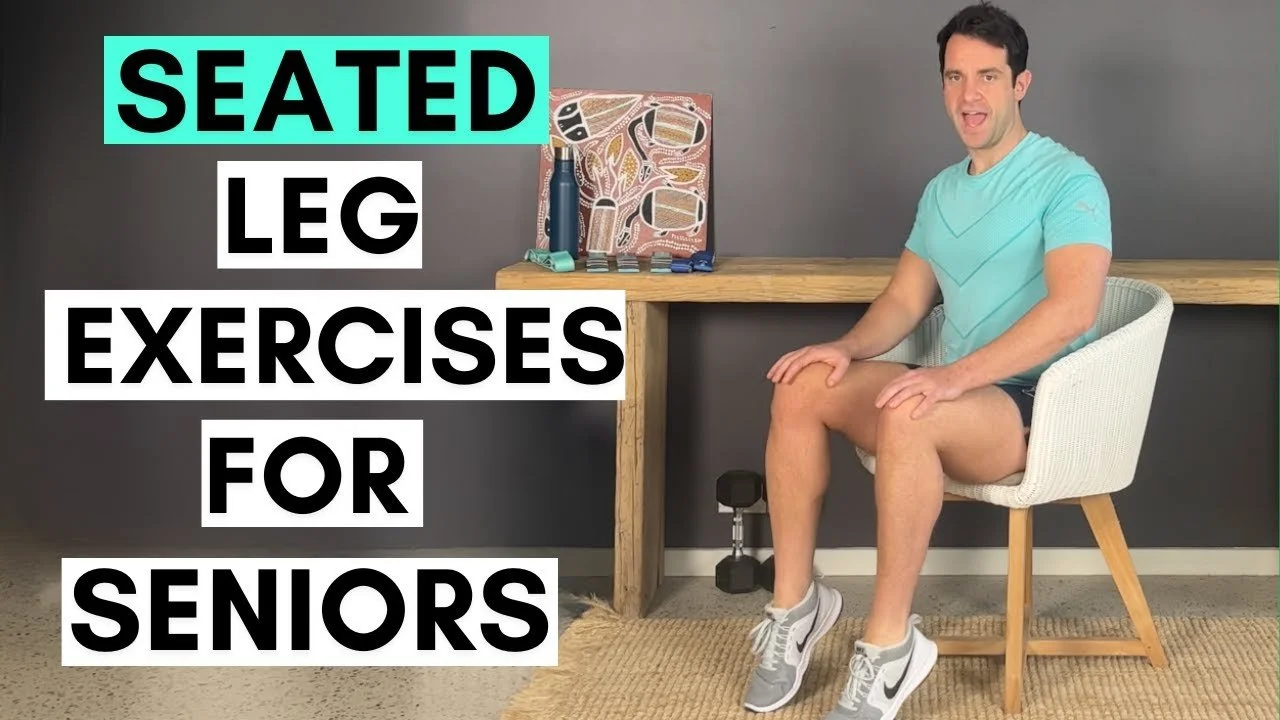
After my last video I posted with seated and standing leg strengthening exercises, I got many requests for a new, full seated leg strengthening exercise video.
Today, I have created a brand new seated leg strengthening exercise video. This video goes for 13 minutes, and we go through some great seated leg exercises.
Now, if you can do standing exercises, it’s important to do standing exercises as well to keep your legs as strong as possible.
Seated Leg Strengthening Exercises For Seniors
After my last video I posted with seated and standing leg strengthening exercises, I got many requests for a new, full seated leg strengthening exercise video.
So today, I have created a brand new seated leg strengthening exercise video. This video goes for 13 minutes, and we go through some great seated leg exercises.
Now, if you can do standing exercises, it’s important to do standing exercises as well to keep your legs as strong as possible.
However, for seated leg exercises, these are the exercises to do!
So get your legs moving with these exercises, and YOU WILL feel the difference! And as always, let me know how you went!
To get moving with me, click the video below.
Remember, consistency and progression with exercise is key!
Stay moving! and I’ll see you soon!
- Mike

Simple Leg Exercises For Seniors (Seated and Standing)
Improve your leg strength with these seated and standing leg exercises for seniors. Enhance your mobility, balance, and coordination while reducing fall risks and discomfort. Incorporate these leg strengthening into your weekly routine for best results.
Simple Leg Exercises For Seniors (Seated and Standing)
When your legs are stronger, you will feel the difference in your daily life.
You’ll be moving around much easier!
Your balance and coordination will improve!
You will decrease your risk of falls!
And stronger legs can help with pain symptoms!
Strengthening your legs should be a priority in your exercise program each week, and today I have created a new video with leg strengthening exercises to help ensure you’re improving your leg strength. These 14 minutes exercises are seated and standing. We also go through a little balance at the end.
To get moving with me, click the video below.
Remember, consistency and progression with exercise is key!
Stay moving! and I’ll see you soon!
- Mike

How To Engage Your Core - Essential Exercises for Over 60
As we age, it becomes increasingly important to maintain a strong and stable core, which is essential for overall functional fitness and everyday activities.
A strong core not only improves posture and balance but also supports daily activities and reduces the risk of injuries.
A simple technique to engage the core is to "draw the belly button to the spine."
Building a Solid Foundation: Core Strengthening TipS fOR SENIORS
The core is composed of a complex group of muscles that work together to provide stability, support, and movement for the entire body.
Core Muscles
The Deeper Core Muscles
The primary muscles of the core include the rectus abdominis, obliques (internal and external), transverse abdominis, and erector spinae.
The rectus abdominis, commonly known as the "six-pack" muscles, run vertically along the front of the abdomen and help flex the spine.
The obliques, located on the sides of the abdomen, aid in rotation and lateral flexion of the trunk.
The erector spinae muscles run along the length of the spine and assist in extending the back.
Lastly, the transverse abdominis (TrA) is a deep muscle that wraps around the torso like a corset and plays a crucial role in core stability and spinal support. We will be focusing more so on this muscle today.
As we age, it becomes increasingly important to maintain a strong and stable core, which is essential for overall functional fitness and everyday activities.
A strong core not only improves posture and balance but also supports daily activities and reduces the risk of injuries.
A simple technique to engage the core is to "draw the belly button to the spine."
Drawing the Belly Button to the Spine:
This is a cue frequently used to activate the deep abdominal muscles, particularly the transverse abdominis.
To engage your core using this technique, follow these steps:
a. Begin by sitting or standing tall with good posture. Or alternatively, you can do this lying with your knees bent and your feet flat on the floor
b. Find your neutral spine position - Ensure you are not slouched or your back is not over-arched.
c. Now gently draw your belly button in towards your spine.
d. Breath Naturally - Maintain a steady, controlled breath while keeping your abdominal muscles engaged.
d. Hold this position for a few seconds and release.
e. Repeat the exercise for a certain amount of repetitions, gradually increasing the duration of the hold.
For a video on this technique, click here below (or HERE):
>>>>> WATCH VIDEO <<<<<
IS THIS THE SAME AS SUCKING IN THE STOMACH?
"Sucking in your stomach" typically refers to the act of pulling in or tightening the abdominal muscles superficially, often for aesthetic purposes or to create a slimmer appearance.
This action primarily engages the external abdominal muscles, such as the rectus abdominis and external obliques, without necessarily activating the deeper core muscles.
On the other hand, "bringing your belly button to your backbone" or "drawing the belly button to the spine" is used to engage the deep core muscles, specifically the transverse abdominis. You’re bringing your muscles in towards your spine.
This technique emphasises activating the muscles that lie deeper within the abdomen, closer to the spine.
It provides greater stability and support to the core, promoting better posture and functional movement.
While both actions involve some level of core engagement, the latter technique of bringing the belly button to the spine focuses on activating the deep core muscles, which offer more substantial benefits for overall core strength and stability.
Other Terms for Core Engagement:
Drawing the belly button to the spine is a popular cue to engage the core.
However, you have most probably heard other terms and techniques to help you to engage the core effectively.
Here are some alternatives:
1. Core Compression:
This involves contracting the muscles around the abdomen, including the rectus abdominis, obliques, and transverse abdominis.
Imagine compressing your midsection inward as if you were wearing a tight corset. This cue emphasizes activating the entire core area.
2. Hollowing the Stomach:
Hollowing the stomach refers to pulling the abdominal muscles inward while maintaining a natural curve in the lower back. Imagine hollowing out your belly, drawing it towards your spine without holding your breath or squeezing too tightly.
3. Bracing:
Bracing involves tensing the abdominal muscles as if you were preparing to take a punch. This technique provides stability and support to the core, similar to how a brace supports a structure.
Core-Strengthening Exercises for Seniors:
Now that you are familiar with various ways engage the core, for core strengthening exercise videos for seniors (including seated videos), click HERE.
Engaging the core is an important exercise to maintain stability, balance, and overall functional fitness and these techniques above can be practiced anywhere!
Whether you prefer the cue "drawing the belly button to the spine" or other terms such as core compression, hollowing the stomach, or bracing, the goal is to activate and strengthen the deep core muscles.
By incorporating core-strengthening exercises into your fitness routine, you can improve your posture, enhance balance, and enjoy an active lifestyle with reduced risk of injury.
Have you heard these cues for strengthening your core? Maybe you have heard others? If so, let me know below!

Intermediate whole body workout for seniors
This energizing session incorporates weights and resistance bands, targeting strength, balance, and overall stamina. Whether you're a beginner or have experience, this workout is suitable for all levels. Stay active, improve your fitness, and prioritise your health with this specially designed-routine. Start today and embrace a stronger, fitter version of yourself!
Intermediate Full Body Workout For Seniors
In today’s video we we do exercises at a slower tempo with higher repetitions, and we also use equipment in the form of hand weights (dumbbells) and a resistance band.
If you don’t have the equipment, that’s ok! You can still follow along and get a great workout!
The video is 20 minutes long; however, I designed it so that even doing the first set will get results (you can progress to the 3 sets over time if you’re not quite at this level!). And in the first set, we don’t use equipment.
To find out more about progressing exercises. Click to read my article HERE.
Also, If you want to purchase the resistance band I use in this exercise video (and many other videos) which is simple to use, you can do so HERE.
To get moving with me, click the video below.
Remember, consistency and progression with exercise is key!
Stay moving! and I’ll see you soon!
- Mike

How To Progress Your Exercise - Gradually!
You would have heard me say in my videos at times, the importance of progressing exercises, gradually.
Now any exercise is great! If you’re overwhelmed by it all. Keep it simple.. some is better than nothing.
However, if you stick to exercise, you ARE going to make improvements; you’ll find yourself becoming stronger, balancing better, moving better. Things will start becoming easier.
This is great, and to continually make improvements you want to make the exercises a little more challenging.
There are several ways you can progress exercises to make them more challenging and continue to improve your fitness levels. The principles are the same at any age!
Here are some common methods to progress your exercises:
PROGRESSING YOUR EXERCISE
You would have heard me mention in my videos (and writing) about the importance of progressing exercises gradually.
If you stick to exercise, you ARE going to make improvements. You’ll find yourself becoming stronger, balancing better and moving better, amongst other things. It will all will start becoming easier.
This is when you want to make the exercises a little more challenging so you continue to make improvements.
Now any exercise is great! If you’re overwhelmed by it all. Keep it simple. Some exercise is better than nothing.
But once you start getting on top of it all, you’re staying consistent, and it’s all making sense, now is the time to progress the exercises.
Here are some common methods to progress your exercises:
Increase repetitions or sets
As you become stronger, you can increase the number of repetitions (reps) or sets you perform for each exercise. For example, if you were doing 5 reps of an exercise, you can aim to increase it to 10 or 12 reps. Similarly, you can add an extra set to your workout routine. If you’re only able to do 1 set, progress to 2 and then 3.
Increase resistance or weight:
If you're performing strength training exercises, gradually increase the amount of weight or resistance you're using.
This could involve using heavier dumbbells, resistance bands with higher tension, or adding weight plates to a barbell.
To purchase the resistance band I recommend, click HERE:For more on Strength training, read my in-depth guide HERE:
Modify the exercise position:
Altering the position or form of an exercise can add difficulty. For example, if you're doing push-ups, progressing from performing them on a wall or bench or on your knees to performing full push-ups on your toes is a way to advance the exercise. I explain this about pushups in this video HERE, and this article HERE.
I also explain how to do this with balancing on one leg HERE.
Change the exercise tempo:
By manipulating the speed at which you perform your exercises, you can make it more challenging.
Slowing down the movement, particularly during the eccentric (muscle lengthening) phase, increases time under tension and can lead to greater strength gains.
In these videos, we work out at a slower tempo.
For walking, you can increase your speed.
Increase range of motion:
Gradually working towards a greater range of motion in exercises can increase the difficulty. For instance, in a squat, you can aim to squat deeper after starting with a partial squat.
How to perform the PARTIAL SQUAT.
How to perform a DEEPER SQUAT.
Incorporate unilateral exercises:
Instead of using both limbs simultaneously, you can progress to unilateral exercises that work one side of the body at a time. This requires greater stability and strength control.
Here is a video we do SINGLE-LEG STRENGTHENING.
Introduce instability:
Using unstable surfaces, such as a balance board or standing on a cushion, when doing the balance exercises.
We do this with different surfaces (such as a cushion) in many of the BALANCE VIDEOS. Click HERE for Balance Videos.
Remember to progress GRADUALLY and listen to your body.
It's important to find the right level of challenge without sacrificing proper technique of the exercise and risking injury.
If you're unsure about progressing exercises safely, it's always a good idea to consult with a Physiotherapist or qualified fitness professional.

Building Strength At Any Stage: Mastering Push Ups For Older Adults
Pushups are one of the best exercises to strengthen the upper body. More specifically, pushups strengthen the muscles of your chest, your shoulders, your arms and your core.
Unfortunately, pushups are not the easiest exercises to perform. If you struggle with them, or you just can’t do them, that’s ok!
You can still perform the pushup exercise, no matter your current strength levels, by modifying the exercise to suit your individual needs.
And here is how!
Pushups are one of the best exercises to strengthen the upper body. More specifically, pushups strengthen the muscles of your chest, your shoulders, your arms and your core.
Unfortunately, pushups are not the easiest exercise to perform. If you struggle with them, or you just can’t do them, that’s ok!
You can still perform the pushup exercise, no matter your current strength levels, by modifying the exercise to suit your individual needs.
And here is how!
Watch the video below to see how and scroll further for pushup exercise demonstrations.

WALL PUSHUPS
Wall pushups are a beginner-friendly variation of the traditional pushup exercise that can help build strength in the chest, shoulders, and arms. Here's how to do them:


Stand facing a sturdy wall, about arm's length away. Your feet should be shoulder-width apart.
Place your hands on the wall slightly wider than shoulder-width apart, at shoulder height.
Keeping your body straight, lean forward and bend your elbows to lower your chest toward the wall.
Pause for a moment when your chest is close to the wall, and then push yourself back up to the starting position.
Repeat the movement for the desired number of repetitions.
Remember to engage your core muscles throughout the exercise and maintain a straight line from your head to your heels.
Adjust the difficulty by changing the distance between your feet and the wall.
PUSHUPS OFF A BENCH (OR CHAIR)
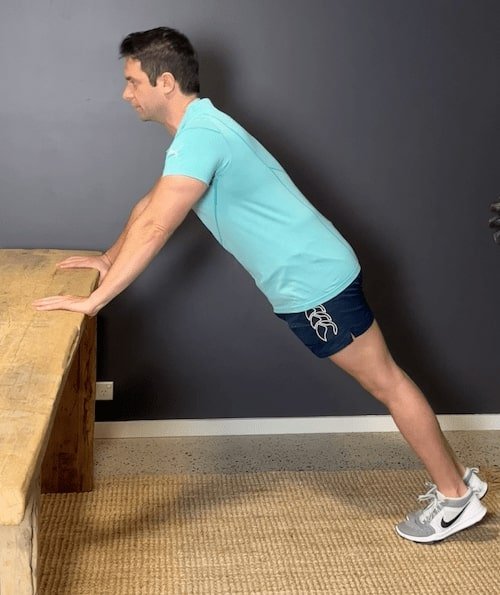
Pushups off a bench, also known as inclined pushups, are a modification that makes pushups easier by reducing the amount of body weight you have to lift.
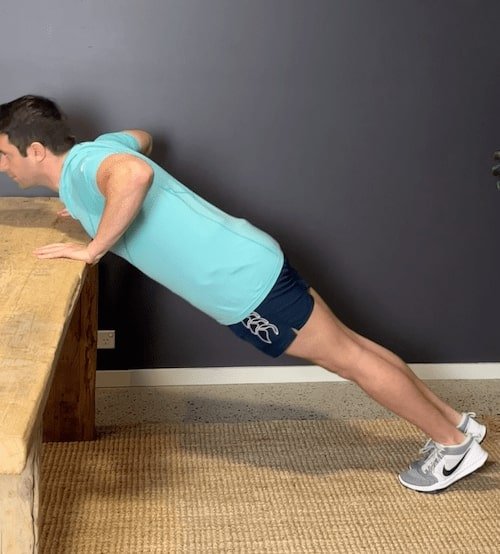
HOW TO:
Find a sturdy bench or elevated surface that is about knee height.
Place your hands on the edge of the bench, slightly wider than shoulder-width apart, and step back so that your body forms a straight line from head to heels. Your feet should be together.
Lower your chest toward the bench by bending your elbows, keeping your body straight and your core engaged.
Pause for a moment when your chest is close to the bench, and then push yourself back up to the starting position.
Repeat for the desired number of repetitions.
Make sure to maintain proper form throughout the exercise, keeping your body aligned and avoiding sagging or arching in the lower back.
Adjust the difficulty by changing the distance between your feet and the chair/bench, and by altering the height of the bench (pushing off a lowering height will increase difficulty).

Decrease height to Push off for increased difficulty

Decrease height to Push off for increased difficulty
PUSHUPS ON THE FLOOR
Pushups on the Floor on Knees:
Pushups on the floor on your knees, also known as knee pushups, are another variation that reduces the intensity of the exercise, making it more accessible for beginners or individuals with limited upper body strength.

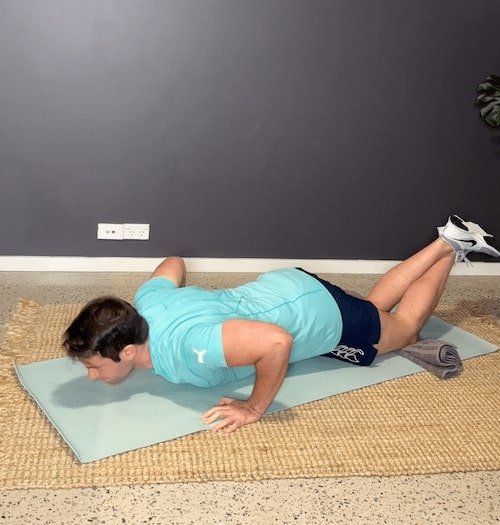
HOW TO:
Start by positioning yourself on the floor with your knees touching the ground and your hands placed slightly wider than shoulder-width apart, fingers pointing forward.
To decrease the strain on your knees, place a folded towel under your knees.
Walk your hands forward and place them directly under your shoulders.
Extend your legs back, keeping your knees in contact with the floor. Your body should form a diagonal line from your head to your knees.
Lower your chest toward the floor by bending your elbows, maintaining a straight line from head to knees.
Pause briefly when your chest is close to the ground, and then push yourself back up to the starting position by straightening your arms.
Repeat for the desired number of repetitions.
Focus on keeping your core engaged and maintaining proper alignment throughout the movement.
As you build strength, you can gradually progress to full pushups on your toes (next exercise).
STANDARD PUSHUP
The standard pushup is a compound exercise that targets multiple muscle groups, including the chest, shoulders, triceps, and core.


HOW TO:
Start by positioning yourself on the floor face down, with your hands placed slightly wider than shoulder-width apart, fingers pointing forward.
Extend your legs back and balance on the balls of your feet. Your body should form a straight line from your head to your heels.
Engage your core muscles, squeeze your glutes, and keep your neck in a neutral position.
Lower your body toward the floor by bending your elbows, maintaining a straight line from head to heels. Keep your elbows tucked close to your body rather than flaring them out to the sides.
Continue lowering until your chest is just above the ground or as far as you can comfortably go.
Pause for a moment in the lowered position, and then push yourself back up to the starting position by straightening your arms.
Keep your body straight and avoid sagging or arching in the lower back throughout the movement.
Repeat for the desired number of repetitions.
It's important to maintain proper form and control during the exercise.
If you're new to pushups or find them challenging, modify them by performing pushups as described above, and as you build strength you can progress to the next variation.

Intermediate Vestibular Exercises | Exercises for Dizziness, Vertigo and Motion Sensitivity
Intermediate vestibular exercises that can help you manage symptoms of dizziness, vertigo, and motion sensitivity. By practising these exercises, you can enhance your balance and reduce feelings of disorientation. You can easily perform these exercises in the comfort of your own home.
Vestibular rehabilitation Exercises
In today’s video we go through some Intermediate Vestibular Exercises.
This video is a follow on from the recent, Beginner Vestibular Exercises. If you missed that video, you can find it here.
Vestibular exercises can be tricky to get right. Not only how to perform them correctly but also how many to do, how often to do them, and how to progress them. So at the start of the video, I explain some guidelines to follow to help with vestibular systems.
And for a little more on the Vestibular System, you can read my article here.
Always make sure you see your doctor or Vestibular Physiotherapist before undertaking these exercises.
To get moving with me, click the video below.
Remember, consistency and progression with exercise is key!
Stay moving! and I’ll see you soon!
- Mike

10 Minute Daily Core Exercises for Seniors (Seated)
Simple seated exercises that effectively target your core muscles and strengthen your glutes. Which goes fro 10-Minutes
A stronger core will make your daily tasks easier and improve stability and balance, reducing the risk of falls.
Moreover, a stronger core promotes better posture and movement patterns, relieving strain on your spine and alleviating pain and discomfort.
Simple Exercises For a Stronger Core
A stronger core will make your daily tasks easier and improve stability and balance, reducing the risk of falls.
Moreover, a stronger core promotes better posture and movement patterns, relieving strain on your spine and alleviating pain and discomfort.
Now I don’t focus on core exercises too often because a lot of the exercises we do indirectly engages the core.
However, it's still beneficial to add some additional core exercises to improve core strength.
Which is precisely what we'll be doing today!
In today’s video we will be focusing on strengthening your core (and glutes) while seated in a chair.
This video goes for 10 minutes, which means in just 10 minutes, you'll get a great little core strengthening workout. And in the video, I have modified some common core exercises typically done on the floor.
To get moving with me, click the video below.
Remember, consistency and progression with exercise is key!
Stay moving! and I’ll see you soon!
- Mike
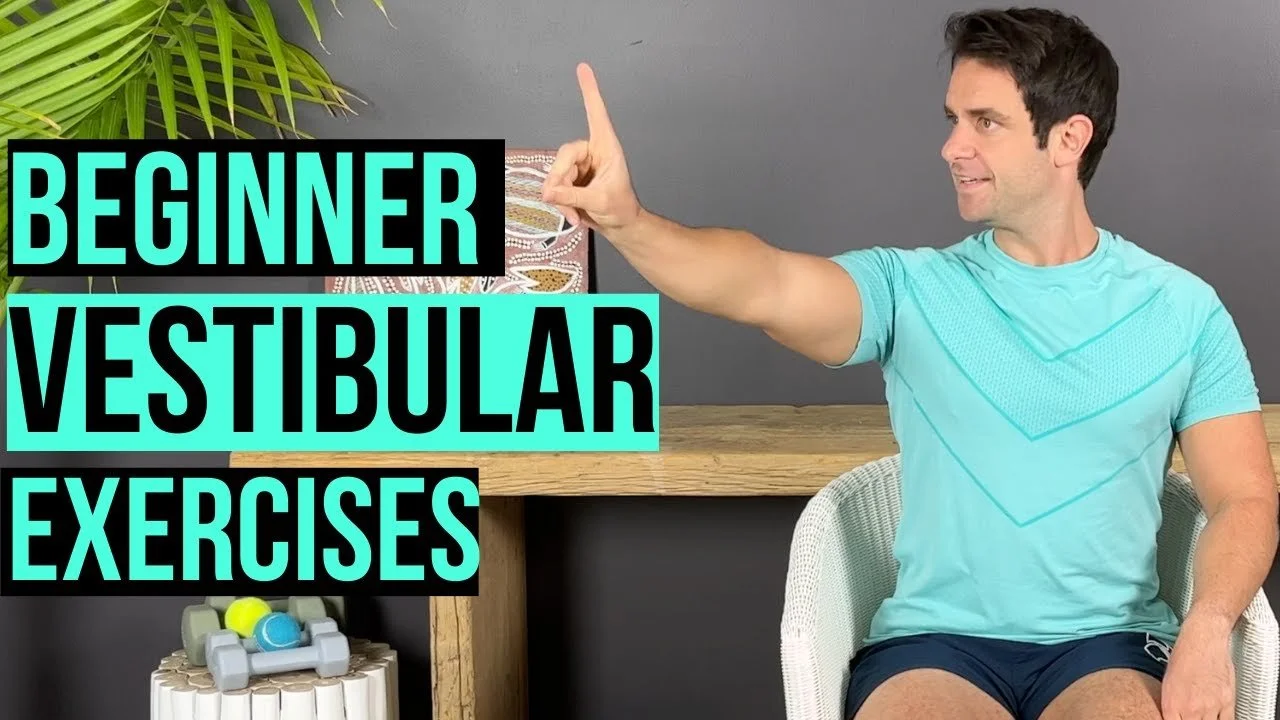
Beginner Vestibular Exercises | Exercises for Dizziness, Vertigo and Motion Sensitivity
Beginner vestibular exercises that can help you manage symptoms of dizziness, vertigo, and motion sensitivity. By practising these exercises, you can enhance your balance and reduce feelings of disorientation. You can easily perform these exercises in the comfort of your own home.
simple Vestibular Exercises
The vestibular system is a part of our inner ear that helps us stay balanced and know where our body is in relation to the space around us.
It is responsible for detecting and processing information about head movements and changes in body position.
As we age, it is not uncommon to experience symptoms of dizziness (lightheadedness and unsteadiness), vertigo (a sensation of spinning or whirling), motion sensitivity (motion sickness) and balance problems.
These are all vestibular symptoms and can significantly impact daily activities and quality of life.
Fortunately, there are proven strategies to reduce these symptoms, including vestibular exercises.
For more on the vestibular system, check out this article here
In today's video, we go through exercises for the vestibular system. These slower-paced vestibular rehabilitation exercises are perfect for seniors, and can be used to relieve symptoms associated with vestibular dysfunction, that being dizziness, vertigo and motion sensitivity.
Always make sure you see your doctor or Vestibular Physiotherapist before undertaking these exercises.
Results are usually seen around 2-6 weeks. Stay consistent and gradually progress the exercises.
To get moving with me, click the video below.
Remember, consistency and progression with exercise is key!
Stay moving! and I’ll see you soon!
- Mike

Vestibular Exercises: Exercises For Dizziness, Vertigo and Motion Sensitivity
As we age, it is not uncommon to experience symptoms of dizziness (lightheadedness and unsteadiness), vertigo (a sensation of spinning or whirling), motion sensitivity (motion sickness) and balance problems. These are all vestibular symptoms and can significantly impact daily activities and quality of life.
Fortunately, there are proven strategies that can reduce symptoms of vestibular issues.
In this article, we will look at the vestibular system so you can better understand what may be happening when you're experiencing these symptoms. We will also look at what can improve symptoms, including exercises and more.
EASING VESTIBULAR SYMPTOMS
As we age, it is not uncommon to experience symptoms of dizziness (lightheadedness and unsteadiness), vertigo (a sensation of spinning or whirling), motion sensitivity (motion sickness) and balance problems. These are all vestibular symptoms and can significantly impact daily activities and quality of life.
Fortunately, there are proven strategies that can reduce symptoms of vestibular issues.
In this article, we will look at the vestibular system so you can better understand what may be happening when you're experiencing these symptoms. We will also look at what can improve symptoms, including exercises and more.
NOTE BEFORE: It's important to remember that not all dizziness is caused by vestibular issues. Dizziness can have various causes, including neurological, cardiovascular, or metabolic conditions, medication side effects, dehydration, anxiety, and more. Therefore, please ensure you see your doctor or health care professional if you experience dizziness, especially if it's persistent or severe, to determine the underlying cause and receive appropriate treatment.
WHAT WE WILL BE COVERING IN THIS ARTICLE:
WHAT IS THE VESTIBULAR SYSTEM AND WHAT DOES IT DO?
The vestibular system is a sensory system of our body, which is predominantly situated in the inner ear, safe and protected inside the temporal bone. It sits adjacent to our cochlea, our organ of hearing.
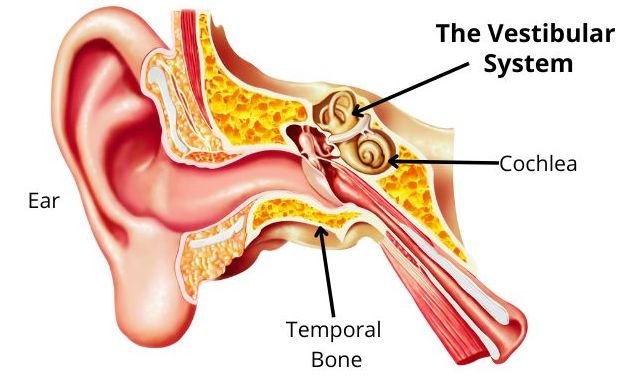
Diagram: The Vestibular System
It contains three canals, known as the semicircular canals, and two organs, the utricle and saccule, which are known as the otolith organs.
The semicircular canals are positioned at right angles to each other, allowing them to detect rotational head movements. They are filled with fluid (known as endolymph). When the head moves, this fluid flows into an area called the ampulla.
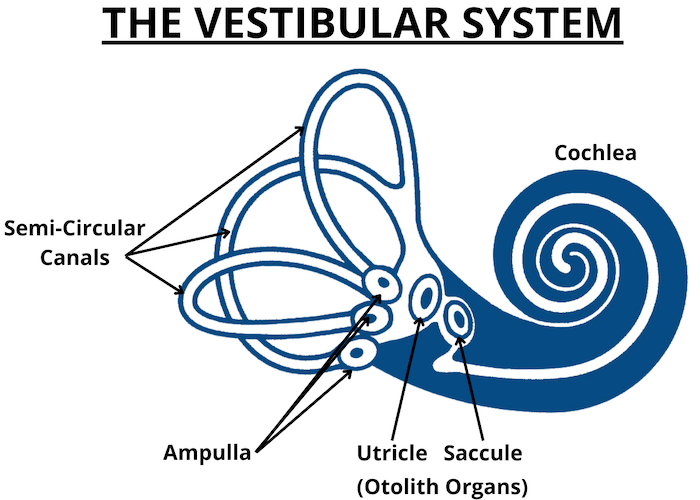
Diagram: A closer look at the Vestibular System
In the ampulla, the movement of the endolymph causes the movement of hair cells, which sends signals or information about the head movement to the brain.
The otolith organs (utricle and saccule) also detect movement. They are responsible for detecting linear acceleration of the head (which are changes in speed or direction in a straight line) and changes in head position with respect to gravity, such as when the head moves forward or backward or when the head is tilted up or down.
More specifically, the utricle is sensitive to horizontal head movement, e.g., moving forward or backward in a car. The saccule is sensitive to vertical head movement - moving up and down.
The otolith organs contain hair cells that are covered with tiny crystals of calcium carbonate called otoconia (or otoliths). When the head moves, the otoconia shift, and the hair cells' movement generates nerve impulses transmitted to the brain.
Together, the semicircular canals and the two otolith organs provide the brain with information about the position, movement, and orientation of the head and body, allowing us to maintain balance, coordinate our movements and provide us with a sense of where our body is in relation to the space around us (spatial orientation).
However, there may be times the vestibular system may not function as it should, leading to symptoms including:
Dizziness or vertigo
Imbalance, lightheaded or unsteadiness
Motion sensitivity or motion sickness
Nausea or vomiting
Sensitivity to light or sound
Tinnitus or ringing in the ears
The feeling of fullness in the ears
Imbalance or unsteadiness
Headaches or migraines.
VERTIGO IN SENIORS: DIZZINESS VS VERTIGO
A symptom of vestibular issues, which can occur among older adults, is vertigo.
Vertigo is a specific type of dizziness characterized by a spinning or whirling sensation.
Dizziness, on the other hand, is a more general term that can refer to a range of symptoms, including lightheadedness, unsteadiness, and feeling faint.
The most common cause of vertigo is Benign Paroxysmal Positional Vertigo (BPPV).
BPPV is a condition where the otoconia (the calcium carbonate crystals discussed above), typically embedded in a gel membrane, become displaced from the utricle and move into one or more of the fluid-filled semicircular canals where they shouldn't be.
How Vertigo Occurs.
This can cause the canals to become overly sensitive to head movements, leading to feelings of dizziness or spinning when the head is moved in certain positions.
BPPV is typically a self-limiting condition that resolves on its own within a few weeks to months, although it can recur in some individuals.
Treatment options for BPPV may include a series of specific head and body movements, known as canalith repositioning procedures (EG. Epley Maneuver) or vestibular rehabilitation exercises, to help move the displaced otoconia out of the semicircular canals and restore normal vestibular function. Medications and surgery are generally not recommended for BPPV.
POSTURAL HYPOTENSION: ANOTHER TYPE OF DIZZINESS
Another type of dizziness that is not uncommon when one gets older is postural hypotension.
Postural hypotension is dizziness or lightheadedness when going from lying or sitting to a standing position. Postural hypotension is caused by a drop in blood pressure.
With postural hypotension, vestibular exercises are not typically used as a treatment.
Postural hypotension is usually managed by addressing underlying medical conditions contributing to the problem, adjusting medications, and making lifestyle modifications such as drinking plenty of fluids, avoiding alcohol, and standing up slowly and standing to a walking aid if required.
However, vestibular exercises can help improve balance and reduce the risk of falls that may occur as a result of postural hypotension.
If you experience dizziness when going from a lying or seated to a standing position, let your doctor know.
Vestibular Exercises for Seniors (EXERCISES FOR DIZZINESS, VERTIGO & MOTION SENSITIVITY)
Vestibular exercises can improve balance, reduce dizziness and vertigo, and increase confidence in daily activities. These exercises can also help prevent falls and promote physical and mental health.
Studies have shown that vestibular exercises can improve the vestibular system's function and reduce symptoms of dizziness and vertigo. These exercises can also help improve postural stability and reduce the risk of falls. [1, 2, 3, 4]
A successful vestibular rehabilitation program should contain exercises of the eyes, the neck and the rest of the body.
Types of vestibular exercises that are commonly used in vestibular rehabilitation include:
Eye and Head Exercises: These exercises may involve moving the head in different directions while focusing on a stationary object or tracking a moving object with the head and eyes.
Gaze Stabilisation Exercises: These exercises involve fixing your gaze on a stationary object while your head is moving. This helps train your brain to interpret signals from your vestibular system better.
Balance Exercises: These exercises help improve your overall balance and reduce your risk of falls. Examples include standing on one leg, walking heel-to-toe, and standing on an unstable surface.
Habituation Exercises: These exercises involve exposing yourself to movements or situations that typically trigger your symptoms in a safe and controlled environment. Over time, your brain may learn to tolerate these movements or situations without causing symptoms.
Canalith Repositioning Manoeuvres: These manoeuvres involve moving your head and body in specific ways to help reposition tiny crystals in your inner ear that may have become dislodged, leading to vertigo.
Brandt-Daroff Exercises: These exercises involve repeatedly sitting up and lying down in a specific way to help desensitise your brain to movements that may trigger vertigo.
It's important to note that the prescribed exercises will depend on symptoms and diagnosis and should be guided by a healthcare professional trained in vestibular rehabilitation.
And it is essential to take precautions when performing vestibular exercises to reduce the risk of injury, including measures in place to prevent falls.
Always start with gentle exercises and gradually increase the intensity as you become more comfortable. If you experience any pain or discomfort, stop the exercise immediately.
Incorporate vestibular exercises into your daily routine to get the most benefit. Start with a few minutes of exercise daily and gradually increase the duration and intensity.
BEGINNER VESTIBULAR EXERCISES (VIDEO)
Join me for these slower-paced vestibular exercises that are perfect for seniors.
These vestibular rehabilitation exercises can be used to relieve symptoms associated with vestibular dysfunction, that being dizziness, vertigo and motion sensitivity.
Always make sure you see your doctor or Vestibular Physiotherapist before undertaking these exercises.
Beginner Vestibular Exercises
INTERMEDIATE VESTIBULAR EXERCISES (VIDEO)
Intermediate Vestibular Exercises
Other Tips for Preventing Dizziness and Vertigo in Seniors
In addition to vestibular exercises, there are other steps you can take to prevent dizziness and vertigo. These include:
Reducing stress can help prevent dizziness and vertigo by reducing tension in the body and promoting relaxation.
Practising relaxation techniques: Stress and anxiety can worsen dizziness and vertigo. Practising relaxation techniques such as deep breathing, meditation, or yoga can help reduce stress and improve symptoms.
Staying hydrated is required for good health and can help prevent dehydration, which can cause dizziness.
Eating a healthy diet rich in nutrients and low in processed foods and vegetable oils can help maintain overall health and prevent conditions that may lead to dizziness or vertigo.
Getting enough sleep is vital for overall health and can help prevent fatigue, which can contribute to dizziness and vertigo.
Improving general fitness may not directly decrease vestibular issues, but it can improve overall health and reduce the risk of certain health conditions that may contribute to vestibular problems. Additionally, regular exercise can improve balance and coordination, which may help compensate for vestibular dysfunction and reduce the risk of falls.
Avoiding alcohol, tobacco, and other stimulants can help prevent dizziness and vertigo by reducing the risk of conditions that may lead to these symptoms.
Using caution with medications: Some medications can cause dizziness as a side effect. Talk to your doctor about any medications you're taking and whether they could contribute to your symptoms.
Managing underlying conditions: Certain conditions, such as migraines and inner ear disorders, can cause dizziness and vertigo. Managing these underlying conditions through medication or other treatments can help prevent symptoms.
References
For References used in this article, click here.

15 Minute Exercises for Seniors with Physiotherapist - At Home Exercises
15 minutes of the best simple exercises for seniors that you can do daily to ensure you can feel the results with other activities of your daily life.
15 MINUTE EXERCISES FOR SENIORS
In today's video, we go through important exercises to do in an exercise session to ensure you notice the benefits in your daily life.
I did my best to limit it to 15 minutes, so that on those days you may not feel like exercising, you can get the benefits by spending just a short amount of time each day. What's 15 minutes in the 1440 minutes of the day? :)
As with all my workouts, this may be the perfect workout for someone based on their current capabilities. For others, it may be too challenging, and for others, maybe it's too easy…… Remember, if an exercise is too difficult, you can modify it to your capabilities. If it is too easy, you can do a more challenging variation.
Along with your specific exercises, I recommend you get outside walking to supplement your weekly exercises. Vary your walks (within your capabilities) to challenge yourself and to work different muscles.
For example, vary your speed - try to increase your pace a little on some walks and work on sustaining this pace for longer each week. Vary the terrain you walk on - walk on the flat, walk uphill, walk downhill, walk upstairs.. And walk on different surfaces (for example, sand vs grass). By doing this you will work different muscles, and it will help improve other areas of your fitness.
Remember, like you do with exercise, build up your walking over time, and if you were previously walking a lot and you’ve had a prolonged break from it, start with less than what you were doing previously when you get back to it. You want to ensure your body adapts to avoid any issues.. and, most importantly, enjoy your walks :) .... and your exercises.
To get moving with me, click the video below.
Remember, consistency and progression with exercise is key!
Stay moving! and I’ll see you soon!
- Mike

Keeping Up Your Exercise
Exercise and movement is medicine. Medicine that should be undertaken consistently each week (preferably daily in some way) to get the benefits and keep the benefits.
Getting started with exercise or another new habit is usually relatively easy. However, when motivation wanes or something comfortable tempts us, it can be challenging to override this in the moment and stick to what we had originally planned.
Our minds will find ways to justify why we don’t have to exercise. We miss a session, and then one missed session turns into two missed sessions, then maybe three or four. And then more. Until it gets to “I haven’t exercised for a while”.
Welcome to 2023! The first article of the year from me.
I hope you had a good Christmas if you were celebrating, and a good New Year. I definitely did!
I’m a week late on this article, I did sit down to write something to help get your year off to a good start last week. However, nothing I wrote I felt was worthy of sharing.
So I turned my laptop off and now, a week later, here I am again trying to think of something good to write that will help KEEP you moving this year.
I put the “KEEP” in capitals because this is the most challenging part when it comes to exercise and other healthy habits. I want you to be exercising throughout the year and for many years to come.
Exercise and movement is medicine. Medicine that should be undertaken consistently each week (preferably daily in some way) to get the benefits and keep the benefits.
Getting started with exercise or another new habit is usually relatively easy. However, when motivation wanes or something comfortable tempts us, it can be challenging to override this in the moment and stick to what we had originally planned.
Our minds will find ways to justify why we don’t have to exercise. We miss a session, and then one missed session turns into two missed sessions, then maybe three or four. And then more. Until it gets to “I haven’t exercised for a while”.
Unfortunately, if we don’t keep up our exercise, we eventually start losing what we’ve gained.
There will always be times when motivation dips or something unexpected gets in the way. So we want to ensure we have some ways to deal with these times that we don’t feel like exercising.
Here are some steps you can take:
COMMIT to exercise.
Unless there is good reason not to, commit to some exercise or movement at least three times each week.
Remember “WHY”.
Everyone has different reasons as to exactly why they’re exercising. You will have your specific reasons also. Think of these reasons, and think about how you will feel after making progress with your exercise versus if you don’t exercise. Remember, when you exercise today, your future self will thank you.
SHOW UP.
If you’re demotivated to exercise, start by just taking steps to show up to the exercise.
For example — put on an exercise video and sit in front of it. Once you’ve done this, there’s a high chance you’ll start following along.
Or, if you know you should go for a walk, just put your exercise clothes on and tie up your walking shoes. Now start taking steps out the door. When you’ve done this, you’re likely going to keep walking.
After some time into it, you’ll most probably find it’s not so bad. And when done, you’ll feel better after.
You don’t have to go all out. Start small, make it easy, have fun with it. Even if it’s not the best session, that’s ok! Don’t beat yourself up. Aim to do better next time.
REPEAT.
Get back to it the next day or the day after, and do your best to improve on your last session (it’s ok if you don’t improve, and even if it’s a slight improvement, that’s great!).
So there are four steps you can follow when you feel your motivation slipping.
I do the same when I don’t feel like exercising. I still make sure I get to the gym. I start with exercises I enjoy and gradually build on this during the session. Most of the time, after some time of the exercise, I get into it. If it’s not a good session, I know I will get back to it tomorrow or the next day. So it’s ok!
I also did the same for my writing last week. Every cell in my body did not want to write, but I know this resistance is normal, So I committed, sat down in front of my laptop and wrote. What I wrote last week was no good, but here I am back to it.
You may have tips to stay consistent with your exercise or other habits. If so, I’d love to hear them. You can let me know by placing a comment below..
I look forward to hearing about your progress with your health and exercising throughout the year.
If you don’t know how, or where to start, create a plan with the exercise videos here.
You can create a playlist of your favourite exercise videos by following this link here.
And if you’re stuck or have questions, join the More Life Health Facebook Support Group (click to join), which is an amazing, supportive group.
I will be writing an email each week to help you on your health and fitness journey. So I will see you again next week! Make sure you’re signed up to the mailing list, you can do so here morelifehealth.com/join …. And more exercise videos to come.
Looking forward to a happy, healthy and exercise-filled year with you!
2023 is going to be a great year!
Stay moving!
- Mike

Seated Workout For Seniors (Beginner)
This workout was designed for those who require a slower speed of exercise.
A good place to start for those very new to exercise also.
25-Minute, Slow Tempo, Workout
Join me (Mike - Physiotherapist) for this completely seated 25-minute workout that goes at a slow pace. This workout was designed for those who require a slower speed of exercise. A good place to start for those very new to exercise also.
In this video, we cover:
Warm-up: 00:30
Upper Body Exercises: 05:25
Lower Body Exercises: 10:11
Beginner Coordination: 16:14
Beginner Cardio: 18:22
Core Holds: 20:14
Relaxation: 21:21
End of Exercises - Outro: 25:59
Stay moving! and I’ll see you soon!
- Mike

Exercises For Stronger Knees
If you want to get your knees stronger, with or without upcoming surgery, these are the exercises to do!
Strengthening your knees can make your movement much easier and help if you have painful knees.
Exercises For Stronger Knees For Seniors
If you want to get your knees stronger, with or without upcoming surgery, these are the exercises to do!
Strengthening your knees can make your movement much easier and help if you have painful knees.
If you do have an upcoming knee replacement surgery, getting your legs stronger will help with recovery post-surgery! They will also be the exercises you’ll be doing with your Physiotherapist post-surgery, so it will help to learn them now.
In this video, the first exercises are performed in lying or long sitting (although I do them on the floor, I recommend you do them on a bed). After this, we do seated and standing exercises.
Give them a go, and let me know how you went with them, or if you have any questions, in the comments below the video.
Take your time with them if you need to. You can always pause the video and go at your own pace!
You will feel the exercises working when you do them and notice a big difference when you stay consistent.
To get moving with me, click the video below.
Remember, consistency and progression with exercise is key!
Stay moving! and I’ll see you soon!
- Mike

Exercises To Do Before Knee Replacement Surgery
Includes VIDEO ON PRE-Knee Replacement SURGERY ExerciseS
So you’re booked in for an upcoming knee replacement surgery.
You most probably have been given a list of exercises to do before this surgery (and other pre-operative instructions) by your surgeon. This will ensure your legs are strong as possible before your surgery, which will help with the recovery.
As a Physiotherapist who has helped many people in your exact situation, I want to help you by going through the exercises in a video so you can follow along to them.
Before we get into this, however, let’s go through a few other things you can do to allow for better recovery following surgery.
Preparing For Knee Replacement Surgery
MENTAL PREPARATION
Undergoing any kind of surgery can be daunting, but it's important to remember that knee replacement surgery is very common and typically has a successful outcome. Still, it's normal to feel some anxiety about the procedure. Here are a few tips to help you mentally prepare for your surgery:
Talk to your surgeon: If you have any questions or concerns about the surgery, be sure to voice them to your surgeon ahead of time. This will help put your mind at ease and ensure that you understand everything that will happen during the procedure.
Educate yourself: Learning as much as you can about knee replacement surgery will also help reduce your anxiety. Talk to your surgeon, read books or articles, and watch videos about the surgery so that you know what to expect.
Find a support system: Whether it's friends, family, or a support group for people who are undergoing knee surgery, having a supportive network will help you feel more comfortable going into the procedure.
You will find many people who have undergone this surgery in the MORE LIFE HEALTH SUPPORT GROUP - which you can join HERE
PHYSICAL PREPARATION
In addition to preparing mentally for your surgery, it's also important to take some steps to prepare physically. This will help ensure a smooth recovery and decrease your risk of complications. Here are some things you can do:
Lose weight: Carrying extra weight puts more strain on your knees. Not only will losing weight help with the pain prior to surgery, it will also allow for a smoother recovery. Speak to your doctor about weight loss techniques.
Quit smoking: If you smoke, it's important to quit at least six weeks before your surgery. Smoking can delay healing and increase the risk of complications. Speak to your doctor about weight loss techniques.
Get healthier - Start introducing healthier habits into your life - eating a healthier diet, getting optimal sleep and reducing stress are some great ways to improve your health.
Exercise: Strong muscles help support your joints, so it's important to exercise regularly prior to your surgery. This will help you stay strong and improve your overall health. We will cover exercise in the next section.
Get your home ready: Before your surgery, you'll need to make some changes to your home to accommodate your recovery. This may include: making sure you have someone to help, setting up a comfortable place to sleep, removing any rugs or other trip hazards, and stocking up on easy-to-prepare meals.
Knee replacement surgery is a major procedure, but if you take the time to prepare both mentally and physically, you can help ensure a successful outcome. Talk to your surgeon about any questions or concerns you have, and be sure to follow their instructions for a safe and smooth recovery.
I also cover more on what you can do (plus exercises), in the video below.
EXERCISES TO DO BEFORE KNEE REPLACEMENT SURGERY
Exercises to do before Knee replacement surgery

When Exercise Isn't Medicine
I know you know that exercise is medicine... And it is!
Exercise is essential to be healthy and to move well, and it can assist in many health conditions.
However, there are times exercise can do more harm than good, and it's my goal to make sure you're exercising and exercising safely to get the results you want and are doing this for many, many years to come.
EXERCISING SAFELY
I know you know that exercise is medicine... And it is!
Exercise is essential to be healthy and to move well, and it can assist in many health conditions.
However, there are times exercise can do more harm than good, and it's my goal to make sure you're exercising and exercising safely to get the results you want and are doing this for many, many years to come.
When I get questions like "Hey Mike, what exercises are best for (insert painful area here)?"
I'll ask back a few questions to understand what's going on a little more, and it's clear the person has been overworking the area in some way, and more exercises won’t be helpful.
What's needed is a period of rest or lighter exercise to stop aggravating the area and to allow the body to heal.
I also commonly see people going all out with their exercise. They're under the impression that because exercise is healthy, more must be better, and they’re working themselves too hard.
The same goes for people who work a stressful or physical job and then, for example, each day do a heavy gym workout or go on a prolonged run on top of this......
And little thought usually gets put into recovery, sleep and getting adequate healthy calories to maintain healthily bodily function.
Yes, they may start looking better and be happy with their slimmer waist and new muscles, but it may be only a matter of time before something gives.
And we don't want this. We want the results without the issues…..
To do this, firstly, we must understand that when we undertake many types of exercise; we are stressing the body so it then adapts to become stronger, fitter, more flexible, moving better and so on due to the demands placed on it.
But as we are stressing the body, it’s important we do it correctly.
Here are some tips on how to exercise to get results without issues:
⁃ Start small, remain patient, and build on this. By doing this, you're building a strong foundation that will allow you to keep going.
⁃ If you feel you could be overdoing it, and if you're the type of person that finds it hard to slow down and do less…. Do your absolute best to pace yourself!
Remember, if something happens, you could be out of exercise for longer than if you paced yourself, which will be much harder.
⁃ If you've got pain and are most probably aggravating the area with activity/exercise, more exercise will not be the answer. Ease off the exercise. Stop aggravating the area. Allow the area to rest. And get it checked by your doctor or Physiotherapist.
You're on the right track when you notice your painful areas are feeling better after taking some time off. Don't push into pain.
⁃ If you're under high levels of mental stress and doing a lot of higher-intensity exercise, you may be burning the candles at both ends. Mental stress and physical stress equals compounded stress. They’re both taking a toll on your body.
Get your stress under control, have rest days, stretch, get massages, meditate or do more things that help you to relax.
⁃ Get your diet, sleep and recovery right. Have some time off.
⁃ Don't rush your exercises. Use good exercise technique. This is important; you'll also get better results when you do this.
By doing these steps, you will be exercising correctly and will see the benefits while minimising the risk of issues or injury.
Remember these tips and make sure you’re doing them.
If you're stuck, you can always ask your question in the More Life Health Facebook Group.
That’s it from me for now.
I will be seeing you soon with a new video. And more!
Remember, all exercise videos can be found categorised here.
Stay tuned for more!
Stay well!
And keep moving………. the right way!
⁃ Mike

5 Simple Health Tips!
This morning I was thinking about what I could write to help motivate to get everyone moving more and to be healthier this week.
At the time, nothing much came to me.
But after opening my laptop and sitting down to write, I want to talk about what steps you, or anyone, can take right now to improve your health. And to improve how you are feeling right now.
I’ll keep it to my top 5 so this email isn’t too long. I have ordered these tips by what I feel you should start with first, that being……
This morning I was thinking about what I could write to help motivate to get everyone moving more and to be healthier this week.
At the time, nothing much came to me.
But after opening my laptop and sitting down to write, I want to talk about what steps you, or anyone, can take right now to improve your health. And to improve how you are feeling right now.
I’ll keep it to my top 5 so this email isn’t too long. I have ordered these tips by what I feel you should start with first, that being……
1. Prioritise Sleep.
Try to get to bed at a decent time, and take action to make your sleep environment more conducive to getting the best sleep you can.. Sleep is restorative.
Why not do this right now?, Think of what you can do today to improve your sleep tonight. (If you’re stuck, click HERE).
What helps me most is not looking at any screens about an hour before bed.
2. Reduce Stress.
Stress has a significant effect on our health. Don’t ignore it!
Think about anything causing unnecessary stress in your life and start doing what you can to reduce or eliminate it.
Also, do your best to avoid hearing and watching too much of the bad stuff happening in the world. Try to focus on the good stuff. You’ll feel better for it.
And ….. start being nicer to yourself. You’re great!
3. Cut Out Unhealthy Foods.
Nutrition is a vast topic. It can be confusing and also a somewhat divisive topic. Doctors and nutritionists have different takes and ideas of what is best.
If I could give just one tip, however, that you could take to get you eating better for your health, which I’m sure the majority of good nutritionists would agree on - I would say stop consuming highly processed junk food AND refined seed oils. Eat more real natural food.
4. Get Moving More.
If you know you must get moving more, just start by building up the amount of time you’re up on your feet and moving.
Start with walking, and do more of it.
But with any movement, always start small and build on it.
It’s common for people to go from not doing much exercise to getting a sudden burst of motivation and going all out. I see it over and over again. This won’t get you very far. It usually leads to burnout or a painful niggle or injury.
Allow your body to adapt to higher amounts of exercise gradually. This is the right way to do it.
You will build a stronger, healthier foundation when you spend less time sitting and gradually build up to more moving.
I started increasing my walking recently and I’m really liking getting out and about. Here is a picture from a recent walk of mine (that I shared in the More Life Health Facebook group that I thought you may like to see).
Are there any nice walking tracks you can go on yourself?
And start doing specific exercise videos. You will find the exercise videos categorised HERE.
5. Get Outside More and Be Happier.
For tip #5, I’ve gone with getting outside more. Breathe the fresh air. Get sunlight (without overdoing it). Vitamin D and bright light are important for health.
Also, why not do some things you like this week, guilt-free without stress.
And you can let me know what makes you happy in the More Life Health Facebook group. I love seeing what you’re doing in different places around the world, and I also love hearing about your hobbies (especially when it’s a hobby I haven’t heard of before).
- Mike

Dynamic Stretch Warm-Up Exercises For Seniors
In this exercise video, we go through some dynamic exercises for seniors. Best dynamic warm-up exercises for seniors.
Dynamic Stretch Exercises
Follow along with me (Mike - Physiotherapist) for these Dynamic stretches to help loosen up your body! This 10-minute workout can also be used as a warm-up before other exercises or physical activity.
Dynamic Warm-Up Exercise Video:
Intro: 0:00
Upper Body Dynamic Stretches: 0:49
Lower Body Dynamic Stretches 4:05
Outro: 9:18
Give these exercises a go and let me know how you went below the video.
Remember consistency and progression with exercise is key!
Stay moving! and I’ll see you soon!
- Mike
10 Exercises To Prevent Falls | Fall Prevention Exercises
In this falls prevention exercise video I go through 10 exercises. 7 leg strengthening exercises and 3 balance exercises (including 2 dynamic balance exercises) which will help improve strength and balance and decrease the risk of falls.
Fall Prevention Exercises
Follow along with me (Mike - Physiotherapist) for these 10 exercises to prevent falls. In this video, we go through strength and balance exercises, and I also show you some progressions of each exercise for continued progress.
For more on falls prevention, head to morelifehealth.com/falls-prevention
Falls Prevention Exercises:
Exercise Begins - Exercise 1 - Knee Extensions: 2:45
Exercise 2 - Sit-To-Stands: 5:29
Exercise 3 - Calf Raises: 9:40
Exercise 4 - Partial Squats: 11:33
Exercise 5 - Knee Flexions: 13:40
Exercise 6 - Hip Extensions: 15:30
Exercise 7: Hip Abductions: 17:00
Exercise 8: Static Balance: 19:30
Exercise 9: Dynamic Balance - Heel - Toe Walks: 22:35
Exercise 10: Dynamic Balance - Figure 8 Walks: 26:33
Give these exercises a go and let me know how you went below the video.
Remember consistency and progression with exercise is key!
Stay moving! and I’ll see you soon!
- Mike