
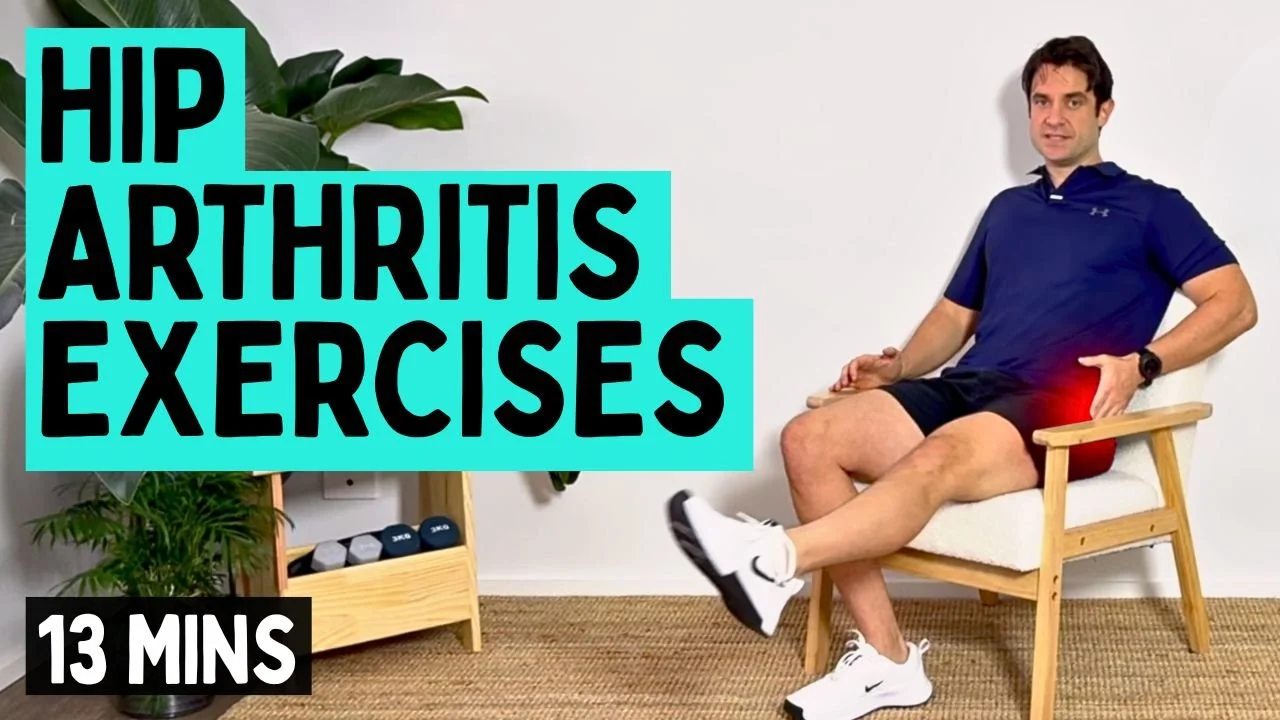
Gentle Hip Arthritis Exercises for Seniors
Dealing with hip arthritis, tight hips, or stiffness? In this gentle 13-minute follow-along workout, I'll guide you through simple exercises designed to improve hip mobility, strengthen the muscles that support your hips, and help you keep moving comfortably and confidently.
A Gentle 13-Minute Workout to Improve Hip Mobility & Reduce Stiffness
The hips play an important role in so many of our everyday movements, from walking and standing, to getting dressed, climbing stairs, and simply moving around with confidence.
When hip arthritis causes stiffness or discomfort, it's common to start avoiding certain movements. Over time, this can lead to the hips feeling even tighter and the muscles around them becoming weaker.
But having hip arthritis doesn't mean you should stop moving.
In most cases, gentle, controlled exercises can help keep your hips mobile, strengthen the muscles that support the joint, and help you continue doing the things you enjoy.
The key is finding movements that feel good for your body, building strength gradually, and staying consistent over time.
In this gentle follow-along workout, we'll start with a warm-up before moving into hip mobility exercises, gentle strengthening movements, and functional exercises designed to support your everyday activities.
The workout includes exercises such as:
Ankle Pumps
Seated Marching
Seated Hip Circles
Seated Hip Openers
Seated Isometric Hip Abduction
Seated Isometric Hip Adduction
Seated Glute Squeezes
Sit-to-Stand
Standing Hip Extension
Knee to Chest Stretch
Remember to work at your own pace and only move within a comfortable range. You don't need to force any movement. The goal is to keep your hips moving, build confidence, and stay consistent.
I hope you enjoy the workout and that it helps your hips feel a little more mobile. If you complete the session, I'd love to hear how you went. Feel free to leave a comment on the YouTube video and let me know how your hips are feeling afterwards.
Stay well, stay happy, and keep moving.
Mike
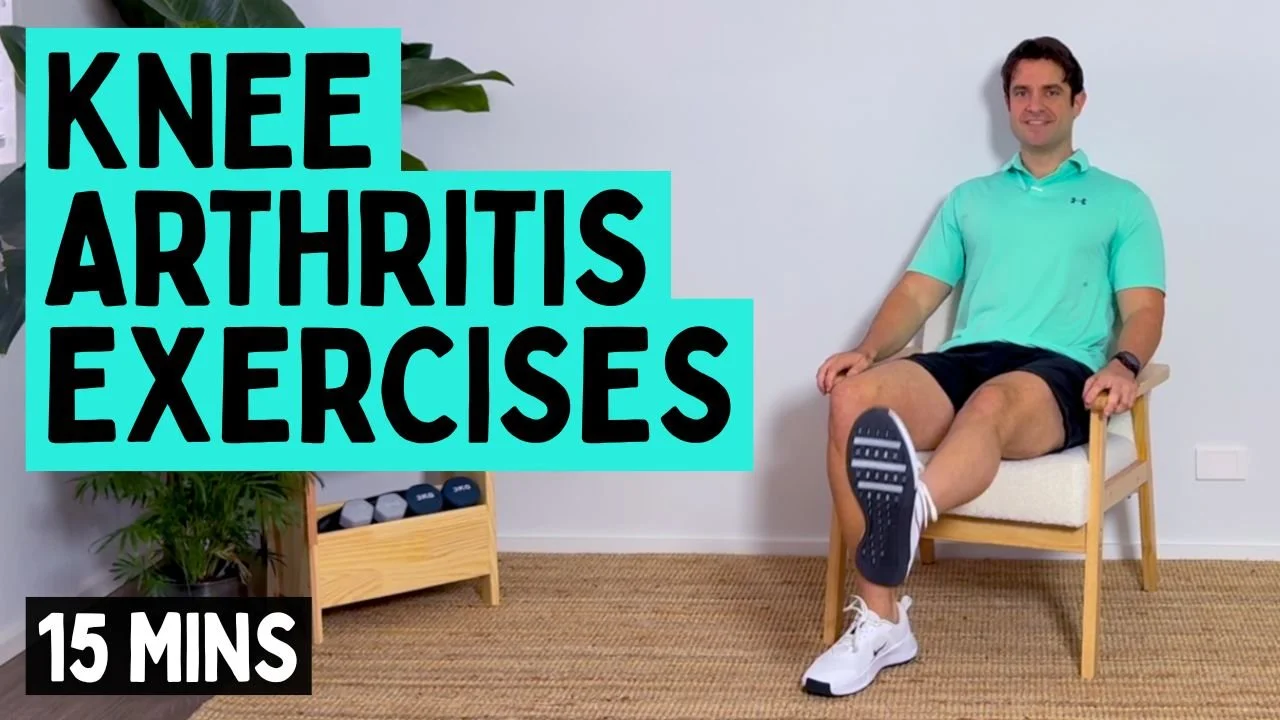
Gentle Knee Arthritis Exercises for Seniors
If knee arthritis is causing pain, stiffness, or making everyday activities like walking, climbing stairs, and getting out of a chair more difficult, this gentle 15-minute follow-along workout is for you. Join me as we work through simple exercises designed to improve mobility, build strength, reduce stiffness, and help you move with greater confidence.
A Gentle 15-Minute Workout to Reduce Pain & Improve Mobility
Knee arthritis can make everyday activities like walking, climbing stairs, and getting out of a chair more difficult. The good news is that gentle, regular exercise is one of the best things you can do to help reduce stiffness, improve mobility, strengthen the muscles that support your knees, and keep you moving with greater confidence.
Many people become worried that exercising will make their arthritis worse. However, in most cases, the opposite is true. Choosing the right exercises and moving within a comfortable range can help improve joint health, maintain muscle strength, and support everyday function
In this gentle follow-along workout, we'll begin with a warm-up to get the knees moving before progressing through mobility, strengthening, and functional exercises designed to help support your everyday activities. We'll finish with a gentle cool down to leave your knees feeling more relaxed and mobile.
The workout includes exercises such as:
Seated Marching
Ankle Pumps
Heel Slides
Seated Leg Extensions
Quad Sets
Sit-to-Stand
Standing Calf Raises
Gentle Hamstring & Knee Flexion Stretches
Remember to work at your own pace and only move within a comfortable range. Mild discomfort may be normal, but stop if you experience significant pain and speak with your healthcare professional if you have any concerns.
I hope you enjoy the workout and that it helps your knees feel a little better. If you complete the session, I'd love to hear how you went. Feel free to leave a comment on the YouTube video and let me know how your knees are feeling afterwards.
Stay well, stay happy, and keep moving.
Mike

Simple, Effective Leg Endurance Exercises for Seniors (Standing - Intermediate)
Boost leg strength, stability, and endurance with this 20-minute standing workout for seniors. No equipment needed—just simple, effective exercises to keep you active and confident in your movements. Perfect for intermediate levels.
LEG ENDURANCE EXERCISES FOR SENIORS
Doing exercises for your legs should be the priority when it comes to your exercise program. This is the reason I have created many leg exercise videos in the past.
Your legs are your foundation! They keep you mobile, independent, and able to do everyday activities like walking, standing, and climbing stairs.
When your legs are strong, you move with confidence. When they have endurance, you can keep going without tiring too quickly.
So what’s the difference between leg strength and leg endurance:
Leg Strength is about how much force your muscles can produce to perform tasks like lifting, standing up, or pushing for example.
Leg Endurance is about stamina—how long your muscles can keep working before they get tired.
Both are essential if you want to be moving better. But… if you find yourself tiring too quickly, and you want to be walking further, working on endurance can make a big difference.
So, how do you build endurance?
Endurance is built through consistent, moderate-intensity activity over time.
One effective way to build endurance is by doing higher reps of exercises. Higher repetitions help your muscles adapt to working for longer periods without fatiguing too soon.
Another great way to improve leg endurance is by gradually increasing your walking distance, or challenging yourself with stairs and different terrains. This helps your muscles become more efficient and better equipped for longer or more intense activities.
It's important to build it up slowly—give your body time to adapt.
And with that said... Let’s get moving with some simple but effective leg endurance exercises in the beautiful outdoors to help you move better for longer.
To view this video, click the video below (or HERE).
I hope you enjoy this workout! Part 3 to come soon!
Remember to stay moving!
Stay healthy! Stay active, stay happy! and I’ll see you soon!
- Mike

Exercises For Stronger Knees
If you want to get your knees stronger, with or without upcoming surgery, these are the exercises to do!
Strengthening your knees can make your movement much easier and help if you have painful knees.
Exercises For Stronger Knees For Seniors
If you want to get your knees stronger, with or without upcoming surgery, these are the exercises to do!
Strengthening your knees can make your movement much easier and help if you have painful knees.
If you do have an upcoming knee replacement surgery, getting your legs stronger will help with recovery post-surgery! They will also be the exercises you’ll be doing with your Physiotherapist post-surgery, so it will help to learn them now.
In this video, the first exercises are performed in lying or long sitting (although I do them on the floor, I recommend you do them on a bed). After this, we do seated and standing exercises.
Give them a go, and let me know how you went with them, or if you have any questions, in the comments below the video.
Take your time with them if you need to. You can always pause the video and go at your own pace!
You will feel the exercises working when you do them and notice a big difference when you stay consistent.
To get moving with me, click the video below.
Remember, consistency and progression with exercise is key!
Stay moving! and I’ll see you soon!
- Mike

The 10 Best Leg Strengthening Exercises For Seniors
Here are the 10 best legs exercises for seniors, to improve strength.
Perform 10-12 repetitions of each of these exercises (at least three times per week) after a warm up.
Remember to take take your time and slowly progress.
THE BEST LEG EXERCISES FOR SENIORS
Here are the 10 best legs strengthening exercises for seniors.
Perform 10-12 repetitions of each of these exercises (at least three times per week) after a warm up.
Remember to take take your time and slowly progress.
If needed, start with 1 set of 10-12 (or less) repetitions and work up to 3 sets of 10-12 repetitions for exercises.
If these exercise are too easy, or they become too easy with the repetitions and sets, add in dumbbells and/or resistance bands.
Always be challenging yourself by progressing the exercises.
Once performed and performed consistently you'll notice big differences in your leg strength, many of your everyday activities feeling a whole lot easier with your newly strengthened legs.
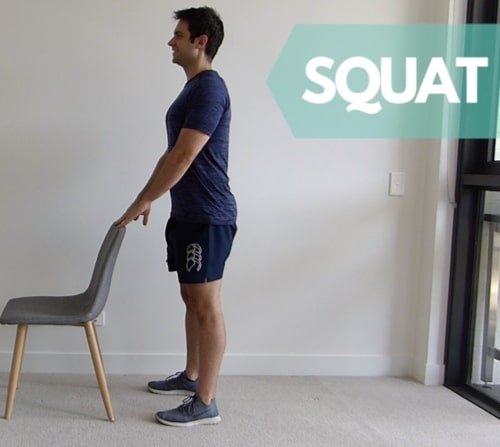
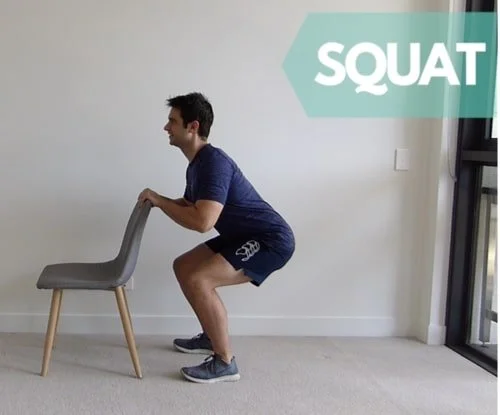
STRENGTH EXERCISE 1: SQUAT
MUSCLES WORKED
Buttocks (glutes), thighs (quads), hips, calves, core and back.
DIFFICULTY: Moderate
HOW TO:
Standing up tall with your feet shoulder-width apart.
Holding onto your chair with both hands.
Hinging at the hips and sitting back as if you were sitting on a chair.
As you sit back, go no deeper than 90 degrees and as you stand back up.
Put equal weight through both legs.
Make sure your knees don’t go over the line of your toes and they aren’t moving inward throughout the exercise.
Repeat for the set repetitions.
For Video Demonstration of the Squat: Click Here
PROGRESSING THE EXERCISE: This exercise can be made more challenging by using no hands, resistance bands, dumbbells, barbell.
EASIER VARIATION - PARTIAL SQUAT
Perform this variation if you have difficulty or get pain with the standard squat.
DIFFICULTY: Easy
HOW TO:
Standing up tall with your feet shoulder width apart.
Holding onto your chair with both hands.
Hinging at the hips and sitting back as if you were sitting on a chair.
Only go to a depth of about 45 degrees before you come back up.
Put equal weight through both legs.
Make sure your knees don’t go over the line of your toes and the aren’t moving inward throughout the exercise.
Repeat for the set repetitions.
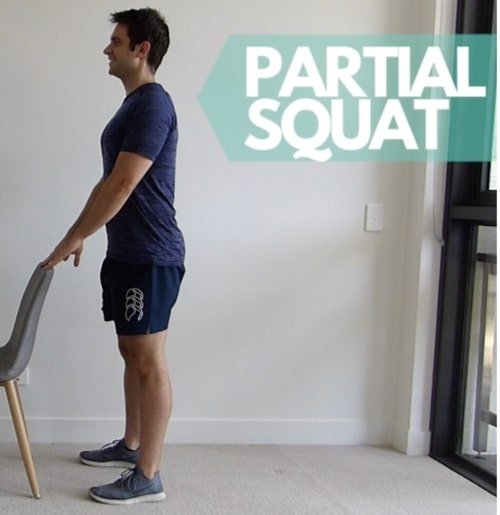
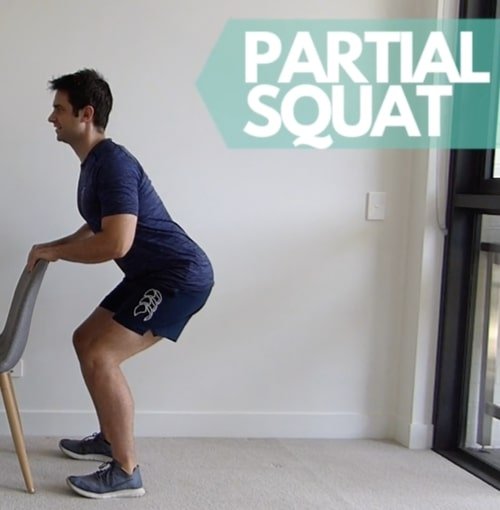
For Video Demonstration of the Partial Squat: Click Here
STRENGTH EXERCISE 2: SIT-TO-STAND
MUSCLES WORKED
Buttocks (glutes), thighs (quads), hips, calves, core and back.
DIFFICULTY: Easy to Moderate (depending on hand use)
HOW TO:
Sitting up tall in your chair, with your feet shoulder-width apart.
Shuffle forward to the front of your chair.
From this position, bringing your feet back, so your heels are behind your knees.
With your hands on the chair, on the arm-rests of the chair, or on your thighs, you’re going to lean forward at the hips so your nose comes over your toes.
Now stand up putting equal weight through both feet/legs.
Make sure you fully extend your legs at the knees and the hips.
And to sit down, hinging at the hips, reaching for the chair and sitting down.
Make sure to keep your chest up throughout the exercise.
Repeat for the set repetitions.
Also, make sure that your knees remain in line with your toes, and they don’t move inwards when you sit down and stand up.
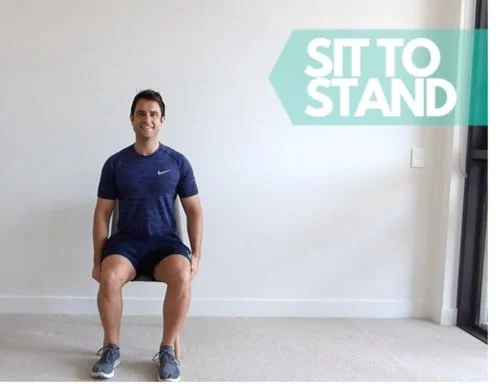

For Video Demonstration of the Sit-To-Stand: Click Here
EASIER VARIATION: This exercise can be made easier by using arms to assist or using a higher chair.
PROGRESSING THE EXERCISE: This exercise can be made more challenging by using no hands, using a lower chair or adding in in dumbbells or resistance bands.
STRENGTH EXERCISE 3: CHAIR DEADLIFT
MUSCLES WORKED
Buttocks (glutes), thighs (quads), hips, calves, core and back.
DIFFICULTY: Harder
HOW TO:
Place your resistance band flat on the floor.
Sitting up tall towards the front of your chair.
Place your feet shoulder-width apart on the resistance band and face your toes slightly outwards and keep your knees in line with your toes.
Reach down and grab hold of your resistance band and maintain your upright posture with your shoulders back and down and your chest up.
Also maintain straight arms whilst holding onto the resistance band, and keep your shoulders back and down in good posture whilst holding onto the resistance band.
Loosen or tighten the resistance band as needed to work your strength.
From this position, whilst only holding onto the resistance, stand up, just like the sit to stand exercise now holding onto the resistance band.
Ensure you completely straighten your knees and hips and squeezing your buttocks when you come to the top of the movement.
Now slowly sit back down.
Keep equal weight through both legs throughout the exercise and make sure your knees aren’t moving inward throughout the exercise.
Repeat for the set repetitions.

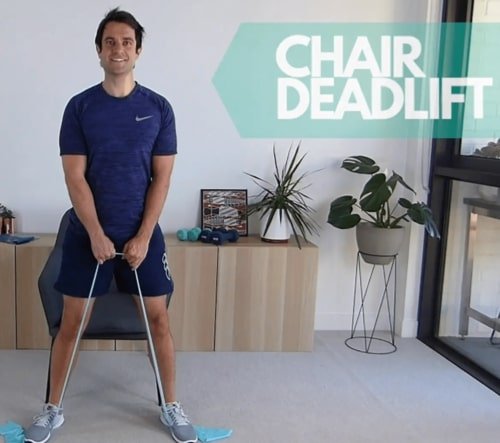
For Video Demonstration of the Deadlift: Click Here
EASIER VARIATION: Lighter weight/resistance.
PROGRESSING THE EXERCISE: Using Heavier resistance bands, Using no chair, using a barbell.
STRENGTH EXERCISE 4: REVERSE LUNGE
The Reverse Lunge is a great exercise as it trains single leg strength. We are exercising one leg at a time, helping to ensure both our legs are getting stronger. This is good for activities such as walking stairs.
MUSCLES WORKED
Buttocks (glutes), thighs (quads), hips, calves, core and back.
DIFFICULTY: Harder
HOW TO:
Standing up tall, with both hands on the chair.
Take a large step directly backwards and drop down just before the floor.
Come back up and repeat for the opposite leg.
Keep your body upright throughout the exercise, ensuring the knee of your front foot does not come past the line of your toes.
Repeat for the set repetitions.
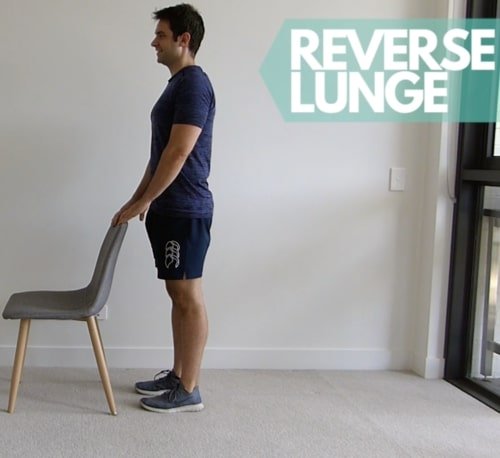
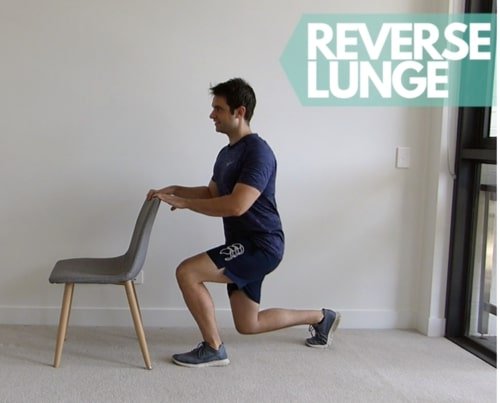
For Video Demonstration of the Reverse Lunge: Click Here
EASIER VARIATION: Don’t go as low to the floor
PROGRESSING THE EXERCISE: Using no chair, using dumbbells, using a light barbell.
STRENGTH EXERCISE 5: CALF RAISES (Up On Toes)
MUSCLES WORKED
Back of lower legs (Calves).
DIFFICULTY: Easy
HOW TO:
Standing up tall with your feet about hip width apart.
Keeping your knees straight and holding onto the chair with both hands.
Coming up on to the toes, raising your heels up off the floor, holding briefly and slowly lowering yourself back down.
Repeat for the set repetitions.
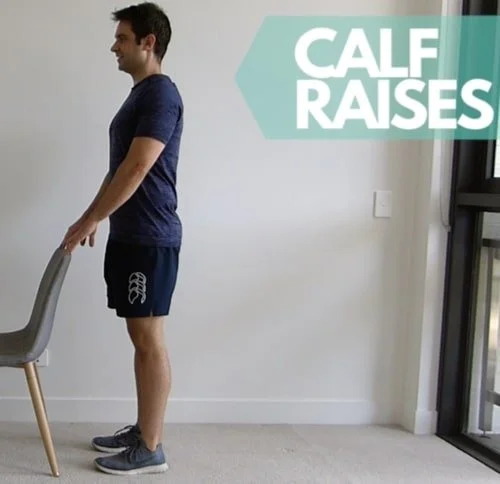
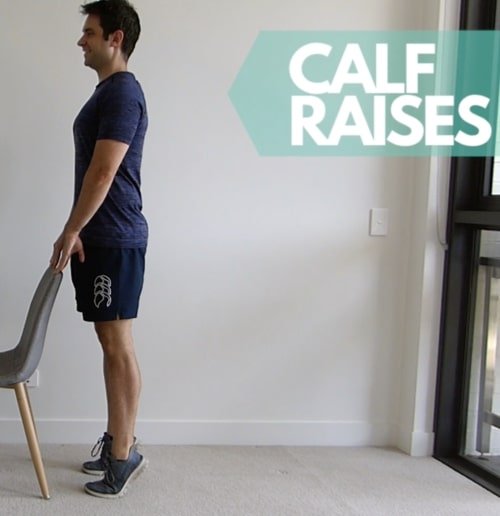
For Video Demonstration of Calf Raises: Click Here
EASIER VARIATION: Seated
PROGRESSING THE EXERCISE: Using no chair, using dumbbells.
STRENGTH EXERCISE 6: HIP ABDUCTIONS (Leg Sideways - Straight)
MUSCLES WORKED
Buttocks (glutes), thighs (TFL)
DIFFICULTY: Easy
HOW TO:
Standing tall with your feet close together and holding on to your chair.
Slowly bring your leg out to the side and in a controlled motion bringing your feet back together.
Ensure you keep your toes facing the front throughout this exercise, also make sure that you do not lean during this exercise or hitch your pelvis.
Repeat for the set repetitions and change legs.


For Video Demonstration of Hip Abductions: Click Here
EASIER VARIATION: Seated
PROGRESSING THE EXERCISE: Using no chair, using resistance bands
STRENGTH EXERCISE 7: HIP EXTENSIONS (Leg BACKWARDS - Straight)
DIFFICULTY: Easy
MUSCLES WORKED
Buttocks (glutes), and back of the thighs (hamstrings).
HOW TO:
Placing both hands on your chair and standing up tall.
Keeping your legs straight slowly bring it back behind you and then bring your feet back together.
Repeat for the set number of repetitions and do the same on the opposite leg.

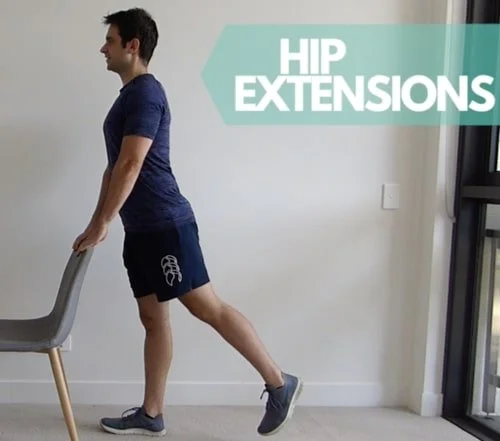
For Video Demonstration of Hip Extensions: Click Here
PROGRESSING THE EXERCISE: Using resistance bands, ankle weights.
STRENGTH EXERCISE 8: KNEE FLEXIONS (KNEE BACK BENDS)
MUSCLES WORKED
Back of the thighs (Hamstrings).
DIFFICULTY: Easy
HOW TO:
Standing up tall, holding onto your chair, with your feet close together.
Bending your leg at the knee, lifting your foot up towards your buttocks, holding briefly and returning your foot back to the ground.
Repeat for the set repetitions and do the same on the opposite leg.
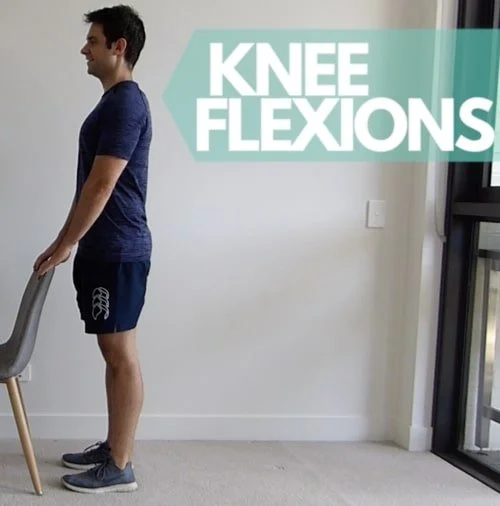
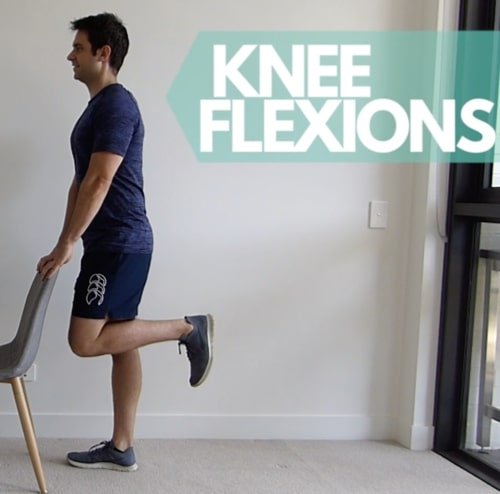
For Video Demonstration of Knee Flexions: Click Here
PROGRESSING THE EXERCISE: Using resistance bands, ankle weights.
STRENGTH EXERCISE 9: SEATED KNEE EXTENSIONS (Knee Straightens)
MUSCLES WORKED
Quadriceps (Thighs)
DIFFICULTY: Easy
HOW TO:
Sitting up tall with your shoulders back and down.
Lifting one leg up, extending at the knee.
Hold briefly at the top of the movement, squeezing the muscles at the front of the thigh before lowering your leg back down.
Ensure the movement is slow and controlled.
Alternate legs, ensuring full knee extension (leg completely straight).
Repeat for the set repetitions.

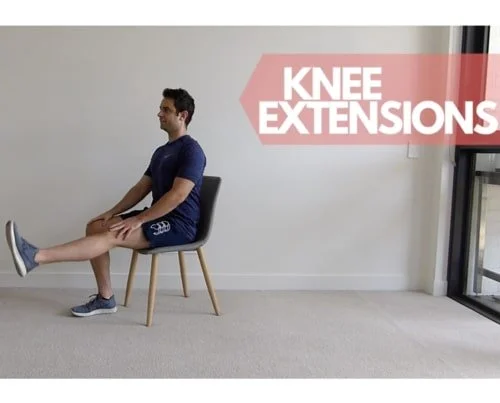
For Video Demonstration of Knee Extensions: Click Here
PROGRESSING THE EXERCISE: Using resistance bands, ankle weights.
STRENGTH EXERCISE 10: SEATED HIP ADDUCTIONS (Thigh Squeezes)
DIFFICULTY: Easy
MUSCLES WORKED
Groin/inner thighs (Hip Adductors)
HOW TO
Sitting up tall, in your chair, shuffle forward to the middle of the chair.
In this position, using a cushion or a rolled up towel, place the item between your knees.
Bring your feet in, ensuring they are in line with your knees.
Whilst holding the cushion lightly with your knees, you're now going to squeeze the cushion using your knees.
Hold this for 5 seconds and relax.
Repeat for the set repetitions.


For Video Demonstration of Seated Hip Abductions: Click Here
And there you have 10 of the best leg strengthening exercises for seniors.
Do these exercises consistently for strong, steady legs.
If you’d prefer just to do exercises with me through video, here are more leg strengthening videos (click below)