
Safe Exercises for Osteoporosis: A Gentle Guide to Getting Started

A diagnosis of osteoporosis can make exercise feel daunting, but the right movement is one of the best things you can do for your bones. This gentle 30-minute follow-along workout helps you build strength, balance, and confidence, safely from home.

Safe Exercises for Osteoporosis: A Gentle Guide to Getting Started

If you've recently been told you have osteoporosis or osteopenia, it's completely normal to feel a little unsettled. Hearing that your bones have become a bit weaker can be worrying, and one of the most common questions I hear as a physiotherapist is a simple one: "What exercises are actually safe for me to do?"

It's a great question, and it's the right one to ask. The good news is that there is a lot you can do to support your bone health, stay steady on your feet, and keep doing the things you love. And one of the very best places to start is with the right kind of movement.

In this guide I'll walk you through why exercise matters so much for your bones, the types of exercise to focus on, the movements to be a little more careful with, and a gentle follow-along workout you can do with me at home today.

Is it safe to exercise with osteoporosis?

For most people, yes, and in fact, avoiding movement is usually the bigger risk. It's a natural instinct to want to wrap yourself in cotton wool after a diagnosis, but staying still tends to make bones and muscles weaker over time, not stronger.

Here's the important thing to remember: your bones are living tissue. They respond to what you do. A diagnosis is a measurement, not a sentence, and there's a great deal you can influence from here.

You don't need to be afraid of moving. You just need to know what to focus on, and what to be a little more careful with.

Why exercise matters for your bones

Exercise helps your bones in two connected ways.

First, when you load your bones safely, through weight-bearing and resistance exercise, your body receives a signal to help maintain, and in some cases improve, your bone strength.

Second, and just as importantly, exercise protects you from falls. Most fractures don't happen because a bone simply gives way. They happen after a fall. So improving your strength, your balance, and your confidence on your feet is one of the most powerful things you can do to protect your bones, and the wonderful news is that balance improves at any age.

The types of exercise to focus on

A well-rounded routine for bone health includes four kinds of movement.

Weight-bearing exercise. Any exercise done on your feet, where your body carries its own weight. Walking, marching on the spot, and stepping up and down a step are all simple examples.

Strength exercise. Working your muscles against resistance, two to three days a week. Think sit-to-stands from a chair, wall push-ups, and exercises with light weights or a resistance band. As you get stronger, gradually building the challenge, including heavier weights over time, gives your bones an even stronger signal.

Balance exercise. Often forgotten, and so important. Because most fractures follow a fall, better balance directly protects your bones. Standing tall with your feet together, heel-to-toe standing, and single-leg practice while holding a bench are all great places to start.

Posture exercise. Gentle strengthening for the muscles of your upper back helps you stand taller and takes pressure off the front of your spine. Shoulder blade squeezes are a lovely, simple option.

Movements to be a little more careful with

Just as important as what to do is what to be mindful of. With osteoporosis, it's generally wise to be careful with repeatedly bending forward through the spine, or bending and twisting at the same time, especially while lifting something heavy.

Please don't read that as a list of things you can never do again. These aren't banned movements, they're simply movements where your technique and the load matter a little more. The message is modify, don't fear.

In practice, that means bending from your hips and keeping your back long when you reach down, moving your feet to turn rather than twisting your spine, and keeping any load close to your body. Everyday movement, gardening, reaching, playing with the grandkids, is not the enemy. It's the goal.

A gentle place to start: follow along with me

Reading about exercises is one thing, but doing them with someone guiding you is far easier. So I've put together a full Safe & Gentle Osteoporosis Exercise Workout that you can follow along with at home, right alongside me.

It's gentle, it's safe, and I talk you through every single exercise. Think of it as a starting point. As your strength and confidence grow, you can gradually build on it over time.

How to progress over time

The main thing, honestly, is simply to get started, and then build gradually. You don't need to do everything at once, and you certainly don't need to be perfect.

This workout is designed to be your foundation. Confidence is often the first thing that improves, that quiet realisation that "I can actually do this safely." From there, you keep challenging yourself a little more: a few more repetitions, a little more resistance, and over time, heavier weights or gym-based strength work, which is where your bones get the strongest signal of all. Small, consistent steps are what make the real difference.

Your free printable osteoporosis guide

To make all of this easy to follow, I've created a free printable Osteoporosis Exercise Guide to go alongside the workout. It includes the exercises to focus on, the movements to be careful with, a push-up progression, and a simple one-page routine you can stick on the fridge and start this week.

A final word

Please don't feel overwhelmed. Movement is one of the kindest, most powerful things you can do for your bones and your independence, and you don't have to figure it out alone. Start gently, work at your own pace, and build from there. Every little step counts.

Stay Moving, Stay Happy, and Enjoy Each Day.‍ ‍

Mike

Read More

Gentle Hip Arthritis Exercises for Seniors

Dealing with hip arthritis, tight hips, or stiffness? In this gentle 13-minute follow-along workout, I'll guide you through simple exercises designed to improve hip mobility, strengthen the muscles that support your hips, and help you keep moving comfortably and confidently.

A Gentle 13-Minute Workout to Improve Hip Mobility & Reduce Stiffness

The hips play an important role in so many of our everyday movements, from walking and standing, to getting dressed, climbing stairs, and simply moving around with confidence.

When hip arthritis causes stiffness or discomfort, it's common to start avoiding certain movements. Over time, this can lead to the hips feeling even tighter and the muscles around them becoming weaker.

But having hip arthritis doesn't mean you should stop moving.

In most cases, gentle, controlled exercises can help keep your hips mobile, strengthen the muscles that support the joint, and help you continue doing the things you enjoy.

The key is finding movements that feel good for your body, building strength gradually, and staying consistent over time.

In this gentle follow-along workout, we'll start with a warm-up before moving into hip mobility exercises, gentle strengthening movements, and functional exercises designed to support your everyday activities.

The workout includes exercises such as:

  • Ankle Pumps

  • Seated Marching

  • Seated Hip Circles

  • Seated Hip Openers

  • Seated Isometric Hip Abduction

  • Seated Isometric Hip Adduction

  • Seated Glute Squeezes

  • Sit-to-Stand

  • Standing Hip Extension

  • Knee to Chest Stretch

Remember to work at your own pace and only move within a comfortable range. You don't need to force any movement. The goal is to keep your hips moving, build confidence, and stay consistent.

I hope you enjoy the workout and that it helps your hips feel a little more mobile. If you complete the session, I'd love to hear how you went. Feel free to leave a comment on the YouTube video and let me know how your hips are feeling afterwards.

Stay well, stay happy, and keep moving.

Mike

Read More

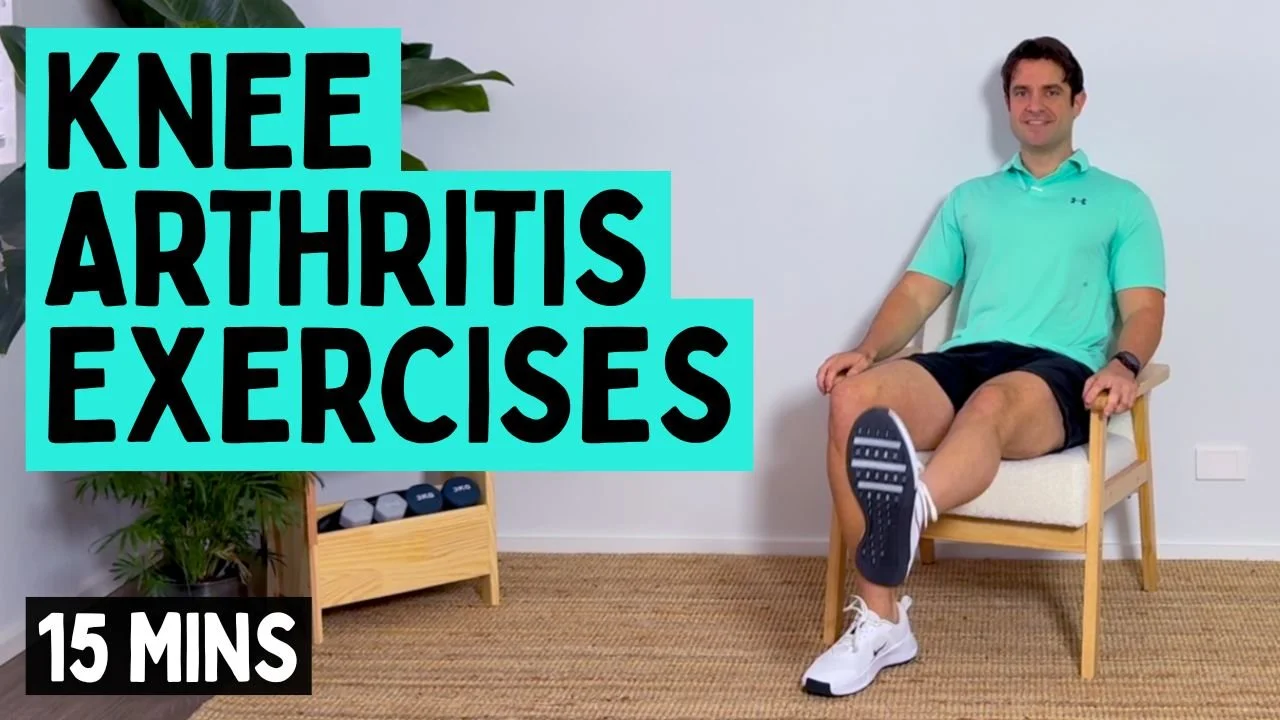
Gentle Knee Arthritis Exercises for Seniors

If knee arthritis is causing pain, stiffness, or making everyday activities like walking, climbing stairs, and getting out of a chair more difficult, this gentle 15-minute follow-along workout is for you. Join me as we work through simple exercises designed to improve mobility, build strength, reduce stiffness, and help you move with greater confidence.

A Gentle 15-Minute Workout to Reduce Pain & Improve Mobility

Knee arthritis can make everyday activities like walking, climbing stairs, and getting out of a chair more difficult. The good news is that gentle, regular exercise is one of the best things you can do to help reduce stiffness, improve mobility, strengthen the muscles that support your knees, and keep you moving with greater confidence.

Many people become worried that exercising will make their arthritis worse. However, in most cases, the opposite is true. Choosing the right exercises and moving within a comfortable range can help improve joint health, maintain muscle strength, and support everyday function

In this gentle follow-along workout, we'll begin with a warm-up to get the knees moving before progressing through mobility, strengthening, and functional exercises designed to help support your everyday activities. We'll finish with a gentle cool down to leave your knees feeling more relaxed and mobile.

The workout includes exercises such as:

  • Seated Marching

  • Ankle Pumps

  • Heel Slides

  • Seated Leg Extensions

  • Quad Sets

  • Sit-to-Stand

  • Standing Calf Raises

  • Gentle Hamstring & Knee Flexion Stretches

Remember to work at your own pace and only move within a comfortable range. Mild discomfort may be normal, but stop if you experience significant pain and speak with your healthcare professional if you have any concerns.

I hope you enjoy the workout and that it helps your knees feel a little better. If you complete the session, I'd love to hear how you went. Feel free to leave a comment on the YouTube video and let me know how your knees are feeling afterwards.

Stay well, stay happy, and keep moving.

Mike

Read More

Exercises For Stronger Knees

If you want to get your knees stronger, with or without upcoming surgery, these are the exercises to do!

Strengthening your knees can make your movement much easier and help if you have painful knees.

Exercises For Stronger Knees For Seniors

If you want to get your knees stronger, with or without upcoming surgery, these are the exercises to do!

Strengthening your knees can make your movement much easier and help if you have painful knees.

If you do have an upcoming knee replacement surgery, getting your legs stronger will help with recovery post-surgery! They will also be the exercises you’ll be doing with your Physiotherapist post-surgery, so it will help to learn them now.

In this video, the first exercises are performed in lying or long sitting (although I do them on the floor, I recommend you do them on a bed). After this, we do seated and standing exercises.

Give them a go, and let me know how you went with them, or if you have any questions, in the comments below the video.

Take your time with them if you need to. You can always pause the video and go at your own pace!

You will feel the exercises working when you do them and notice a big difference when you stay consistent.

To get moving with me, click the video below.

Remember, consistency and progression with exercise is key!

Stay moving! and I’ll see you soon!

- Mike

Read More